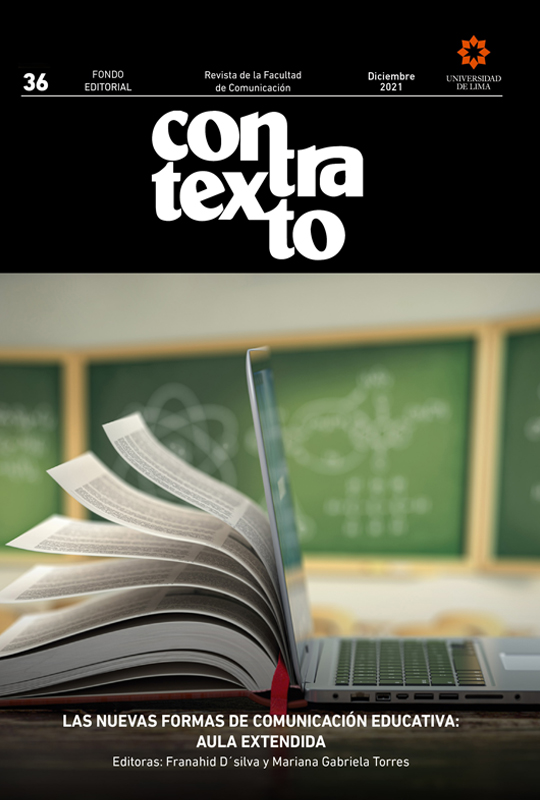
Development of Soft Skills from Out-of-School Experiences in Peru. Learnings from Non-Profit Organizations’ Activities in Public Schools in Lima
DOI:
https://doi.org/10.26439/contratexto2021.n036.5193Keywords:
soft skills, NGO, quality educationAbstract
This research aimed to examine the enhancement of soft skills in public education in Peru through analysing non-profit organisations’ techniques at the school level. The objectives were (a)To understand how the quality of education in Peruvian public schools assures the development of soft skills, (b)To explore the potential of non-profit organisations in supporting the development of soft skills in public schools. Interviews with three non-profit organisations and a government official, alongside reports, were analysed based on an OECD model. The findings include government initiatives that indirectly develop soft skills, but management issues might lead to teacher-centred rather than student-centred methodologies, deterring skills development. Unfriendly environments characterise vulnerable areas for skills development; non-profits become supportive disruptive spaces to cultivate values, ethics, and skills. The discourse analysis concludes that, despite their small scope, they mainly develop collaboration and task performance skills, impacting career decisions, families and communities. Non-profits employ a playful and concrete methodology that fosters the development of soft skills, but which is difficult to implement in public schools due to a lack of resources and school management. Further research should explore non-profits’ impact on skills development. This study is a pioneer in this field in LATAM.
Downloads
References
Aprendo Contigo (n.d.). Quienes somos [About us]. Aprendo contigo [I Learn with You] https://www.aprendocontigo.org/quienes-somos/
Banks, N., Hulme, D., & Edwards, M. (2015). NGOs, States, and Donors Revisited: Still Too Close for Comfort? World Development, 66, 707–718. https://doi.org/10.1016/j.worlddev.2014.09.028
Bebbington, A. (1997). New States, New NGOs? Crises and Transitions among Rural Development NGOs in the Andean Region. World Development, 25(11), 1755–1765. https://doi.org/10.1016/S0305-750X(97)00066-1
Castro, J.F., Yaqmada, G., & Arias, O. (2016). Higher Education Decisions in Peru: On the Role of Financial Constraints, Skills, and Family Background. Higher Education, 72(4), 457–486. http://doi.org/10.1007/s10734-016-0040-x
Cortina, R. (2016). How to Improve Quality Education for Indigenous Children in Latin America. In R. Cortina (Ed.), Indigenous Education Policy, Equity, and Intercultural Understanding in Latin America (pp. 3-25). Palgrave Macmillan US. https://doi.org/10.1057/978-1-137-59532-4_1
CPI (2019). Perú: Población 2019 [Peru: 2019 Population] (Market Report No 4). Compañía Peruana de Estudios de Mercados y Opinión Pública [Compañía Peruana de Estudios de Mercados y Opinión Pública] http://cpi.pe/images/upload/paginaweb/archivo/26/mr_poblacional_peru_201905.pdf
Cueto, S. (2016). Innovación y calidad en educación en América Latina [Innovation and quality in Latin America]. ILAIPP & GRADE. https://www.grade.org.pe/wp-content/uploads/ILAIPPGRADE_innovcalEdu.pdf
Cunha, F., & Heckman, J. J. (2008). Formulating, Identifying and Estimating the Technology of Cognitive and Noncognitive Skill Formation. Journal of Human Resources, 43(4), 738-782. https://doi.org/10.1353/jhr.2008.0019
Darcourt, A., Ramos, S., Moreano, G., & Hernández, W. (2020). Why Do Peruvian School Students Choose Science and Technology Careers? In K.Villalba-Condori, A. Aduríz-Bravo, J. Lavonen, L. Wong, & T. Wang (Eds.), Education and Technology in Sciences Communications in Computer and Information Science (pp. 158-173). https://doi.org/10.1007/978-3-030-45344-2_13
Di Gropello, E. (2006). A Comparative Analysis of School-Based Management in Central America. (World Bank Working Paper No. 72). The World Bank. http://hdl.handle.net/10986/6978
El Comercio (2014). Apafas: ¿A dónde va el dinero que los padres pagan? [Apafas: Where does the money parents pay go?]. El Comercio. https://elcomercio.pe/lima/apafas-dinero-padres-pagan-295446-noticia/
Freire, P. (1972). Pedagogy of the oppressed. Herder and Herder.
Glewwe, P., & Kremer, M. (2006). Chapter 16. Schools, Teachers, and Education Outcomes in Developing Countries. In E. Hanushek, F. Welch (Eds.), Handbook of the Economics of Education: Vol 2 (pp. 945-1017). Elsevier B.V. https://doi.org/10.1016/S1574-0692(06)02016-2
Hanushek, E. A., & Woessmann, L. (2015). The Knowledge Capital of Nations: Education and the Economics of Growth. MIT press.
Hanushek, E. A., & Woessmann, L. (2007). The Role of Education Quality for Economic Growth. The World Bank. http://hdl.handle.net/10986/7154
Humphries, J. E., & Kosse, F. (2017). On the Interpretation of Non-Cognitive Skills – What is Being Measured and why it Matters. Journal of Economic Behavior & Organization, 136, 174-185. https://doi.org/10.1016/j.jebo.2017.02.001
Hynsjö, D., & Damon, A. (2016). Bilingual Education in Peru: Evidence on how Quechua Medium Education Affects Indigenous Children’s Academic Achievement. Economics of Education Review, 53, 116-132. https://doi.org/10.1016/j.econedurev.2016.05.006
INEI (2019a). Producción y empleo informal en el Perú [Informal production and employment in Peru]. Instituto Nacional de Estadística e Informática [Statistics and Informatic National Institute]. https://www.inei.gob.pe/media/MenuRecursivo/publicaciones_digitales/Est/Lib1701/libro.pdf.
INEI (2019b). Indicadores de Educación por departamento 2008-2018 [Education Indicators by department 2008-2018]. Instituto Nacional de Estadística e Informática [Statistics and Informatic National Institute]. https://www.inei.gob.pe/media/MenuRecursivo/publicaciones_digitales/Est/Lib1680/
Jagannathan, R., Camasso, M. J., & Delacalle, M. (2019). Promoting Cognitive and Soft Skills Acquisition in a Disadvantaged Public School System: Evidence from the Nurture thru Nature Randomized Experiment. Economics of Education Review, 70, 173-191. https://doi.org/10.1016/j.econedurev.2019.04.005
James, P., Nadarajah, Y., Haive, K., Stead, V., Age, A., Annear, P., & Yomba, J. (2012). Informal Economies and Community Livelihoods. In P. James, Y. Nadarajah, K. Haive, & V. Stead (Eds.), Sustainable Communities, Sustainable Development: Other Paths for Papua New Guinea (pp. 216-246). University of Hawaii Press. https://doi.org/10.21313/hawaii/9780824835880.003.0007
Jayaram S., & Engmann M. (2017). Diagnosing the Skill Gap. In Jayaram S., Munge W., Adamson B., Sorrell D. and Jain N. (Eds.), Bridging the Skills Gap. Technical and Vocational Education and Training: Issues, Concerns and Prospects (pp. 1-14). Springer. https://doi.org/10.1007/978-3-319-49485-2_1
JEC (n.d.). Componentes del modelo educativo de la JEC [Components of the educational model of the JEC]. Jornada Escolar Completa [Full Day School] http://jec.perueduca.pe/?page_id=4912
Kankaraš M., & Suarez-Alvarez J. (2019). Assessment Framework of the OECD Study on Social and Emotional Skills. (OECD Education Working Papers No. 207). OECD. https://doi.org/10.1787/5007adef-en
Kautz, T., Heckman, J. J., Diris, R., Ter Weel, B. & Borghans, L. (2014). Fostering and Measuring Skills: Improving Cognitive and Non-cognitive Skills to Promote Lifetime Success. National Bureau of Economic Research, 0898-2937. https://doi.org/10.3386/w20749
Kerstetter, K. (2016). A Different Kind of Discipline: Social Reproduction and the Transmission of Non-cognitive Skills at an Urban Charter School. Sociological Inquiry, 86(4), 512-539. https://doi.org/10.1111/soin.12128
Lleras, C. (2008). Do Skills and Behaviors in High School Matter? The Contribution of Noncognitive Factors in Explaining Differences in Educational Attainment and Earnings. Social Science Research, 37(3), 888-902. https://doi.org/10.1016/j.ssresearch.2008.03.004
Marcos, M., & Vásquez, M. C. (2018). Tipología y caracterización de las escuelas privadas en el Perú [Typology and characterization of private schools in Peru]. (Serie Estudios Breves [Brief Studies Series] N.o 3). Ministerio de Educación (MINEDU) [Ministry of Education]. http://umc.minedu.gob.pe/wp-content/uploads/2019/01/EB03.pdf
McCrae, R., & A. Terracciano (2005). Universal Features of Personality Traits from the Observer’s Perspective: Data from 50 cultures. Journal of Personality and Social Psychology, 88, 547-561. https://doi.org/10.1037/0022-3514.88.3.547
MIMP (n.d). Diagnóstico situacional de organizaciones de voluntariado [Situational diagnosis of volunteer organizations]. Ministerio de la Mujer y Poblaciones Vulnerables (MIMP) [Ministry of Women and Vulnerable Populations]. https://www.mimp.gob.pe/sinavol/files/INFORMEBREVE-CONSOLIDADO7REGIONES.pdf
MINEDU (2016). Programa curricular de educación secundaria. [Secondary Education Curriculum Program]. Ministerio de Educación (MINEDU) [Ministry of Education]. http://www.minedu.gob.pe/curriculo/pdf/programa-curricular-educacion-secundaria.pdf
MINEDU (2017). Currículo nacional de la educación básica. [National Curriculum of Basic Education]. Ministerio de Educación (MINEDU) [Ministry of Education]. http://www.minedu.gob.pe/curriculo/pdf/curriculo-nacional-de-la-educacion-basica.pdf
MINEDU (2018). Perú: ¿cómo vamos en educación? [Peru: how are we doing in education?]. Unidad de Estadística [Statistics Unit]. Ministerio de Educación (MINEDU) [Ministry of Education]. https://siteal.iiep.unesco.org/sites/default/files/sit_accion_files/peru_como_vamos_en_educacion._2018.pdf
MINEDU (n.d.a) Evaluación Docente [Teachers assessment]. Ministerio de Educación (MINEDU) [Ministry of Education]. http://evaluaciondocente.perueduca.pe/evaluacion-docente/.
MINEDU (n.d.b). Colegios de Alto Rendimiento [High Performance Schools]. Ministerio de Educación (MINEDU) [Ministry of Education]. http://www.minedu.gob.pe/coar/index.php#admision.
Mizala, A., & Ñopo, H. (2016). Measuring the Relative Pay of School Teachers in Latin America 1997–2007. International Journal of Educational Development, 47, 20–32. https://doi.org/10.1016/j.ijedudev.2015.11.014
Namuddu K., Jain N., & Adamson B. (2017). Systemic Curricular Change. In S. Jayaram, W. Munge, B. Adamson, D. Sorrell & N. Jain N (Eds.), Bridging the Skills Gap. Technical and Vocational Education and Training: Issues, Concerns and Prospects (pp. 55-75). Springer. https://doi.org/10.1007/978-3-319-49485-2_4
Nichols, M. (2017). Can I Choose to Have Grit? Non-cognitive Skills, Behavior, and School Choice. Journal of School Choice, 11(4), 622-641. https://doi.org/10.1080/15582159.2017.1395636
OECD (2014). PISA 2012 Results in Focus. What 15-year-olds know and what they can do with what they know. OECD Publishing. https://www.oecd.org/pisa/keyfindings/pisa-2012-results-overview.pdf
OECD (2015). OECD Skills Studies: Skills for Social Progress: The Power of Social and Emotional Skills. OECD Publishing. https://www.oecd.org/education/skills-for-social-progress-9789264226159-en.htm
Oded, G. (2011). Inequality, Human Capital Formation and the Process of Development. National Bureau Of Economic Research. https://doi.org/10.3386/w17058
Osorio, A., Aredo, M., Bonillla, M., Castro, O., Isidro, L., Quintanilla, C., Sabino, C., & Villavicencio, R. (2018). Report on Mathematics Teacher Preparation in Perú. In: Y. Baldin & U. Malaspina (Eds.), Mathematics Teacher Education in the Andean Region and Paraguay (pp. 75-103). Springer International Publishing. https://doi.org/10.1007/978-3-319-97544-3_4
Portocarrero, F., Sanborn, C., Cueva, H., & Millán, A. (2002). Más allá del individualismo: el tercer sector en el Perú [Beyond individualism: the third sector in Peru]. Universidad del Pacífico.
Primi, R., Zanon, C., Santos, D., De Fruyt, F., & John, O. P. (2016). Anchoring Vignettes: Can They Make Adolescent Self-Reports of Social-Emotional Skills More Reliable, Discriminant, and Criterion-Valid? European Journal of Psychological Assessment, 32(1), 39-51. https://doi.org/10.1027/1015-5759/a000336
Rose, P. (2009). NGO Provision of Basic Education: Alternative or Complementary Service Delivery to Support Access to the Excluded? Compare, 39(2), 219-233. https://doi.org/10.1080/03057920902750475
Saavedra, J., & Gutierrez, M. (2020). Peru: A Wholesale Reform Fueled by an Obsession with Learning and Equity. In: F. Reimers (Ed.), Audacious Education Purposes (pp. 153-180). https://doi.org/10.1007/978-3-030-41882-3
Sánchez, A., & Favara, M. (2019). Consequences of Teenage Childbearing in Peru: Is the Extended-School-Hour-Program an Effective Policy Instrument To Prevent Teenage Pregnancy? (Working Paper Young Lives N.o 185). Young Lives. https://www.younglives.org.uk/content/consequences-teenage-childbearing-peru-extended-school-day-reform-effective-policy
Schleicher, A. (2019). PISA 2018: Insights and Interpretations. OECD Publishing. https://www.oecd.org/pisa/PISA%202018%20Insights%20and%20Interpretations%20FINAL%20PDF.pdf
Suddleson, H. (2015). Empathy, Attitude, and Other Soft Skills that Translate into Hard Dollars. Air conditioning, heating & refrigeration news, 256(3).
Tawil, S., Akkari, A., & Macedo, B. (2012). Beyond the Conceptual Maze: the Notion of Quality in Education. UNESCO Education Research and Foresight, 2, 1-16. https://learningportal.iiep.unesco.org/en/library/beyond-the-conceptual-maze-the-notion-of-quality-in-education
UNESCO (2005). Education for All. The Quality Imperative. (Efa Global Monitoring
Report 2005). Unesco. https://en.unesco.org/gem-report/report/2005/education-all-quality-imperative
Walliman, N.S.R. (2011). Research Methods: the Basics. Routledge.
Wang, H., Chu, J., Loyalka, P., Xin, T., Shi, Y., Qu, Q., & Yang, C. (2016). Can Social-Emotional Learning Reduce School Dropout in Developing Countries? Journal of Policy Analysis and Management, 35(4), 818-847. https://doi.org/10.1002/pam.21915
West, M. R., Kraft, M. A., Finn, A. S., Martin, R. E., Duckworth, A. L., Gabrieli, C. F. O., & Gabrieli, J. D. E. (2016). Promise and Paradox: Measuring Students’ Non-Cognitive Skills and the Impact of Schooling. Educational Evaluation and Policy Analysis, 38(1), 148-170. https://doi.org/10.3102/0162373715597298
World Bank (n. d.). Government Expenditure on Education, Total (% of GDP). World Bank. https://data.worldbank.org/indicator/SE.XPD.TOTL.GD.ZS
World Bank (2007). Toward High-quality Education in Peru. Standards, Accountability, and Capacity Building. The World Bank. https://digitallibrary.un.org/record/615921?ln=en
Zamarro, G., Cheng, A., Shakeel, M. ,& Hitt, C. (2016). Comparing and Validating Measures of Character Skills: Findings from a Nationally Representative Sample. (University of Arkansas Working Paper Series 2016-08). University of Askansas. https://scholarworks.uark.edu/edrepub/32
Downloads
Published
Issue
Section
License
All of the works published are licensed under a CC BY 4.0 Creative Commons Attribution license. (updated on March 1st 2021)
The content of the journal may be shared in any material or format. The content may be adapted, contributed upon and transformed. Both possibilities are only permitted in so far as they complete the following conditions:
- Attribution: Credit must be given where it is due, a link to the license must be provided and changes, if made, must be indicated. This should be done in the manner deemed appropriate, without suggesting that the licensor promotes you or your use of the material.
Ownership rights
The patrimonial rights for Contratexto are published under a Creative Commons BY 4.0 license, allowing authors to keep the patrimonial rights to their work without restrictions.
If a work published in Contratexto were to be copied, distributed, spread, or any other activities contemplated in the aforementioned license, the author(s) and the journal must be mentioned visibly and expressly.
Self-archive
This journal allows and encourages authors to post items submitted to the journal on personal websites or institutional repositories both prior to and after publication, while providing bibliographic details that credit, if applicable, its publication in this journal.