RECLAIMING THE URBAN COMMONS IN
THE BORDER OF CITIES
Recuperar los bienes comunes urbanos en
los bordes de la ciudad
Wagner Rezende
Arquitecto, Universidade Federal de Goiás
(UFG) – GOIÁS, Brasil
https://orcid.org/0000-0001-7054-3615
Received: May 15th, 2024
Approved: September 30th, 2024
doi: https://doi.org/10.26439/limaq2026.n017.7122
This article presents a methodological and conceptual analysis of Quintal nos Bairros, a collaborative urban project developed between residents of peripheral neighbourhoods in Goiânia and the Federal University of Goiás. Grounded in debates on the right to the city, urban commons, and insurgent citizenship, the study examines the collective design of a public square as a shared urban space. The project adopts a framework of “plural praxis” —strategic, experimental, insurgent, reflective, and expressive— to articulate participatory design, technical collaboration, and community mobilisation. Through workshops, collective mapping, tactical urbanism actions, and the co-production of design proposals, the initiative sought to transform a neglected area into an inclusive public space while fostering social innovation and local development. Beyond its material outcomes, the project highlights the role of shared experience, collective imagination, and citizen participation in reclaiming urban commons in contexts marked by socio-spatial inequality.
Urban commons, Right to the city, Insurgent citizenship, Participatory urban design, Urban periphery
Este artículo presenta un análisis metodológico y conceptual de Quintal nos Bairros, un proyecto urbano colaborativo desarrollado entre habitantes de barrios periféricos de Goiânia y la Universidad Federal de Goiás. A partir de los debates sobre el derecho a la ciudad, los bienes comunes urbanos y la ciudadanía insurgente, el estudio examina el diseño colectivo de una plaza concebida como espacio urbano compartido. El proyecto adopta el marco de las “prácticas plurales”, que articula dimensiones estratégicas, experimentales, insurgentes, reflexivas y expresivas, para integrar diseño participativo, colaboración técnica y movilización comunitaria. Mediante talleres, cartografías colectivas, acciones de urbanismo táctico y la coproducción del diseño, la iniciativa buscó transformar un área degradada en un espacio público inclusivo y promover la innovación social y el desarrollo local. Más allá de sus resultados materiales, el proyecto pone en relieve el papel de la experiencia compartida y la participación ciudadana en la recuperación de los bienes comunes urbanos en contextos marcados por la desigualdad socioespacial.
bienes comunes urbanos, derecho a la ciudad, ciudadanía insurgente, diseño urbano participativo, periferia urbana
This is an open access article, published under the terms of the Creative Commons Attribution 4.0 International (CC BY 4.0) license.
INTRODUCTION
This article is the result of a collaborative urban project developed through a partnership that began in 2020 between residents of two neighbourhoods on the outskirts of Goiânia and the Federal University of Goiás. After a few months of dialogue, residents submitted a request for the design of a public square to the Coletivo Experimental do Habitar Político (‘Experimental Collective for Political Dwelling’). The collective comprises students and faculty with experience in participatory dialogues on social housing in communities across Goiânia’s urban periphery. This article also revisits key concepts that have shaped debates on the right to the city over the past two decades—such as plural praxis, insurgent citizenship, and the urban commons, among others.
The premise that the project operates as an instrument of territorial transformation—mediated by processes of collective creation and technical collaboration, and requiring specific strategies to promote social innovation—shaped the political framework of the local action Quintal nos Bairros (‘Backyard in the Neighbourhoods’). This process enabled the exchange of knowledge, practices and experiences among professionals, students, and residents of the Antônio Carlos Pires (ACP) neighbourhood. Beyond the collaborative practice of urban design, the project also fostered reflection on the production of urban commons, understood as shared spaces, pursuing a dual objective. While the design of a public square for the ACP neighbourhood was collectively envisioned with the local community—emphasising a space for children’s activities and recreation—the project also sought to foster the exchange of experiences and knowledge as a means of exploring alternatives for local development through urban design.
The Quintal nos Bairros initiative emerged as an extension of a previous collaboration between ACP Neighbourhood Association and the School of Visual Arts at the Federal University of Goiás, which began in March 2019. This collaborative effort gave rise to a community-based extension project in which unemployed women living in these neighbourhoods volunteered to produce face masks that were distributed to health units responding to the COVID-19 pandemic. At the same time, the resident’s association initially brought to university staff the need for technical assistance to collaboratively envision public spaces, framing community collaboration as a response to the unsatisfactory housing conditions in the area.
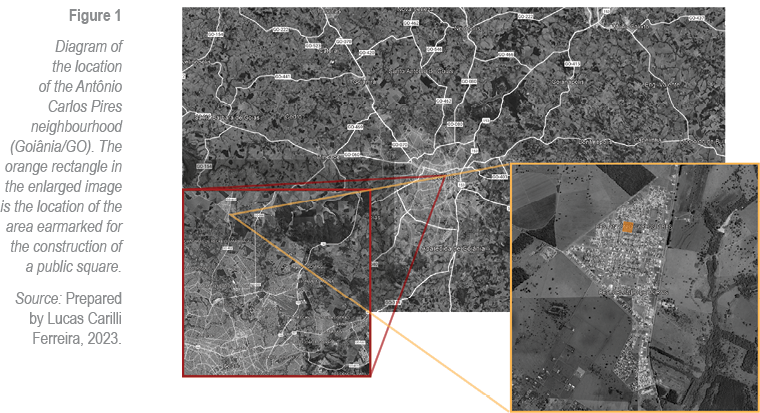
The ACP neighbourhood is located in the northern region of Goiânia, along the GO-462 highway, approximately 15 km from the city centre. It constitutes a territory displaced from the established urban fabric, with limited access to other parts of the city, as a result of an urban expansion process that has extended toward the city’s periphery. Situated in a non-urbanised hinterland between the Itatiaia neighbourhood—located in proximty to Campus II of the Federal University of Goiás—and the municipality of Santo Antônio de Goiás, the ACP neighbourhood’s relative isolation has resulted in a lack of essential urban infrastructure necessary residents’ well-being.
Although implemented relatively recently, in 2008, the neighbourhoods are characterised by a fragmented urban configuration that reflects the strategies adopted during the subdivision process, in which approximately one third of the lots (479 plots), were allocated to social housing development. While this urbanisation process represents a potential pathway for social inclusion, it also produces territorial fragmentations and socio-political disconnections that affect access to public policies, particularly in the areas of health, education, and security. Such a territorial configuration has paradoxical effects on the everyday life of its residents. From a progressive perspective, this configuration represents a tangible advantage for social diversity, which is beneficial within the local context of development. From a regressive perspective, and with equal intensity, it generates social asymmetries in access well-being facilities, manifested in political disarticulation when reclaiming access to the city’s public spaces.
This approach to urban development, while offering a path to social inclusion, also produces territorial divisions that weaken residents’ political cohesion in their efforts to access to essential public services such as health, education, and security. Currently, these neighbourhoods display an urban configuration characterised by a fragmented morphology, divided into several areas with diverse buildings typologies. Although this structure may favour social integration, it paradoxically fosters social and territorial divisions within the neighbourhood, reflected in the political disunity of residents in defending their urban rights.
(POLITICAL) ONTOLOGIES OF THE RIGHT TO THE CITY
The Right to the City and Public Spaces
For Lefebvre (2001), the right to the city is realised through the “right to freedom, to individualisation in socialisation, to habitat and to dwell” (p. 134), which implies the right to appropriation grounded in the sensory experience of the city as the foundation of everyday life. By contrast, the commodification of the city and alienation constitute inseparable effects and conditions of contemporary urbanisation processes, largely guided and controlled by globalised financial centres. This dynamic establishes the primacy of the distant order over the proximate order, profoundly affecting the levels of urbanity in public spaces. Lefebvre further argues that the expulsion of low-income populations from city centres constitutes a class strategy—specifically that of the ruling class—which perceives itself as threatened in struggles over different modes of urbanity.
The peripheries, suburbs, and distant housing estates constitute a form of ‘(de)urbanised urbanisation’, as they enable the articulation of alternative urban ways of life. The right to the city, a term coined by Lefebvre, not only highlights the urban experience and access to its services but also, through socio-spatial practices, calls for intervention in the construction of cities through the production of citizenship. It constitutes an essential social right for a de facto democracy and a minimum condition for guaranteeing other human rights. Within Lefebvre’s understanding of everyday life, the concept of appropriation is fundamental to grasping the articulations between the two spheres of city production (the proximate and the distant orders), the agents involved (people, objects, and activities) and everyday interactions within the urban contexts of the informal city.
The concept of the right to the city brings together several dimensions of the Quintal nos Bairros project, since it encompasses not only the right to housing but also the broader set of rights of city dwellers to shape and access public spaces as urban commons. The project materialises this right through the transformation of a neglected area into an inclusive and accessible public space. In line with Holston’s (2013) discussion of insurgent citizenship, the initiative demonstrates how residents have mobilised the right to the city by claiming and creating spaces that respond to their needs and desires. These processes are evident not only in infrastructural improvements but also in expanded access to quality public spaces, increased participation in urban life, and involvement in decision-making processes related to urban development.
Urban Commons as Public Spaces
The debate on the urban commons has gained prominence over the past decade, both within and beyond the academic field; however, there remain relatively few studies addressing the diversity and characterisation of its constituent dimensions. These include the commons as a perspective of social transformation mediated by collaborative modes of production; commons as goods and services collectively produced; and communality as the socio-spatial practice that sustains and reproduces the commons. As Klein (2001) argues, there is spectre of a radical reclaiming of the commons, which has accelerated multiple forms of oppositions to “the privatisation of every aspect of life, and the transformation of every activity and value into a commodity” (p. 82). In this contexts, numerous resistance networks have emerged worldwide, extending beyond national borders and reshaping perceptions of mainstream urban development failures, while promoting alternatives to neoliberal urbanisation— particularly in Brazilian cities.
Our approach to the notion of urban commons engages with the current debate on the subject and distinguishes three conceptual roots: the common, the commons and communality (Hess, 2008; Borch & Kornberger, 2015; Cruz & Paulino, 2020; Feinberg et al, 2021; Foster & Iaione, 2019; Parker & Schmidt, 2017;). The term commons describes the foundation of shared material and symbolic resources upon which collective life is sustained, ranging from natural resources to digital wealth (Hardt & Negri, 2009). In this sense, the commons also refer to collective goods that emerge from institutional dynamics and governance arrangements built around shared resources (Teli et al., 2015). The process of producing commons is reflected in communality, understood as the socio-spatial practice that collectively links a resource to its surrounding community (Foster & Iaione, 2019).
The theoretical and conceptual foundations on the urban commons have been developed over the past few decades as part of a broader debate on the philosophical, political, and economic nature of the commons. Garrett Hardin (1968) articulated a critique of redistributive political economies bay advocating a more efficient distribution of wealth through the generalised privatisation of tangible and intangible resources. This position was consistently challenged by Elinor Ostrom (1990), who demonstrated the principles governing collective mechanisms for the creation and management of the commons. As Christophe Aguiton (2019) points out, the commons—whether tangible, intangible, digital, or cultural—are governed by social relations of collaboration that generate social consensus based on fundamental principles and give rise to communality. In a neoliberal context of urbanisation that continually builds and destroys the urban commons—thereby rendering the idea of the right to the city increasingly hollow—critical reflection on the commons becomes both necessary and urgent. Urban commons are continually produced through collective labour, only to be subsequently appropriated by capital in commodified and monetised forms following processes of real estate valorisation, for instance through the expansion of gentrification in areas redeveloped by the public authorities. Thus, policies for urban commons must be instituted for their production, protection, and collective use, particularly in a context marked by the degradation of labour and natural resources (Harvey, 2014).
In contrast to the approaches of Hardin (1968) and Ostrom (1990) to the notion of the commons, alternative perspectives have emerged. Sharing similar narratives, these perspectives introduce new theories of anti-capitalist economies in which the meaning of the commons is constructed from the notion of community and draws on neo-Marxist thought (Dardot & Laval, 2016; Hardt & Negri, 2016; Hess, 2008;). The theory of the urban commons helps elucidate the social, political, and economic conflicts that emerge through the commodification of urban spaces in cities around the world (Harvey, 2012; Klein, 2001; Stavrides, 2016). This approach proposes layering discussions on the commons within the urban context, enabling simultaneous reflection on cities and commons (Borch & Kornberger, 2015). As urban commons comprise material, intangible, and digital assets shared within an urban environment, they constitute a foundation for collective well-being. Therefore, the degradation of the commons is perceived as a loss (Feinberg et al, 2021). The concept of the commons is built around social issues such as participation, collective action and self-organisation, expressed through practices of collectively creating, using, and managing shared resources (Linebaugh, 2008). In this sense, Harvey’s (2014) proposal is quoted in full below:
The re-emergence of the commons as a political issue must be fully integrated into the anti-capitalist struggle in a very specific way. Unfortunately, the idea of the commons (such as the right to the city) has been as easily appropriated by the existing political power as the value to be extracted from the current urban commons by property interests. The question, therefore, is to change all that and find creative ways to use the powers of collective labour for the common good, and to keep the value produced under the control of the workers who produced it. This requires a double political attack whereby the state is forced to offer more and more public goods for public purposes, along with the self-organisation of entire populations to appropriate, use and complement these goods in ways that extend and enhance the qualities of the non-market reproductive and environmental commons (p. 168).
Thus, by emphasising the effective collaboration among community members involved in the Quintal nos Bairros project, this analysis engages with the fundamentals of urban commons—namely, the collective creation and management of resources and spaces that are accessible and beneficial to the wider community. Such spaces are co-created and collectively managed, fostering collective well-being. In this sense, the public square is not just an open physical infrastructure; it is the concrete projection of urban commons. It is the product of collaboration among different segments of the community—a collective and collaborative practice that emerged from, and continues to be sustained by, shared efforts—thereby reflecting the essence of the urban commons.
From the Urban Commons to the Insurgent Polis
Holston (2013) argues that, contrary to what “many nineteenth- and twentieth-century social theories of the working classes predict, members of these classes became new citizens not through labour struggles, but through struggles for the city” (p. 16). The acceleration of democratisation and urbanisation during the twentieth century intensified socio-cultural conflicts in cities and contributed to the emergence of a form of citizenship characterised by the instability of normative social control. Consequently, the global insurgency of democratic forms of citizenship that has unfolded in recent decades has disrupted established formulas of governance and privilege across diverse societies.
The complex and often contradictory nature of citizenship in the Brazilian context—where rights are neither evenly or unconditionally distributed—suggests that conventional forms of citizenship frequently produce social differentiation, granting full access to rights and privileges only to certain groups or individuals. This argument is further developed in analyses of the Brazilian case, which identify the existence of a differentiated form of citizenship enacted in everyday life.
This form of citizenship, a deeply rooted historical and cultural legacy, is marked by “legalised privileges and legitimised inequalities”, producing a system in which, despite the legal proclamation of equality among all citizens, social reality diverges sharply, as certain individuals and groups enjoy advantages and access to rights denied to others. According to the author, this discrepancy exposes a fundamental tension between the ideals of equality and justice enshrined in Brazilian legislation and the lived reality of inequality and exclusion.
Citizenship in Brazil therefore manifests unevenly, reflecting and perpetuating structures of power and privilege. Holston emphasises the need to recognise and address these disparities inherent in the concept of citizenship in order to move towards a fairer and more equal society, in which rights and privileges are not merely legal promises but lived realities for all citizens.
If, as the author argues, Brazilian citizenship continually sustains a regime of “legalised privileges and legitimised inequalities” (p. 16), this condition is most evident in urban peripheries, where public policies rarely reach all individuals and socio-spatial justice is fragmented and unevenly realised. By clarifying that insurgent forms of citizenship involve actions and movements that challenge conventional and entrenched forms of differential citizenship—often in response to condition of exclusion or injustice—this framework also reveals that regimes exclusive citizenship can be disrupted through the agency of insurgent citizenship.
Faced with the difficult question of whether insurgent mobilisation experiences could constitute new planning practices within the horizon of a human urbanism, Miraftab (2016) argues that insurgent planning, when articulated with progressive alternative planning approaches, can respond effectively to the need for new lexicons and practices capable of advancing socio-spatial justice. She acknowledges, however, that the conditions for a rupture with traditional planning remain unpredictable under neoliberal urbanisation, “where inclusion is an alibi for exclusion and the normalisation of neocolonial domination; the bankruptcy of liberal inclusive planning presses us to rethink the epistemological and ontological parameters of planning theorisations and practices” (p. 367). In response to this condition, insurgent practices and insurgent planning extend beyond struggles for representative social inclusion mediated by experts or politicians, instead prioritising the inclusion of citizens and their social actions, through which rights are actively enacted and practised. According to the author, specialised literature indicates that insurgent activists, both in theory and in practice, articulate a distinct interpretation of justice. In their pursuit of social change, they shift the basis of their claims for justice from Rawl’s (1993) theory of justice as fairness toward the recognition of difference as a political dimension, as articulated by Young (1990). This vision reformulates the discourse on inclusion, shifting it from the paradigm of representativeness to that of self-determination—an evolution that legitimises collective and direct citizen action while redirecting the focus from representative to participatory democracy.
More recently, Friendly (2022), examining infrastructural challenges in Rio de Janeiro, argues that within the current political order in many Brazilian cities, the increasingly struggle of urban planning against hegemonic political forces positions this ‘unsettling era’ as an opportunity to re-engage with the idea of insurgent planning. In this context, this condition highlights the active role of residents within the community-based project. Their participation in the project represents a form of insurgent citizenship, in which citizens—often marginalised by traditional urban policies—take the initiative to shape their own urban space. This dynamic reflects an active claim to urban rights and resources, challenging established norms. In the Quintal nos Bairros project, the mobilisation of residents, in collaboration with the Federal University of Goiás, illustrates the effects of insurgent citizenship as a socio-spatial practice. By moving beyond the mere mapping of deprivation, the initiative actively intervenes to transform local conditions, challenging the limitations of public policies, and promote social inclusion.
In the context of demands for public spaces, insurgent citizenship often emerges when groups or individuals perceive themselves as marginalised in terms of access to and use. This marginalisation can manifest in various ways, including the lack of safe, accessible, and inclusive spaces for all members of the community. In response, these groups or individuals begin to mobilise—both collectively and spontaneously—through organised forms of action, seeking to claim their right to public space and to challenge the norms and structures that restrict access and use.
The struggle for safe and accessible public spaces for children constitutes a means of challenging the oppressive dynamics perpetuated by patriarchal society. This struggle is reflected in demands for spaces where women can express themselves, gather, and participate in public life without fear of harassment, violence, or exclusion. In this context, insurgent action is not limited to claiming physical spaces but also involves struggles for more equal representation and for the recognition of women’s voices and needs within the planning and management of urban spaces. Thus, insurgent citizenship, when articulated through demands for public spaces, reflects an active pursuit of spatial justice, equality, and security, challenging the social, cultural, and physical barriers that have historically limited the access and full participation in the public sphere—particularly for children, women and the elderly.
METHODOLOGY
In recent years, academic literature has shown a growing interest in the dynamics of collaboration within sustainable development initiatives, with particular emphasis on long-term strategies and projects. For example, the contributions by Suri (2003), Manzini et al. (2008), Del Gaudio et. al. (2015), Carlos (2015), Huybrechts et al. (2016), and Rezende (2022) stand out for their analyses of case studies in this field. Specifically, Huybrechts et al. (2016), in the context of public policies associated with design processes, discuss five forms of active participation and propose their adoption in local development initiatives under the label “democratic dialogues”. The authors argue that this approach offers a theoretical and practical framework that enables participants to engage actively in design processes through communicative interactions.
However, the effective involvement of architects and urban planners in participatory processes remains an open field for research. It is recognised that their participation transcends the mere application of specialised technical skills and that they can act as agents of change, contributing to the improvement of environmental conditions in the face of economic, social, and technological constraints. These professionals are encouraged to become experts in “infrastructuring”, understood as the practice of creating and maintaining lasting social relationships with local stakeholders within specific urban contexts. Nevertheless, as Selloni and Manzini (2016) point out, many public policies continue to neglect the value of bottom-up approaches in strategic planning processes.
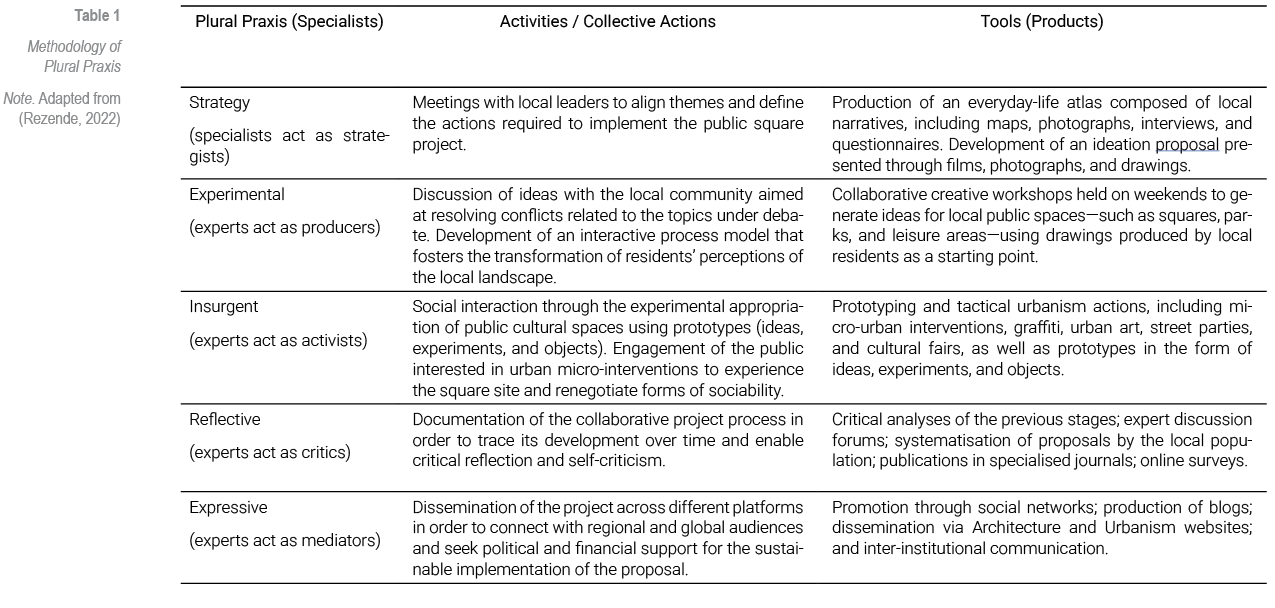
This theoretical perspective on the various practices associated with the roles of architects and urban planners led to the development of an initial exploratory typology, which is applied in the project conducted in the ACP neighbourhood, located in the northern region of Goiânia. Drawing inspiration from the aforementioned experiences and conceiving of the city as a constantly evolving process, we propose a conceptual methodology termed “plural praxis”. This concept was developed with the aim of identifying appropriate instruments for the different stages of a participatory urban project, as detailed in Table 1. This methodology comprises the following components: a) strategic praxis; b) experimental praxis; c) reflective praxis; d) insurgent praxis; and e) expressive praxis.
INSURGENT COLLECTIVE IMAGINATION
At the start of the project, the strategic praxis phase was implemented and was marked by planning sessions and the mapping of the ACP neighbourhood. This phase included reconnaissance walks that enabled open-ended observation without predetermined itineraries, as well as exploratory visits and perceptual analyses of the neighbourhood. The aim was to become familiar with these places, capturing nuances of behaviour and everyday routines. During these explorations, audio recordings and detailed visual documentation were produced, including photographs and notes from conversations with residents, alongside the collection of technical data relevant to the site selected for the construction of the new public square.
During the experimental praxis, a two-part booklet was developed as an initial tool. The first section, more theoretical in nature, aimed to motivate residents to explore and reflect on their neighbourhood, the concept of public spaces, and the importance of citizenship. This section included a brief description of the origins of the neighbourhoods, a map of Municipal Public Areas (MPA), texts addressing the importance of quality public spaces, as well as games designed to reinforce these concepts. The second section sought to collect residents’ expectations, desires and perceived challenges regarding the design of the future park-square, thereby enabling the collaborative development of the project. Through specific activities, the places frequented by residents, the activities they wished to carry out in the square, and sketches illustrating possible spatial arrangements were analysed. The production of the booklet—including graphic design, text development, the conception of games and activities, and editing—required a series of meetings, both virtual and face-to-face, to ensure the cohesion and flow of the content. With the collaboration of a dedicated team, the booklet was finalised and distributed to students at a municipal school in the Orlando de Morais neighbourhood. After receiving 157 completed booklets, they were scanned and catalogued, and a spreadsheet was created to facilitate the analysis and discussion of the responses. This cataloguing stage marked the beginning of the design process itself, guided by the wishes and preferences recorded by residents in the booklets. This information enabled the identification of needs and priorities for designing a square that harmonises with the local inhabitants’ way of life and leisure preferences.
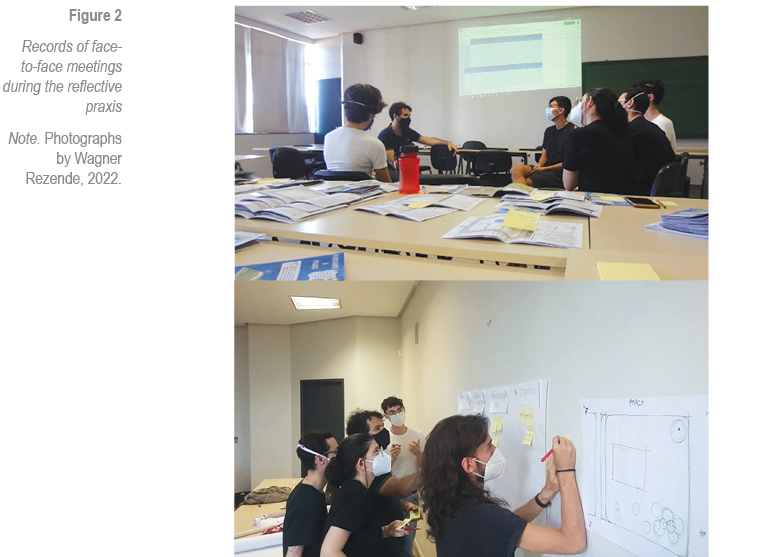
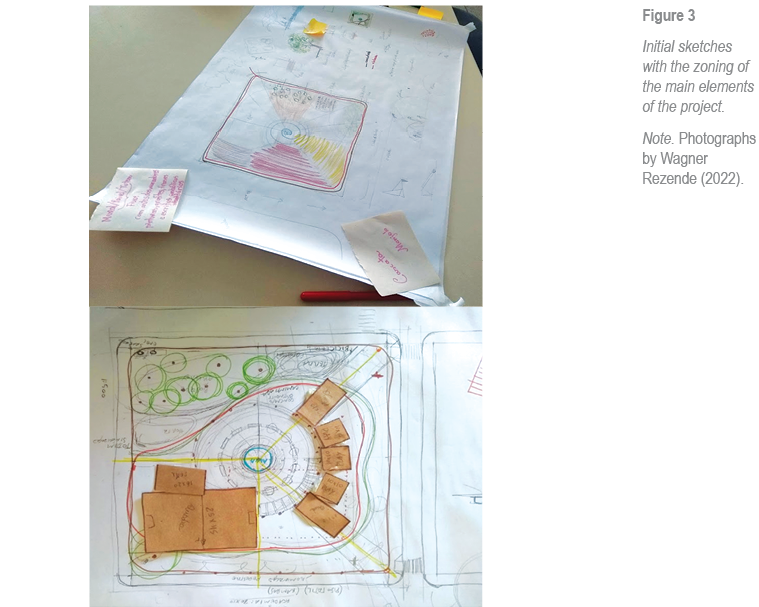
The reflective praxis involved analysing, coding, and interpreting the data obtained from the questionnaires completed by the residents of the Orlando de Morais and ACP neighbourhoods during the experimental praxis phase. This phase was crucial to the team’s formulation of the preliminary landscape project, as data from the booklets were used to produce diagrams, sketches, technical drawings, and a detailed model of the future square using a variety of materials. Through this process, creative solutions were developed in the form of graphic representations and physical models. The implementation of the reflective praxis included weekly face-to-face meetings among Quintal nos Bairros project participants, alternating with tasks carried out individually or in groups between meetings. Based on these discussions, the planning of the square was categorised into four main areas: landscaping, infrastructure, social interaction, and entertainment. This categorisation enabled a brainstorming session to identify potential components within each area. Thus, the first reflective praxis meeting concluded with a preliminary outline of the elements associated with each of these four sections.
After defining the areas and elements of the future square, the final phase of the reflective praxis focused on three specific tasks: creating a 3D model to generate visualisations of the square (including modelling, rendering and post-production); producing a humanised plan of the preliminary project; and constructing a 1:125 scale model. To carry out these tasks, the team was organised into subgroups between 22 November and 2 December, each responsible for producing the 3D images, developing the humanised plan, or assembling the scale model. The latter was carried out in person by part of the team over several days. These visual elements were fundamental to the final presentation of the project to the community. The most significant outcome of this phase was the preliminary design for the square in MPA-05, located in the ACP neighbourhood. This project was enriched by elements obtained collaboratively during the experimental praxis, reflecting the contributions and expectations of the local population.
The insurgent praxis was characterised by the ongoing adaptation of planned stages as time and events unfolded, altering the initially defined course of interaction and communication within the project. This process culminated in a special day divided into two parts, which partially overlapped with the conclusion of the booklet-based activities developed during the experimental praxis, despite initial expectations of a clear distinction between the different practices. The “My Backyard is My Square” event, held on 6 November 2021, involved the collaboration of various entities, including the Rotary of Goiânia Anhanguera, NucliSolos, the Goiás Association of Auto Parts Entrepreneurs, Enel, Aneel, Adeel, PROEC, FAV and UFG. The event took the form of a collective celebration that promoted a range of activities, with broad participation from the local community, highlighting the potential of open urban spaces as places for social interaction. The main activities included: a) storytelling and drawing activities for children; b) a kite-building workshop, face painting and inflatable play equipment; c) the distribution of snacks; d) talks on composting, including demonstrations on how to set up a low-cost home compost bin; and, e) the planting of seedlings, which attracted significant interest from residents concerned with urban agriculture and local vegetation.
The expressive praxis encompassed the dissemination of the project, extending from the start of the interventions to the presentation of the square’s design to the community. This phase functioned as a dynamic interface between internal operations and the public sphere, ensuring the visibility of the planned activities and events across both physical and digital environments. On 3 December 2021, the official exhibition of the outcomes of the square’s final design was held at an educational institution. The event was attended by figures such as Edward Madureira, Rector of the Federal University of Goiás (UFG); Emiliano Godoi, Pro-Rector for Extension and Culture; Bráulio Vinícius Ferreira, Director of the Faculty of Visual Arts (FAV); as well as representatives of the Council of Architecture and Urbanism (CAU/GO) and community leadership. The dissemination efforts by CAU/GO’s communications team, culminating in the publication of an article dedicated to the project, contributed to recognising the value of this collaborative initiative, which was funded through the CAU/ATHIS call for proposals. Subsequently, in 2022, a video documentary was produced and a catalogue was published, both documenting the process and final results of the project. Although Goiânia City Hall supported the project throughout the process, no effective action was taken to implement the planned public square in the ACP neighbourhood. A few months later, a multi-sports court was built on the site where a football field had been planned, and footpaths were paved around the perimeter of the square.
WAYS OF THINKING THE CITY: EXPERIENCE, CITIZENSHIP
AND PROJECT
The intersection between the right to the city and public spaces prompts critical reflection on the intrinsic relationship between the notions of citizenship, experience, and project. In this context, approaching urban commons as public spaces emerges as a strategy that goes beyond traditional conceptions of the city, contributing to the reconfiguration of insurgent citizenship in Goiânia. Interweaving these key ideas makes it possible to uncover the nuances that shape the urban fabric and the relationship between citizens and the city, clarifying how citizenship, urban experience, and project intersect in the production of contemporary urban phenomena.
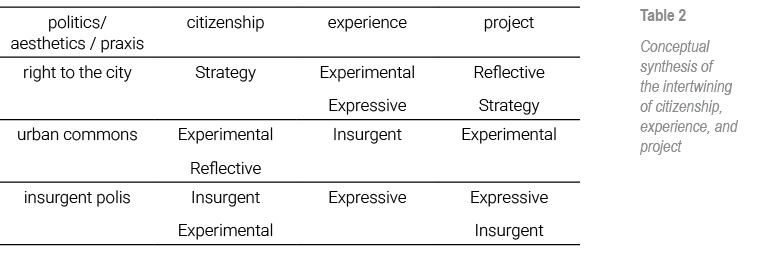
The right to the city, as advocated by Lefebvre (2001), cannot be separated from modes of urban experience associated with insurgent citizenship, which depend on the existence of urban public spaces as sites of encounter and collective expression fundamental to building an inclusive city. This right is grounded in the idea that everyone has the right not merely to inhabit the city, but to actively participate in the construction and redefinition of urban space. If the political existence of the city depends on public space, as Borja (2013) argues, the exercise of citizenship relies on its material presence—that is, on the concrete reality of public spaces such as public squares in the peripheral neighbourhoods of Goiânia. However, everyday urban experience becomes conflictual when these spaces are not genuinely public but are structured by private interests, revealing unequal and asymmetrical forms of appropriation of the urban commons and undermining the very notion of “public”. In this way, the quality of these spaces—in terms of accessibility, inclusivity and representativeness—directly shapes urban experience.
By considering urban commons as public spaces emerging from collective practices shared by the community, it becomes possible to observe a shift in the perception of these places—from merely physical areas to symbolic territories of encounter and conviviality. The critical analysis addresses the intersection between the management of urban commons, citizen participation, and the influence of these spaces on local identity. At this point, the concept of experience comes to the fore, as living in these spaces shapes citizens’ emotional relationships with the city. These spaces are not limited to their physical function but also encompass a symbolic dimension, as their experiential condition transcends mere physical occupation and contributes to the construction of a social fabric that promotes inclusion and diversity. Urban design thus becomes not only an expression but also an agent of this collective experience, actively moulding the urban environment. As a political and social device, urban design makes it possible to materialise citizenship in practice, whereby everyday experience becomes inseparable from the dynamics of the urban commons through the fostering of participation and conviviality.
The articulation of urban commons through socio-spatial practices associated with insurgent citizenship signals a transformative process, emphasising the need for active and critical community participation and revealing a collective claim that goes beyond the mere use of space. Lived experience in these spaces challenges pre-established norms, redefining citizenship through collective actions that reconfigure urban space and assert rights. The project, as an expression of this insurgency, moves beyond the traditional conceptions of urban intervention by incorporating the voices and aspirations of the community for a fairer city. Insurgent citizenship is thus forged in the dynamic between shared experience within the urban commons and design practices that materialise conviviality and claim space in the city. Insurgency is not limited to resistance but extends to the active creation of new possibilities. Everyday experience in the urban commons becomes the fertile ground through which insurgent citizenship is sutained, challenging oppressive structures and reclaiming the city as a space of emancipation.
The intertwining of the notions of experience, citizenship and project implies an openness not only to the influence of projects on lived urban experience, but also to the effects of insurgent citizenship on the use and appropriation of the urban commons. Insurgent citizenship, in turn, becomes a catalyst for the transformation of these spaces, while the project emerges as a tool that materialises collective aspirations and contributes to redefining the urban landscape. Active participation in the management and use of these spaces redefines urban experience, promoting forms of citizenship that transcend the mere right to be in the city. The project thus ceases to be a top-down imposition and becomes a collective construction, moulded by the experiences and aspirations of the community.
Rather than merely highlighting the importance of the urban commons in Goiânia, this study argues for the complex yet vital interdependence between the right to the city, public spaces, insurgent citizenship, and urban projects. Within this intertwining, shared experience in the urban commons not only challenges existing norms but also actively shapes the understanding of the city as a stage for a dynamic interaction between experience, citizenship, and project. In this way, the interconnection of these elements emerges as a powerful narrative for rethinking the city as a space of inclusion, participation, and emancipation.
CONCLUSIONS
The Quintal nos Bairros project sought to provide technical assistance to the community of the Antônio Carlos Pires neighbourhood in Goiânia for the development of a public square. The project was carried out by the Quintal nos Bairros project team, fellows and volunteers, neighbourhood residents and other collaborators. Grounded in a participatory process, the project was structured around five forms of praxis: strategic, experimental, insurgent, reflective and expressive (Rezende, 2022). Although analytically distinct, these phases are interdependent and together constitute an integrated, iterative, and synergistic process.
This approach illustrates the community’s cohesion and engagement in addressing precarious living conditions, which are marked by a lack of infrastructure in the areas of health, safety, education, and leisure. The project is grounded in the understanding that it functions as an instrument capable of transforming the territory through processes of collective creation and technical collaboration, requiring specific strategies to foster social innovation. Throughout the process, the project involved virtual and in-person meetings, on-site visits to the neighbourhoods, data collection activities, practice-related events, collaborative project planning, and the construction of a physical model.
This initiative demonstrates the collective mobilisation of residents to address precarious living conditions in the neighbourhood, characterised by a lack of urban infrastructure in the areas of health, safety, education, and leisure. The project is understood as an instrument for territorial transformation, mediated by processes of collective creation and technical collaboration, and requiring specific strategies to promote social innovation. In this sense, the local action Quintal nos Bairros constituted more than just a collaborative project experience on the outskirts of Goiânia. Beyond the exchange of knowledge, practices and experiences between professionals, students, and residents of the Orlando de Morais and Antônio Carlos Pires neighbourhoods in northern Goiânia, the initiative also fostered reflection on the production of urban commons in the form of shared places.
This article presents a methodological analysis of a collaborative project between residents of outlying neighbourhoods in Goiânia and the Federal University of Goiás, whose main objective was to create a public square as an urban common. The interaction between professionals, students and residents contributed to the improvement of living conditions and fostered the exchange of knowledge, everyday experiences, and residents’ local wisdom. By encouraging reflection on the production of urban commons and shared places, the project highlighted the role of social innovation and community integration in local development. In conclusion, the article underscores the importance and positive impact of the Quintal nos Bairros project on the community of Antônio Carlos Pires. It demonstrates the success of collaboration between professionals, students, and residents in improving urban spaces and fostering stronger community integration. Finally, it highlights the relevance of social innovation and local development initiatives, showing how collaborative actions can effectively contribute to the transformation of the urban environment.
The author disclosed receipt of financial support for the research, authorship, and publication of this article from Conselho de Arquitetura e Urbanismo, Seção Goiás (CAU/GO).
REFERENCES
Aguiton, C. (2019). Os bens comuns. In P. Solón (Ed.), Alternativas sistêmicas: bem viver, decrescimento, comuns, ecofeminismo, direitos da Mãe Terra e desglobalização. Elefante.
Borch, C. & Kornberger, M. (Eds.). (2015). Urban commons: Rethinking the city. Routledge. https://doi.org/10.4324/9781315780597
Borja, J. (2013). Revolución urbana y derechos ciudadanos. Alianza Editorial.
Carlos, E. (2015). Movimentos sociais e instituições participativas: efeitos do engajamento institucional nos padrões de ação coletiva. Revista Brasileira de Ciências Sociais, 30(88), 83-98. https://dx.doi.org/10.17666/308883-98/2015
Cruz, S. & Paulino, S. (2020). Urban commons in active mobility experiences. International Journal of the Commons, 14(1), 539-552. https://thecommonsjournal.org/articles/10.5334/ijc.1018
Dardot, P. & Laval, C. (2016). Comum: ensaio sobre a revolução no século xxi. Boitempo.
Del Gaudio, Ch., Oliveira, A. J., Franzato, C. (2015). Intersecções entre design estratégico e pesquisa-ação para promover processos participativos de reapropriação do espaço urbano. In K. d. M. Freire (Ed.). Design estratégico para a inovação cultural e social, 26-33. Kazuá.
Feinberg, A., Ghorbani, A., & Herder, P. (2021). Diversity and challenges of the urban commons: A comprehensive review. International Journal of the Commons, 15(1),1-20. https://thecommonsjournal.org/articles/10.5334/ijc.1033
Foster, S. R. & Iaione, C. (2019). Ostrom in the city: Design principles and practices for the urban commons. In D. Cole, B. Hudson, J. Rosenbloom (Eds.) Handbook of the study of the commons, 235-255. Routledge
Friendly, A. (2022). Insurgent planning in pandemic times: The case of Rio de Janeiro. International Journal of Urban and Regional Research, (46), 115-125. https://doi.org/10.1111/1468-2427.13000
Hardin, G. (1968). The tragedy of the commons. Science, 162 (3859), 1243-1248. https://www.jstor.org/stable/1724745
Hardt, M., & Negri, A. (2009). Commonwealth. Harvard University Presss; Belknap Press. https://doi.org/10.2307/j.ctvjsf48h
Hardt, M & Negri, A. (2016). Bem-estar comum. Record.
Harvey, D. (2012). Rebel cities: from the right to the city to the urban revolution. Verso.
Harvey, D. (2014). Cidades rebeldes: do direito à cidade à revolução urbana. Martins Fontes.
Hess, C. (2008, 14-18 July). Mapping the new commons. (Written presentation). The 12th Biennial Conference of the International Association for the Study of the Commons, Cheltenham, United Kingdom.
Holston, J. (2013). Cidadania insurgente: disjunções da democracia e da modernidade no Brasil. Companhia das Letras.
Huybrechts, L., Dreessen, K., Schepers, S., & Calderon Salazar, P. (2016). Democratic dialogues that make cities ‘work’. Strategic Design Research Journal, 9(2), 100-111. https://www.revistas.unisinos.br/index.php/sdrj/article/view/sdrj.2016.92.05
Klein, N. (2001). Reclaiming the commons. New Left Review,(9), 81-89. https://newleftreview.org/issues/ii9/articles/naomi-klein-reclaiming-the-commons
Lefebvre, H. (2001). O direito à cidade. Centauro.
Linebaugh, P. (2008). The Magna Carta manifesto: Liberties and commons for all. University of California Press.
Manzini, E., Walker, S., & Wylant, B. (Eds.) (2008). Enabling solutions for sustainable living: A workshop. University of Calgary Press.
Miraftab, F. (2016). Insurgência, planejamento e a perspectiva de um urbanismo humano. Revista Brasileira de Estudos Urbanos e Regionais, 18(3), 363-377. https://doi.org/10.22296/2317-1529.2016v18n3p363
Ostrom, E. (1990). Governing the commons: The evolution of institutions for collective action. Cambridge University Press.
Parker, P. & Schmidt, S. (2017). Enabling urban commons. CoDesign, 13(3), 202-213. https://www.tandfonline.com/doi/full/10.1080/15710882.2017.1355000
Rawls, J. (1971). Uma teoria da justiça. Presença.
Rezende, W. (2022). Imagine a cidade: práxis plurais e a produção de lugares compartilhados. Cadernos de Pós-Graduação em Arquitetura e Urbanismo, 22(1), 32-49. https://doi.org/10.5935/cadernospos.v22n1p32-49
Selloni, D. & Manzini, E. (2016). Policy constellations as eco-systems of design actions: Exploring three cases of social innovation policies in Italy. Strategic Design Research Journal, 9(2), 128-136. https://revistas.unisinos.br/index.php/sdrj/article/view/sdrj.2016.92.07
Stavrides, S. (2016). Common space: The city as commons. Zed Books.
Suri, J. F. (2003). The experience of evolution: developments in design practice. The Design Journal, 6(2), 39-48. https://www.tandfonline.com/doi/abs/10.2752/146069203789355471?utm_medium=article&utm_source=researchgate.net
Teli, M., Bordin, S., Menéndez Blanco, M., Orabona, G., De Angeli, A. (2015). Public design of digital commons in urban places: A case study. International Journal of Human Computer Studies, (81),17-30.
Young, I. M. (1990). Justice and politics of difference. Princeton University Press.