DISCRETE-EVENT SIMULATION
OF THE COCOA VALUE CHAIN IN PUERTO
ASÍS, COLOMBIA: COMPARATIVE EFFECTS
OF TECHNIFICATION AND WORKFORCE
SCALING
James Mauricio Enríquez Rodríguez
https://orcid.org/0009-0009-4704-3191
Mónica Lizeth Sánchez Arévalo
https://orcid.org/0000-0001-8871-1912
Facultad de Ingeniería, Corporación Universitaria Iberoamericana, Colombia
Received: January 22, 2026 / Acepted: March 11, 2026
Published: June 15, 2026
doi: https://doi.org/10.26439/ing.ind2026.n50.8548
ABSTRACT. This study presents a detailed case analysis of the cocoa value chain in Puerto Asís, Colombia, using discrete-event simulation to evaluate the impacts of technification and workforce scaling on post-harvest productivity. We calibrated a baseline model that represents traditional practices using field data, achieving validation with a relative error below 5 %. We assessed four intervention scenarios through comparative performance analysis and one-way ANOVA (p < 0,05). The baseline model required 14,3 days to complete the post-harvest cycle, incurring losses of 22 %. The most efficient configuration, which integrated solar drying infrastructure and optimized workforce allocation (C1), reduced processing time to 8,2 days (43 % reduction) and decreased losses to 10 %, while enhancing production stability. The results indicate that moderate labor optimization, when combined with technological advancements, yields significantly greater improvements in processing time, loss reduction, and production stability compared to isolated labor expansion under identical operational conditions. Furthermore, the simulation framework developed in this study serves as a replicable decision-support tool for rural cocoa systems operating under structural constraints.
KEYWORDS: simulation / FlexSim / cocoa value chain / sustainable rural development
SIMULACIÓN DE EVENTOS DISCRETOS DE LA CADENA DE VALOR DEL CACAO EN PUERTO ASÍS, COLOMBIA: EFECTOS COMPARATIVOS DE LA TECNIFICACIÓN
Y LA AMPLIACIÓN DE LA FUERZA LABORAL
RESUMEN. Este estudio presenta un análisis aplicado de la cadena de valor del cacao en Puerto Asís, Colombia, utilizando simulación de eventos discretos para evaluar el impacto de la tecnificación y de la ampliación de la fuerza laboral sobre la productividad del proceso poscosecha. Se construyó un modelo base que representa las prácticas tradicionales de procesamiento, calibrado con datos de campo y validado con un error relativo inferior al 5 %. A partir de este modelo se analizaron cuatro escenarios de intervención mediante comparación de desempeño y ANOVA de una vía (p < 0,05). El escenario base presentó un tiempo total de 14,3 días para completar el ciclo poscosecha y pérdidas del 22 %. La configuración más eficiente, que integra secado solar y una asignación optimizada de la mano de obra, redujo el tiempo a 8,2 días (43 %) y las pérdidas al 10 %. Los resultados evidencian que la tecnificación combinada con optimización laboral mejora significativamente la eficiencia y estabilidad productiva del sistema.
PALABRAS CLAVE: simulación / FlexSim / cadena de valor del cacao / desarrollo rural sostenible
This research was funded by the Corporación Universitaria Iberoamericana, Banco de Proyectos y Programas de Investigación e Innovación Ibero 2025, code 202510D007.
* Corresponding author
E-mail addresses in order of appearance: [email protected];
[email protected]
This is an open access article distributed under the terms of the Creative Commons Attribution 4.0 International License (CC BY 4.0).
INTRODUCTION
The cocoa value chain in Colombia currently represents one of the most significant strategies for promoting sustainable rural development and facilitating the transition toward legal agricultural economies in post-conflict territories (Hernanz et al., 2024). In regions such as Puerto Asís, Putumayo, cocoa cultivation has progressively established itself as a viable productive alternative that generates income, strengthens local organizations, and fosters socially inclusive agricultural systems (Apraez Muñoz et al., 2024). Despite these advances, the sector continues to confront structural challenges that impact its productivity and competitiveness, particularly in rural areas where technological resources, infrastructure, and coordination among stakeholders remain inadequate (Enriquez, 2019).
At the national level, the cocoa production system primarily comprises small-scale producers who operate under traditional management schemes and have limited access to post-harvest technologies and specialized logistics infrastructure (Hernanz et al., 2024). These conditions frequently lead to inefficiencies in fermentation, drying, storage, and transportation processes, which consequently impact product quality, elevate operational costs, and hinder producers’ ability to meet the standards required by differentiated markets (Hayat et al., 2024). Therefore, the overall performance of the cocoa value chain relies significantly on the organization of its processes, the availability of resources, and the efficiency with which stakeholders manage post-harvest operations.
From a conceptual perspective, the value chain framework offers a systemic approach to analyzing the sequence of activities that generate value, spanning from primary production to final commercialization (Helmold, 2020). In the agro-industrial context, the cocoa value chain encompasses multiple stages—including cultivation, harvesting, fermentation, drying, storage, transportation, and marketing—interconnected through economic, logistical, and organizational relationships among producers, cooperatives, intermediaries, and market agents (Awafo & Owusu, 2022). Therefore, factors such as agronomic conditions, operational coordination, infrastructure availability, and institutional support mechanisms significantly influence the performance of this system.
In rural territories such as Puerto Asís, the efficiency of the cocoa production chain strongly depends on labor availability, the level of technological adoption in post-harvest processes, and local actors’ ability to coordinate logistics and commercialization activities (Apraez Muñoz et al., 2024). The lack of adequate drying technologies, insufficient storage infrastructure, and unreliable transport systems often result in prolonged processing times and post-harvest losses, diminishing both the economic profitability and commercial potential of cocoa production (Hayat et al., 2024). These challenges underscore the necessity for analytical approaches that evaluate the system’s behavior under various operational conditions and identify opportunities for improvement.
From the perspective of industrial engineering, the cocoa value chain can be viewed as a dynamic system characterized by the flow of materials and information. In this system, the interactions among resources, capacities, and processing times critically influence overall performance (Cortés et al., 2025). Improvements made at a local level can generate systemic effects throughout the entire chain, highlighting the importance of analyzing interactions between different stages rather than evaluating each process in isolation. Consequently, computational modeling and simulation have emerged as essential tools for representing complex production systems and assessing the impact of various operational configurations prior to their implementation (Turner et al., 2025).
Discrete-event simulation (DES) serves as a powerful tool for researchers to replicate the dynamic behavior of production and logistics systems by accurately modeling processes, resources, queues, and stochastic variability within a controlled digital environment. This methodology enables the identification of bottlenecks, the evaluation of resource utilization, and the testing of improvement scenarios related to technological upgrades or organizational adjustments, all while avoiding interference with actual operations. In agro-industrial systems that are characterized by variability and constrained infrastructure, simulation models offer a rigorous analytical framework that supports evidence-based decision-making.
In this context, this study investigates the operational dynamics of the cocoa value chain in the municipality of Puerto Asís by developing a discrete-event simulation model implemented in FlexSim. Utilizing empirical data gathered through field observations, interviews with producers, and documentary analysis, the model delineates the key processes involved in post-harvest management and distribution. The simulation environment facilitates the evaluation of various operational scenarios that target the enhancement of workforce availability and the integration of technological advancements in drying and fermentation processes.
The remainder of this paper is structured as follows: Section II presents the theoretical foundations concerning value chains and simulation modeling in agro-industrial systems. Section III articulates the methodological framework and details the construction of the discrete-event simulation model in FlexSim, including its parameterization and validation procedures. Section IV presents the results obtained from the baseline model and conducts a comparative evaluation of the experimental scenarios. Section V explores the implications of these findings with respect to productivity improvement and technological adoption within rural cocoa systems. Finally, Section VI summarizes the main conclusions and suggests directions for future research.
Theoretical Framework
System Simulation as a Decision-Making Tool
Discrete event simulation (DES) represents one of the most widely used methodologies in industrial engineering for the representation of complex processes (Possik et al., 2023). This approach aims to accurately and quantitatively reproduce the behavior of a system by utilizing models that depict material flows, the resources involved, and the interactions among its components (Kienzlen & Verl, 2024).
In agro-industrial chains, this technique enables the evaluation of scenarios without altering the real system, thereby reducing the risks associated with decision-making and facilitating the identification of strategies that most effectively enhance productivity and sustainability (Kienzlen & Verl, 2024; Paulo et al., 2022). The application of simulation in rural contexts allows for a comprehensive analysis of improvement alternatives—such as increasing personnel, advancing technological integration, or reorganizing logistics —under conditions characterized by variability, resource limitations, and seasonal production (Liu, 2025; Smith et al., 2024).
The FlexSim tool utilized in this study enables the modelling of processes through functional blocks that represent operations, waiting times, resources, and logistics flows (Hering et al., 2021; Lorenc, 2024). Researchers employ this tool to quantify performance indicators such as resource utilization, cycle times, losses, and overall system efficiency (Eugenija, 2022). Consequently, simulation serves not only an analytical purpose, but also pedagogical and strategic functions by visualizing the impacts of decisions on the overall behavior of the system (Pérez et al., 2026).
Optimization and Improvement in Rural Production Systems
The concept of optimization within agro-industrial systems entails the pursuit of configurations that enhance the overall system, reduce losses, and optimize the utilization of available resources (Sergeyeva, 2020; Zhdanov et al., 2021). Specifically for cocoa, the pivotal factors for enhancement include labor availability, drying and storage capacity, and the minimization of downtime within the logistics chain (Malik et al., 2025; Quintero-García et al., 2025).
The utilization of simulation models facilitates the analysis of the system’s sensitivity to variations in these factors and enables projection of their effects on productivity and sustainability (Da Paixão Alves et al., 2025; Kharraz & Szabó, 2025). Implementing strategies such as increasing the operational workforce or introducing controlled drying technologies leads to substantial reductions in total processing time and post-harvest losses (Sharma et al., 2025; Zhu et al., 2021).
In rural environments with limited resources, optimizing production through simulation presents a viable alternative that mitigates the need for costly experimental investments and facilitates the prioritization of improvements based on their operational and social returns (Huo et al., 2022; Yu et al., 2025). This approach effectively integrates the quantitative rationality inherent in engineering with a nuanced understanding of local realities.
Social Appropriation of Knowledge in Rural Chain Management
Social appropriation of knowledge (SAK) is defined as a process in which social actors actively participate in generating, validating, and applying scientific and technological knowledge (Ramos-García et al., 2024; Romero-Rodríguez et al., 2020). Within the agro-industrial context, SAK facilitates the integration of local producers’ knowledge with analytical tools developed by academic institutions, thereby fostering collective learning and enhancing the sustainability of innovations (Kondratenko et al., 2024; Rushchitskaya et al., 2025).
The participatory approach implemented in this study incorporated co-creation workshops, validation spaces, and participatory simulation sessions with producers in the municipality of Puerto Asís. This strategy strengthened trust among the stakeholders, enabled the adaptation of model parameters to reflect the actual conditions of the territory, and enhanced the producer community’s understanding of the results (Pelzer et al., 2020).
The simulation emerged as a robust technical analysis tool and a means for knowledge transfer and appropriation, thereby enhancing producers’ capacity to interpret, make decisions, and plan their own production systems (Cao & Tao, 2025; Lopera Molano, 2022). The intersection of simulation and social appropriation constitutes a significant methodological contribution to rural chain management, synthesizing the precision of computational modeling with the legitimacy of collective knowledge (Rodríguez & Sánchez, 2023; Wang et al., 2025).
METHODOLOGY
Research Design and Analytical Strategy
This study represents an applied case analysis of the cocoa value chain in Puerto Asís, Colombia, specifically emphasizing the post-harvest processing subsystem. The research methodologically integrates empirical data collection with discrete-event simulation to assess operational performance across various technological and labor configurations.
The unit of analysis pertains to the post-harvest cycle, encompassing the fermentation and drying processes. Researchers obtained empirical data through field observations, production records, and direct interaction with producers, thereby ensuring that the baseline model accurately reflects the actual operating conditions of the association. Additionally, the researchers calibrated the simulation model against observed cycle times to ensure consistency between empirical and simulated performance.
Instead of using a mathematical optimization algorithm, this study employs a scenario-based performance evaluation approach. Researchers designed various configurations to evaluate the impacts of technological upgrades, specifically solar drying systems and workforce scaling strategies. The study simulated all scenarios under uniform external conditions to ensure structural comparability.
The selection of the optimal configuration relies on clearly defined decision criteria, specifically the minimization of total post-harvest processing time and the reduction of post-harvest losses. This comparative framework facilitates the identification of dominant operational configurations, underpinned by statistical analysis of simulation outputs.
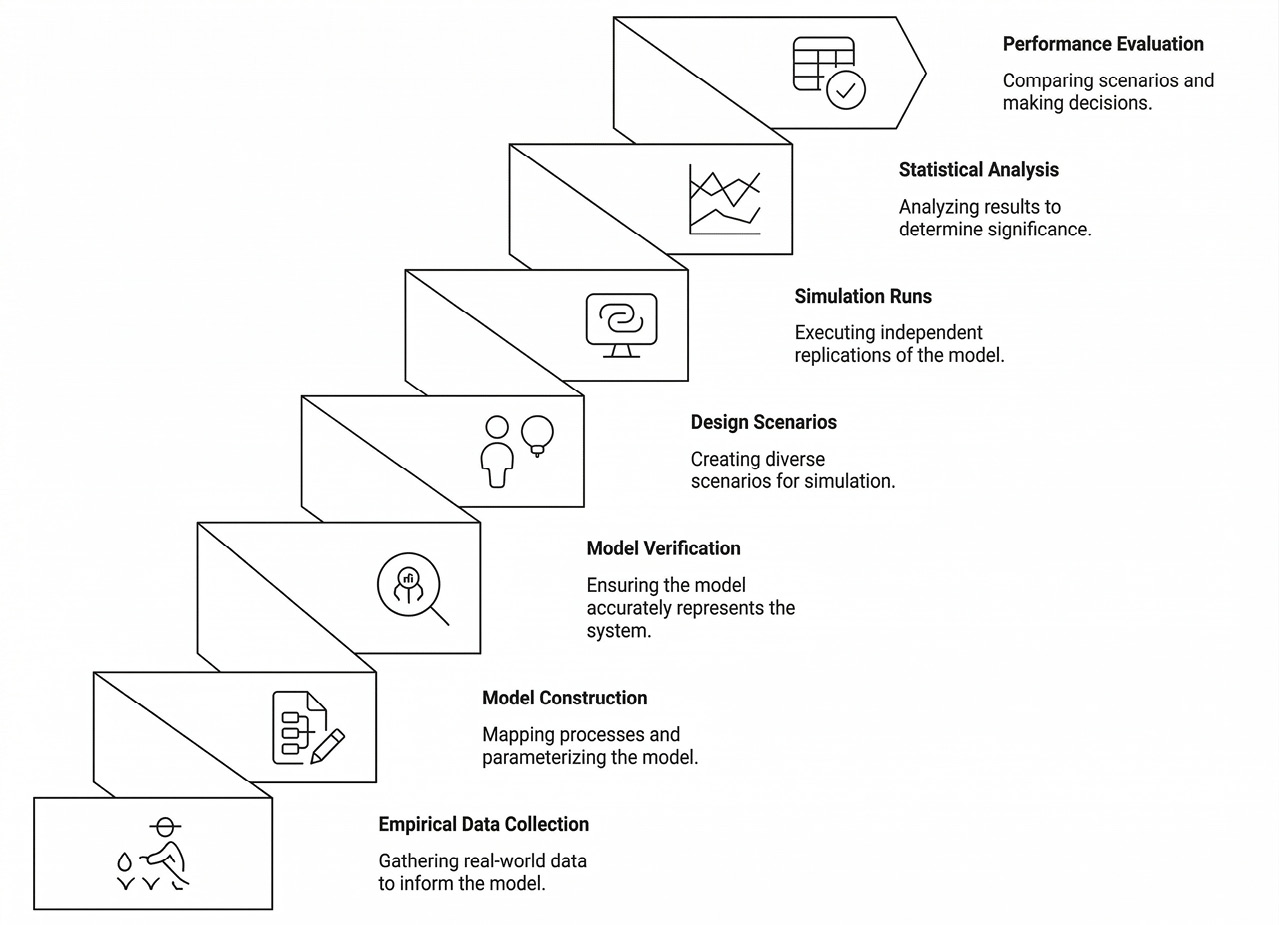
Figure 1
Conceptual framework of the simulation-based experimental design
Empirical Basis and Validation of the Model
The researchers constructed the model using a mixed approach that integrates empirical data collection in the field with the analytical structuring of processes through discrete event modeling techniques. They gathered primary information in Puerto Asís (Putumayo) by conducting semi-structured interviews with producers, organizing participatory workshops with cocoa associations, and directly observing operations at collection and drying centers (Apraez Muñoz et al., 2024; Hernanz et al., 2024; Sánchez Garavito, 2021).
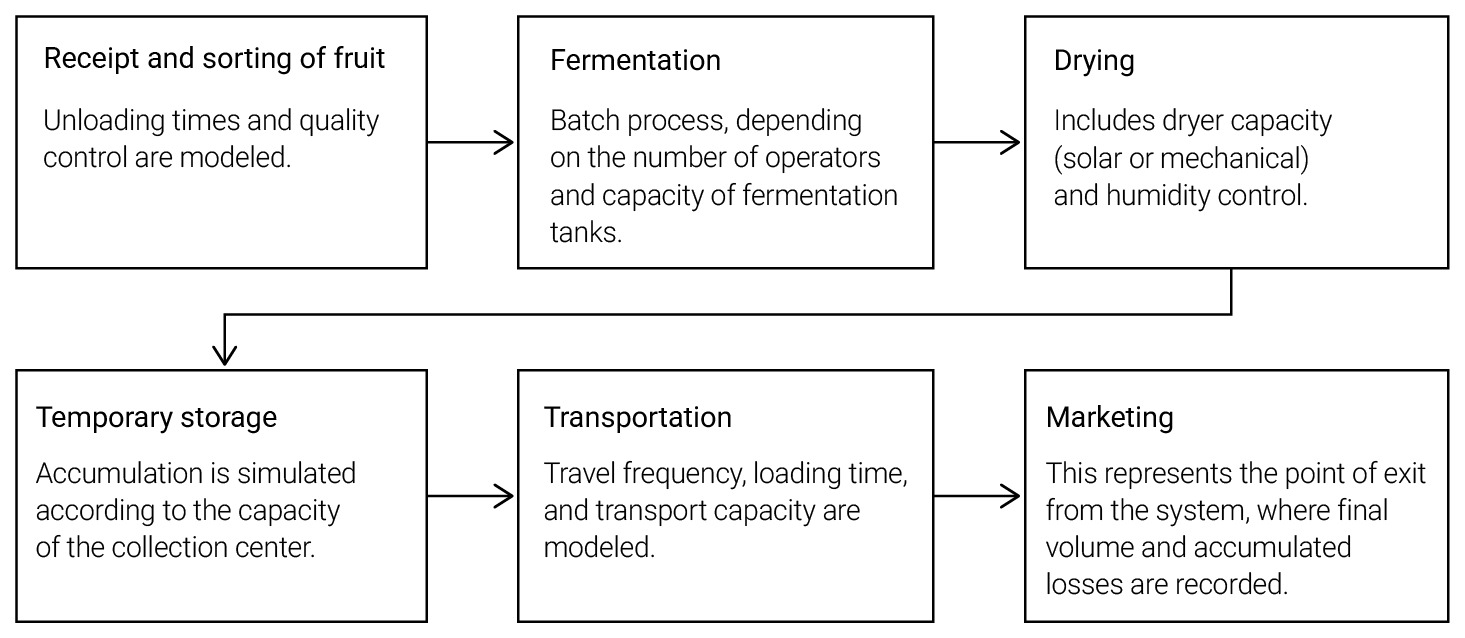
The foundational model was designed to encompass the logistical and operational components identified within the chain, which include fruit reception, fermentation, drying, storage, transport, and marketing. Each process was parameterized using average times, resource capacities, and loss rates, which local stakeholders validated (Cleland et al., 2023; Eremić Dodić et al., 2023; Ramos-García et al., 2024; Wolff & Knutas, 2023).
To ensure the representativeness of the system, we developed an iterative validation process that comprises two complementary phases: (i) Technical verification of the model, which aims to ensure the consistency of flows, process times, and resource availability in FlexSim (Eugenija, 2022; Poloczek, 2025; Sreekar et al., 2020), (ii) Participatory validation, conducted through simulation sessions with producers and technicians, during which we compared the behavior of the model with the actual dynamics of the chain (Khuwaileh & Ababneh, 2020; Wang et al., 2020).
This dual validation process facilitated the establishment of a reliable model that accurately represents the operational context of cocoa in Puerto Asís, and serves as an effective participatory analysis tool for informed decision-making.
Conceptual Model of the Cocoa Value Chain
The developed model integrates the functional structure of the agro-industrial value chain, effectively representing the main processes and material flows through a sequence of interconnected modules (Akimbekova et al., 2025; Botero Montoya et al., 2024; Yani et al., 2022). Figure 2 depicts the general flow of the system as modeled in FlexSim.
Figure 2
Conceptual model of the cocoa value chain in Puerto Asís (Putumayo)
Experimental Scenarios and Operational Parameters
After verifying the base model, researchers established experimental scenarios to evaluate the effects of two operational improvement strategies: (i) increasing the available labor force, and (ii) technification of post-harvest processes (Gerasymenko, 2023; Lavrina et al., 2022; Savitri et al., 2022; Smirnova & Postnova, 2020). These scenarios are described in Table 1.
Table 1
Configuration of Experimental Scenarios
|
Scenario |
Main intervention |
Parametric change |
Expected impact |
|
Base |
Current situation |
— |
Total time: 14,3 days; losses: 22 % |
|
A1 |
+20 % staff |
Increase in fermentation and |
Time ↓ 11,8 days; losses ↓ 17 % |
|
A2 |
+40 % staff |
Seasonal or cooperative hiring |
Time ↓ 10,5 days; losses ↓ 15 % |
|
T1 |
Technification level 1 |
+25 % drying capacity (solar dryer) |
Time ↓ 10,2 days; losses ↓ 14 % |
|
T2 |
Technification level 2 |
+50 % capacity and –10 % |
Time ↓ 8,9 days; losses ↓ 12 % |
|
C1 |
Combined |
+30 % personnel +25 % |
Time ↓ 8,2 days; losses ↓ 10 % |
Running Comparative Simulations in FlexSim
The research team implemented the model in FlexSim 2024, employing discrete-event simulation (DES) logic (Eugenija, 2022). The study conducted comparative simulations over a one-year production horizon, under the assumption of stable demand for dry cocoa and constant availability of raw materials.
To ensure statistical stability and minimize random variability, each scenario underwent ten replications (Khuwaileh & Ababneh, 2020). Preliminary pilot runs indicated that after approximately eight replications, the variation in key performance indicators—especially total processing time and resource utilization—stabilized, yielding relative deviations below 3 %. Consequently, the team determined that ten replications were adequate to ensure convergence of the mean values and enable reliable comparisons among the various scenarios.
Although researchers did not implement a formal Common Random Numbers (CRN) variance reduction scheme, they executed all scenarios under identical structural and operational configurations of the model. Prior to comparative evaluation, the study verified the convergence of mean values, thereby ensuring that performance differences between the scenarios result from structural interventions rather than stochastic dispersion.
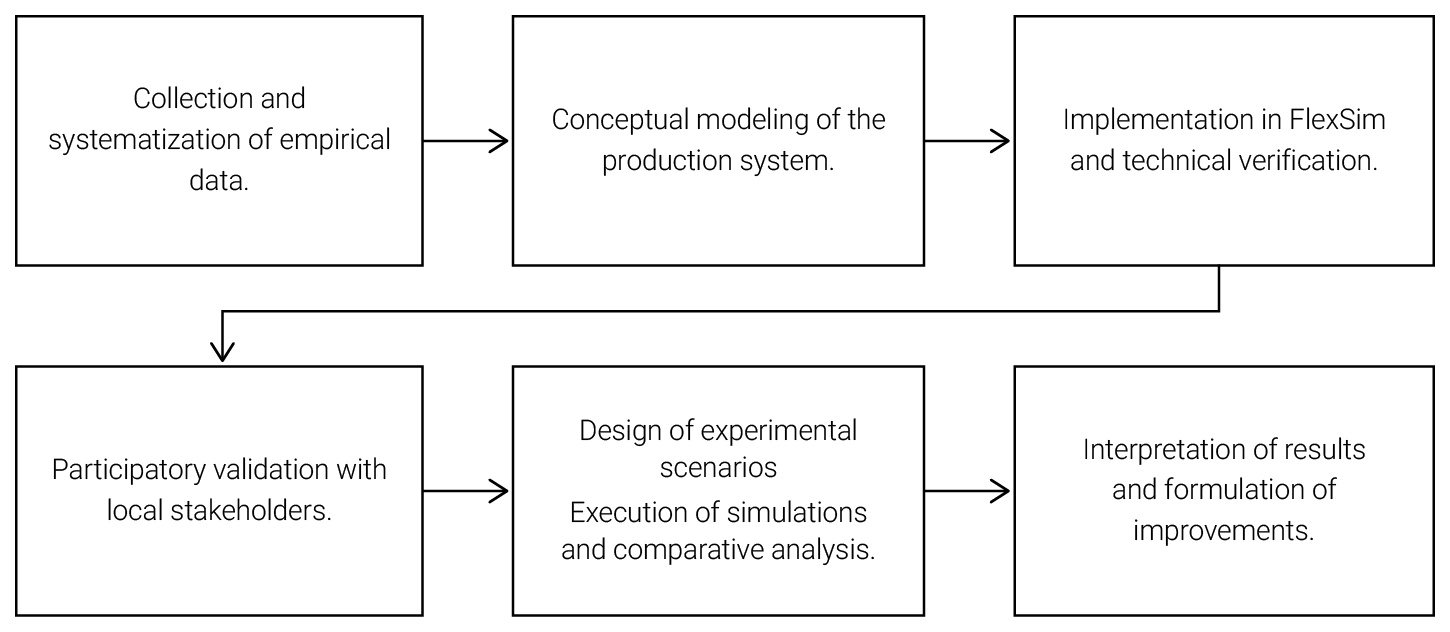
Figure 3 illustrates the methodological procedure employed in the development, verification, validation, and analysis of the simulation model. This sequence of stages adheres to the methodological approach commonly utilized in simulation-based production studies, which encompasses conceptual modeling, parameterization, verification, validation, and experimental scenario evaluation (Khuwaileh & Ababneh, 2020; Kristiana et al., 2023).
Figure 3
Methodological diagram of model construction and simulation
Model Parameterization
The simulation model necessitated the formal definition of operational, logistical, and stochastic parameters to ensure the internal coherence of the processes represented in FlexSim. This parameterization integrates empirical observations gathered during fieldwork, production records supplied by local associations, and technical assumptions aligned with rural agro-industrial systems. To maintain the fidelity of the system, process times, capacities, operator availability, and loss factors were validated collaboratively with producers during participatory sessions.
The inputs are categorized into six distinct groups: (i) batch configuration and annual capacity, (ii) time parameters related to reception, fermentation, drying, storage, and transport, (iii) resource constraints encompassing labor availability and equipment capacity, (iv) stochastic distributions reflecting the variability in operations and environmental conditions, (v) scenario-dependent parameters concerning personnel increases and post-harvest technification, and (vi) global simulation parameters that include the time horizon, number of replications, arrival rates, and random seed configuration.
Table 2 presents a comprehensive set of inputs utilized in the model. These parameters establish the baseline configuration from which the experimental scenarios (A1, A2, T1, T2, C1) are developed. The table also indicates the source of each parameter, classifying them as empirical, assumed, or analytically derived, and outlines the probability distributions assigned to processes exhibiting inherent variability. This structured parameterization ensures transparency, reproducibility, and analytical robustness in the simulation outcomes.
Table 2
Model Parameters Used in the Simulation
|
Parameter |
Symbol |
Base value |
Unit |
Source |
Distribution |
Technical note |
|
Annual pressing capacity |
CAP_AN |
5200 |
kg/year |
Empirical |
Constant |
Based on observed annual output |
|
Batch size |
BATCH_SIZE |
100 |
kg |
Empirical–Assumed |
Constant |
Equivalent to 52 batches/year |
|
Dispatch frequency |
FREQ_TRANS |
1 |
trips/week |
Empirical |
Constant |
Increases to 2 trips/week in optimized scenarios |
|
Reception time |
T_RECV |
0,5 |
days |
Empirical |
Triangular |
Per batch |
|
Fermentation time |
T_FERM |
5,0 |
days |
Empirical |
Triangular |
Sensitive to labor availability |
|
Drying time |
T_DRY |
6,0 |
days |
Empirical |
Triangular |
Main bottleneck |
|
Storage time |
T_STORE |
1,8 |
days |
Empirical |
Triangular |
Pre-transport buffer |
|
Verified total time |
T_TOTAL |
14,3 |
days |
Calculated |
— |
Sum of all operational stages |
|
Dryer utilization |
U_DRY |
95 |
% |
Empirical |
— |
High saturation level |
|
Post-harvest losses |
LOSS_BASE |
22 |
% |
Empirical |
— |
Due to moisture and over-fermentation |
|
Fermentation operators |
OP_FERM |
4 |
persons |
Empirical |
— |
Increased in A1/A2 |
|
Drying operators |
OP_DRY |
2 |
persons |
Empirical |
— |
Critical resource |
|
Handling operators |
OP_HAND |
2 |
persons |
Empirical |
— |
Turning, sorting, transfers |
|
Transport personnel |
OP_TRANS |
1 |
persons |
Empirical |
— |
Adjustable in C1 |
|
Dryer capacity (baseline) |
CAP_DRY |
100 |
kg/batch |
Assumed |
— |
Standard rural dryer |
|
Dryer capacity T1 |
CAP_ |
125 |
kg/batch |
Assumed |
— |
+25% capacity |
|
Dryer capacity T2 |
CAP_ |
150 |
kg/batch |
Assumed |
— |
+50 % capacity |
|
Fermentation reduction T2 |
RED_ |
10 |
% |
Assumed |
— |
Reduces fermentation to 4,5 days |
|
Replications |
N_REP |
10 |
runs |
Methodological |
— |
Stability of stochastic outputs |
|
Simulation horizon |
HORIZON |
365 |
days |
Methodological |
— |
One-year operation |
|
Arrival rate |
ARR_DIST |
0,142 |
batches/day |
Empirical–Assumed |
Poisson |
52 batches per year |
|
Dry yield |
YIELD |
0,90 |
ratio |
Empirical |
Triangular |
Dry/wet conversion |
|
Loading time |
T_LOAD |
0,25 |
days |
Empirical |
Triangular |
Per transport event |
|
Transport time |
T_TRAVEL |
1,0 |
days |
Empirical |
Triangular |
Rural road conditions |
|
CAPEX T1 |
CAPEX_T1 |
1200 |
USD |
Estimated |
— |
Solar dryer |
|
CAPEX T2 |
CAPEX_T2 |
5000 |
USD |
Estimated |
— |
Mechanical dryer |
|
Handling losses |
LOSS_HAND |
2 |
% |
Assumed |
— |
Manual operations |
|
Technification level |
TECH_LVL |
0 |
0–100 scale |
Methodological |
— |
Base=0; T1=45; T2=75; C1=100 |
|
Climate variability |
CLIMATE_VAR |
10 |
% |
Assumed |
Sensitivity |
Affects drying time |
|
Random seed |
RNG_SEED |
2025 |
— |
Methodological |
— |
Ensures reproducibility |
Verification and Validation (V&V)
A verification and validation (V&V) procedure was conducted to ensure the reliability of the FlexSim model. The verification process focused on confirming the internal logic of process flows, resource interactions, and event sequencing through block-level inspections and extreme-case behavior tests. The model demonstrated stable behavior across all stress tests.
Validation involved an empirical comparison with field data and participatory sessions with local producers. The observed performance indicators—processing time, dryer utilization, losses, and throughput—were compared against the outputs of ten simulation replications. Researchers applied calibration adjustments to fermentation and drying times, loss factors, and arrival rates until the error levels fell within acceptable ranges (Table 3).
Table 3
Summary of V&V accuracy indicators
|
Indicator |
Observed |
Simulated |
% Error |
|---|---|---|---|
|
Total processing time (days) |
14,3 |
14,1 |
1,4 % |
|
Dryer utilization (%) |
95 |
93,8 |
1,3 % |
|
Post-harvest losses (%) |
22 |
21,1 |
4,1 % |
|
Annual production (kg) |
5200 |
5140 |
1,1 % |
Note. The observed low error values (all <5%) validate that the model accurately represents actual operational conditions and demonstrates its appropriateness for assessing alternative operational scenarios.
Model verification aimed to ensure the logical consistency of the process flow, entity routing, and resource allocation within the simulation structure. To achieve validation, we employed empirical calibration that utilized observed postharvest cycle times and operational data collected from the production system, supplemented by expert reviews from field specialists.
A relative error of less than 5 % between simulated and observed cycle times is considered acceptable for model validation, aligning with the established simulation standards used in discrete-event modeling studies.
To maintain experimental consistency, all scenarios were simulated under identical external conditions. Input parameters related to raw material availability, fermentation duration, climatic assumptions affecting drying performance, and demand levels remained constant throughout the experiments. Only the internal configuration variables associated with technological upgrading, specifically the implementation of solar drying systems, and workforce allocation were adjusted. This controlled structure ensures structural comparability among scenarios, thereby allowing the observed performance differences to be attributed solely to the intervention strategies evaluated.
RESULTS
Results of the baseline simulation
The initial model accurately reflects the configuration observed at the collection and processing centers in the municipality of Puerto Asís. Table 4 presents a summary of the performance indicators of the system in its baseline state, highlighting prolonged processing times and elevated levels of resource utilization.
Table 4
Performance indicators of the baseline system
|
Indicator |
Observed value |
Interpretation |
|---|---|---|
|
Average total time per batch |
14,3 days |
Excessive time in the system; bottlenecks in drying |
|
Dryer utilization |
95 % |
High operational saturation; risk of overload |
|
Post-harvest losses |
22 % |
Derived from excess moisture and prolonged fermentation |
|
Annual processing capacity |
5200 kg |
Limited by human resources and equipment |
|
Transport frequency |
1 trip/week |
Slow dispatch rate; accumulation in storage |
The analysis revealed that the drying stage constitutes the primary bottleneck within the system, while the fermentation process is heavily dependent on labor availability. These identified constraints informed the development of alternative operational scenarios, which were subsequently evaluated. In addition to comparing the scenarios, a statistical analysis of ten replicates per scenario was conducted to assess the stability and significance of the observed differences. The descriptive values presented in Table 5 indicate a progressive decrease in the total system time, accompanied by a reduction in variability as personnel levels and degrees of technification increase. The combined scenario (C1) achieved the shortest average duration (8,20 days) and exhibited the lowest dispersion, demonstrating a more stable post-harvest flow behavior.
Table 5
Descriptive statistics for total processing time (days)
|
Scenario |
Mean |
SD |
Min |
Max |
|
Base |
14,30 |
0,42 |
13,7 |
14,9 |
|
A1 |
11,80 |
0,38 |
11,2 |
12,4 |
|
A2 |
10,50 |
0,33 |
9,9 |
11,0 |
|
T1 |
10,20 |
0,31 |
9,7 |
10,6 |
|
T2 |
8,90 |
0,27 |
8,5 |
9,4 |
|
C1 |
8,20 |
0,25 |
7,8 |
8,6 |
Statistical Analysis
Each scenario underwent simulation with ten independent replications to ensure statistical robustness and stability of the performance estimators. A confidence level of 95 % was utilized for all statistical comparisons. To evaluate differences in total processing time across scenarios, one-way ANOVA was employed, as this method allows for the comparison of multiple experimental configurations under controlled conditions. Before conducting the analysis, the assumptions of normality and independence of observations were verified based on the outputs from the replications. A relative error of less than 5 % and consistent variance patterns across replications affirmed the validity of the parametric approach.
ANOVA analyses revealed statistically significant differences between the scenarios (p < 0,001). Furthermore, post-hoc tests demonstrated that C1 significantly differs from all individual interventions, while the technification scenarios exhibit greater improvements compared to staff increases. These findings underscore the efficacy of the combined approach in reducing overall system time and stabilizing the production process.
Improvement Scenarios: Increase in Personnel and Technification
The study evaluated six experimental scenarios (Base-A1–A2–T1–T2–C1), as defined in the methodology section. Table 6 provides a comparative analysis of the key indicators following execution of the simulations.
Table 6
Comparison of simulated scenarios
|
Scenario |
Total time (days) |
Losses (%) |
Dryer use (%) |
Annual production (kg) |
Transport frequency |
|
Base |
14,3 |
22 |
95 |
5200 |
1/week |
|
A1 (+20 % staff) |
11,8 |
17 |
90 |
6100 |
1/week |
|
A2 (+40 % staff) |
10,5 |
15 |
88 |
6750 |
2/week |
|
T1 (Level1 Technical Training) |
10,2 |
14 |
75 |
7000 |
2/ week |
|
T2 (Level 2 Technical Training) |
8,9 |
12 |
70 |
7800 |
2/ week |
|
C1 (Combined) |
8,2 |
10 |
68 |
8000 |
2/week |
Comparative Performance Analysis
Figure 4 illustrates the variation in total system time across the simulated scenarios. The analysis reveals a progressive reduction in processing time, culminating in a 43 % improvement over the base model in the combined scenario (C1).
Figure 5 illustrates the relationship between the level of technification and post-harvest losses. The observed downward trend indicates that the incorporation of controlled drying technologies directly reduces losses, thereby enhancing the final quality of the product and stabilizing the logistics flow.
Figure 4
Reduction in Total System Time per Experimental Scenario
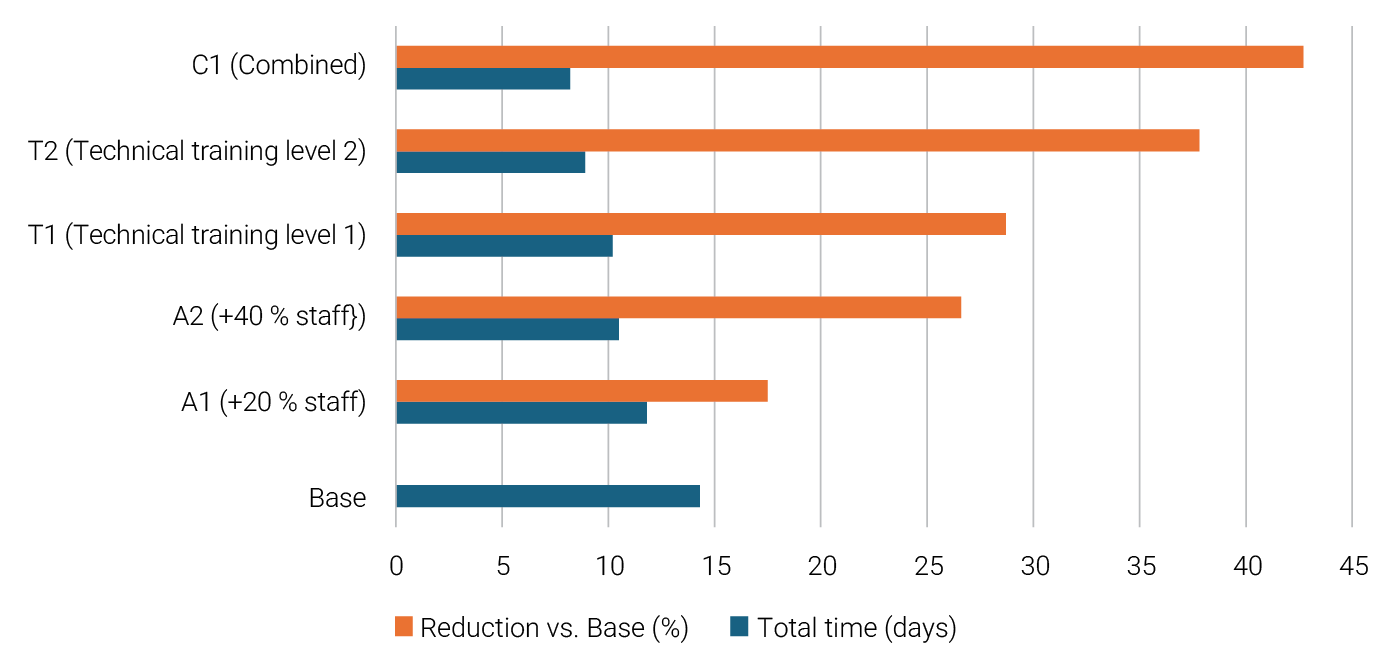
Figure 5
Relationship between technification and post-harvest losses
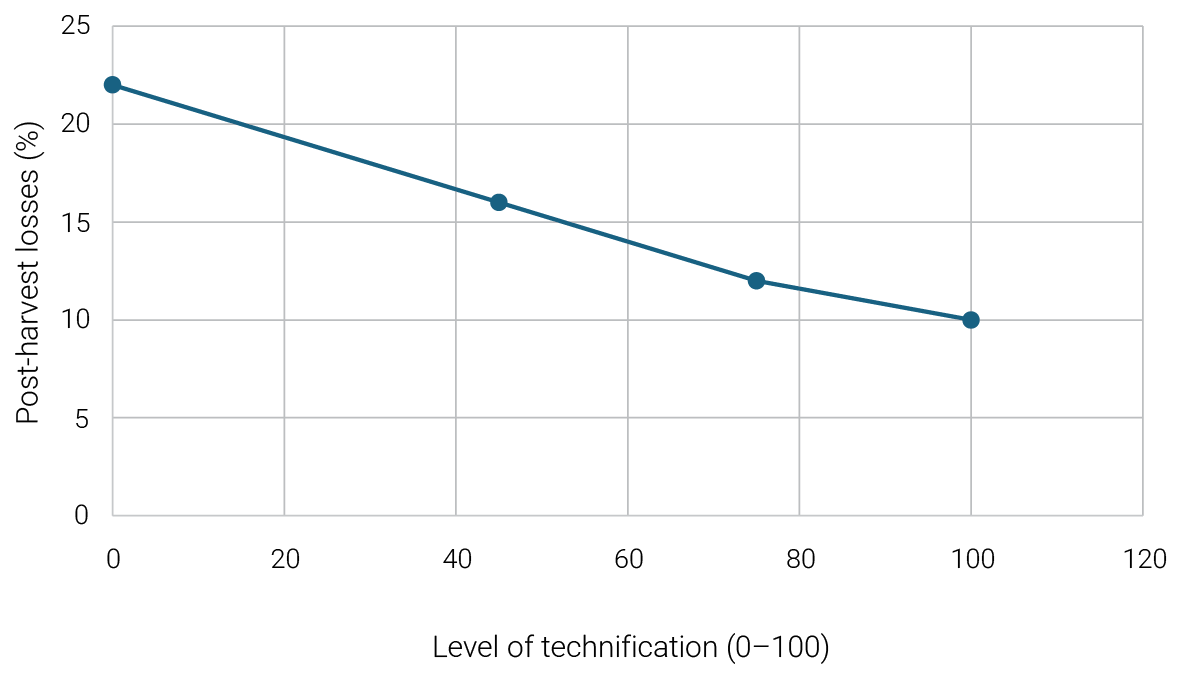
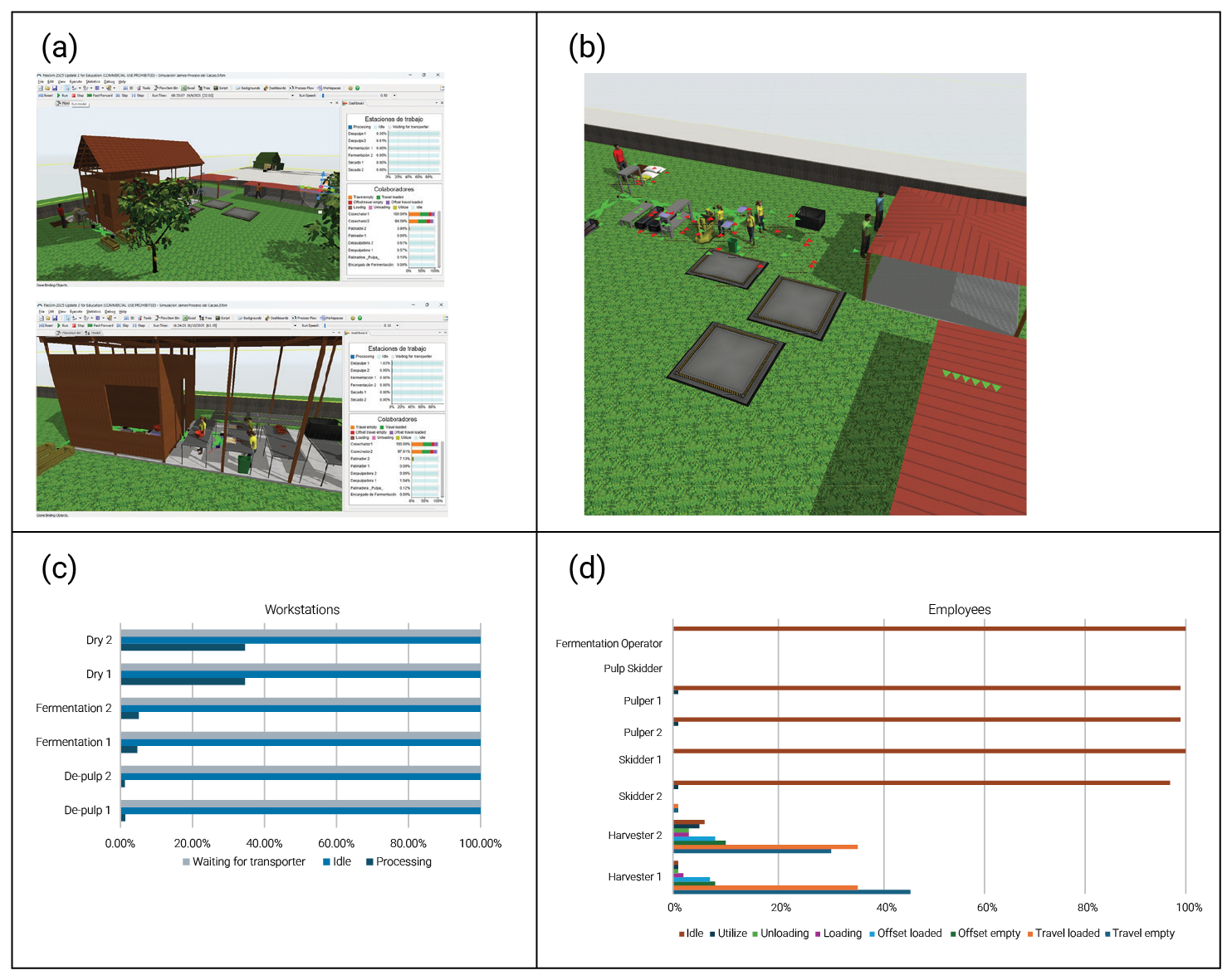
Figure 6 illustrates the operational behavior of the system across various levels of technification. The collection of graphs A–D presents a comprehensive overview of the progressive reductions in processing times, stabilization of flows, and decreases in post-harvest losses resulting from the incorporation of drying and humidity control technologies.
Figure 6
Summary of results by level of technification
Interpretation of Results
The results indicate that both increased staffing and technical advancements lead to significant improvements in system efficiency, albeit with distinct operational implications:
- Increased staffing enhances flexibility and decreases fermentation and internal transfer times, while still maintaining a considerable reliance on manual labor.
- Conversely, technological advancements have a structural impact on performance by augmenting operational capacity and minimizing process variability.
- The combined scenario (C1) achieves the optimal balance between efficiency, flow stability, and loss reduction, illustrating that the synergy between these two factors yields the best overall system performance.
From the perspective of operations engineering, these results facilitate the development of progressive improvement strategies specifically tailored to the rural context. This process begins with the organization of cooperative work and subsequently incorporates low-cost technologies such as solar dryers and humidity sensors.
The comparative analysis reveals a distinct performance hierarchy among the evaluated scenarios. While incremental increases in labor (A1, A2) yielded only moderate reductions in total processing time, technification strategies (T1, T2) resulted in markedly larger improvements. The combined configuration (C1) achieved the most significant reduction in total system time, demonstrating up to 43 % improvement compared to the baseline scenario. These findings affirm that structural technological upgrades, particularly when synergistically integrated with workforce adjustments, yield substantially greater operational gains than labor scaling strategies implemented in isolation under identical external conditions.
Beyond the gains in operational efficiency, the observed reductions in total processing time carry significant sustainability implications. Shorter drying and storage cycles mitigate the risks of product deterioration and post-harvest losses, thereby improving material efficiency. The adoption of solar drying systems reduces dependence on fossil-fuel-based or inefficient traditional drying methods, thereby minimizing environmental impact. Furthermore, improved coordination and decreased idle times optimize resource utilization, aligning operational performance with the principles of sustainable rural production systems.
Social Impact and Participatory Validation
The application of the Social Appropriation of Knowledge (SAK) process has been pivotal in interpretating and validating the results. Through participatory simulation sessions, producers actively recognized the impact of improvements on their operational flow and came to appreciate the value of simulation as a planning tool.
Additionally, the workshops facilitated the transfer of analytical and technological thinking skills, thereby enhancing the autonomy of local associations in managing their processes. This participatory component ensures that the proposed operational improvements are not only technically viable but also socially appropriate and sustainable.
DISCUSSION
The results derived from the simulation model developed for the cocoa value chain in Puerto Asís (Putumayo) align with contemporary literature that addresses the challenges of sustainability, efficiency, and social participation within cocoa agro-industrial systems. Scholars generally agree that optimizing the value chain necessitates the integration of appropriate technologies, the social organization of producers, and the adoption of analytical tools, such as simulation, to enhance decision-making processes.
Numerous studies indicate that post-harvest management and logistical coordination among actors significantly influence the cocoa value chain. In the case of Colombia, the researchers Apraez Muñoz et al. (2024) and Hernanz et al. (2024) highlight the importance of coordination between producers and community organizations to improve bean quality and reduce the environmental vulnerability of production systems. Likewise, Caviedes Rubio et al. (2024) assert that the sustainability of the cocoa sector depends on the effective balancing of ecological, economic, and social impacts through the promotion of clean and equitable production practices.
Cortés et al. (2025) propose value chain models specifically designed to enhance the production of fine aroma cocoa in Arauca, emphasizing scalability and international competitiveness. In parallel, Da Paixão Alves et al. (2025) introduce the concept of a cocoa bioeconomy in the eastern Amazon, positioning it as a vital mechanism for both environmental conservation and rural development. These findings corroborate the results of the current study, which demonstrates a simultaneous improvement in operational efficiency and socioeconomic sustainability through the strengthening of local capacities and the incremental adoption of technologies.
Discrete event simulation has emerged as an effective tool for analyzing the dynamics of agro-industrial chains and projecting improvement scenarios. Mujica Mota et al. (2019) demonstrated that process-based simulation effectively identifies bottlenecks in cocoa logistics in Côte d’Ivoire. Additionally, Paulo et al. (2022) utilized discrete event modeling in biomass chains to optimize design and planning. In a similar context, Eugenija (2022) and Lorenc (2024) highlighted the potential of FlexSim as a modeling environment for industrial processes, thereby confirming its significance in agri-food systems.
Furthermore, research conducted by Castaneda et al. (2023) and Possik et al. (2023) highlights the importance of simulation as a tool for analyzing barriers to innovation and assessing manufacturing efficiency, thereby establishing a methodological foundation that aligns with the approach adopted in this study. Similarly, Poloczek (2025) and Eremić Dodić et al. (2023) demonstrate that material flow simulation, along with the application of quantitative methods, enables the prediction of the effects of operational decisions. The results from the model in Puerto Asís indicate that strategies aimed at enhancing labor and technification led to a notable 43 % improvement in overall efficiency. This finding corroborates the observations made by Sharma et al. (2025), who report comparable increases achieved through the implementation of smart solar dryers for temperate crops.
The integration of Social Appropriation of Knowledge (SAK) into rural chain management serves as a critical factor for sustaining innovations. Ramos-García et al. (2024) and Romero-Rodríguez et al. (2020) emphasize that participatory processes not only strengthen the legitimacy of scientific knowledge but also facilitate its application within local contexts. Similarly, Lopera Molano (2022) and Rodríguez and Sánchez (2023) identify knowledge appropriation as a vital mechanism for community empowerment in rural areas. This study involved producers in the construction and validation of the model, fostering a collective learning process akin to that described by Pelzer et al. (2020), wherein co-creation promotes the transfer of knowledge and the adaptation of technological tools to meet local needs. The synergy of computational modeling and Agroforestry Systems for Cocoa (establishes a comprehensive methodological approach that effectively links technical rationality with social relevance, aligning with the perspectives of Kondratenko et al. (2024) and Rushchitskaya et al. (2025) on sustainability in agro-industrial complexes.
The transition to sustainable agro-industrial systems necessitates the integration of digital technologies, knowledge management, and organizational innovation. Akimbekova et al. (2025) and Botero Montoya et al. (2024) emphasize that digital transformation within the agro-industrial sector enhances efficiency through sustainability-oriented innovations, while Cao and Tao (2025) propose collaborative governance models designed to reconcile the interests of various stakeholders in agri-food chains. These contributions underscore the necessity for comprehensive strategies, such as those formulated in this study, in which simulation serves as a crucial tool for fostering sustainable and collaborative management.
The findings of this study offer insights that go beyond mere confirmatory evidence in the existing literature. The primary scientific contribution lies in the methodological advancement achieved through the structured integration of discrete-event simulation and participatory validation mechanisms within a rural post-conflict agro-industrial system. While prior research has either employed simulation tools or analyzed sustainability challenges in isolation, this study innovatively combines empirical calibration, statistically controlled scenario comparison, and Social Appropriation of Knowledge (SAK) within a cohesive experimental framework.
From an applied perspective, the study delivers quantified evidence regarding the magnitude of operational gains attainable through technification in smallholder cocoa systems under Amazonian conditions. The observed 43 % reduction in total processing time associated with the combined configuration offers a clear indication of productivity improvements in the cocoa post-harvest process. These findings are consistent with previous research emphasizing that enhancements in post-harvest management, processing infrastructure, and organizational coordination can significantly boost efficiency in smallholder cocoa systems (Apraez Muñoz et al., 2024; Caviedes Rubio et al., 2024; Hernanz et al., 2024). In this context, the results indicate that the concurrent implementation of technification and workforce scaling can yield substantial operational gains in rural cocoa value chains.
At the territorial level, the proposed framework serves as a replicable analytical model for rural development contexts, particularly in National Comprehensive Program for the Substitution of Illicit Crops (PNIS) and post-conflict regions characterized by concurrent infrastructural limitations and labor constraints. By integrating simulation-based evaluation, statistical validation, and participatory co-creation, the study offers a transferable decision-support structure that can be adapted to various decentralized agricultural value chains.
However, the external applicability of the model hinges on context-specific parametrization. Variables such as patterns of harvest seasonality, labor availability and skill levels, conditions of transportation infrastructure, storage capacity, and the technological maturity of post-harvest operations significantly influence system throughput, utilization rates, and the potential for loss reduction. Consequently, replicating the model in other cocoa-producing regions requires local data calibration to maintain the model’s validity and ensure that projected productivity gains accurately reflect structural conditions rather than contextual asymmetries.
CONCLUSION
The simulation results clearly identified the operational dynamics that define the performance of the cocoa value chain in Puerto Asís. Scenario analysis revealed that the bottlenecks affecting system efficiency do not originate from a single source; instead they stem rather from the simultaneous interaction between labor limitations and technological constraints during the fermentation and drying stages. This observation accounts for the moderate improvements associated with partial interventions, while highlighting that integrated actions yield substantial changes in overall performance indicators.
The comparative evaluation indicated that the technification of the drying process is the most sensitive component of the system, primarily due to its direct influence on reducing postharvest losses and its role in stabilizing operational flow. The introduction of controlled-temperature equipment with greater capacity diminished variability between batches and shortened total processing times. Similarly, adjustments in workforce availability alleviated constraints related to manual handling, leading to reduced waiting times and minimized accumulated delays. The convergence of these measures in the combined scenario resulted in an approximate 43 % reduction in total cycle duration, thus confirming the synergistic nature of the interventions.
In addition to the quantitative outcomes, the process of social appropriation of knowledge contributed essential elements for validating the model and interpreting the findings within their territorial context. The active participation of producers enabled the contrasting of operational assumptions, refinement of parameters, and ensured that the proposed improvements were aligned with real conditions of the Amazonian rural environment. This collaborative approach enhanced the relevance of the simulations and facilitated an understanding of their practical implications.
Overall, this study demonstrates that discrete-event simulation serves as a robust tool for analyzing agro-industrial systems characterized by high operational variability. It supports decision-making in contexts where resources are limited and evidence-based planning is imperative. The findings confirm that the combination of technification and workforce scaling constitutes a viable strategy for improving post-harvest productivity in the cocoa value chain, yielding positive effects on logistical efficiency, product quality, and the competitiveness of producers in the region.
CONFLICTS OF INTEREST
The authors declare no conflicts of interest.
AUTHOR CONTRIBUTION
James Mauricio Enríquez Rodríguez: conceptualization, formal analysis, funding acquisition, investigation, methodology, project administration, resources, supervision, validation, visualization and writing original draft. Mónica Lizeth Sánchez Arévalo: data curation, formal analysis, funding acquisition, investigation, methodology, resources, supervision, validation, visualization, writing original draft, writing–review and editing.
STATEMENT ON THE USE OF GENERATIVE AI
The authors used generative AI tools solely to improve the writing, grammar, and clarity of the manuscript. The interpretation of the results, analysis, and conclusions correspond exclusively to the authors.
REFERENCES
Akimbekova, G., Espolov, T., Baimukhanov, A., Tazhibayeva, R., & Kontselidze, N. (2025). Digital transformation in agro-industrial complex: Technological innovations for sustainable development. In J. Machado, J. Trojanowska, F. Soares, P. Rea, S. Butdee & B. Gramescu (Eds.), Innovations in Mechatronics Engineering IV [Lecture Notes in Mechanical Engineering]. Springer. https://doi.org/10.1007/978-3-031-94223-5_36
Apraez Muñoz, J. J., Burgos Jimenez, G., & Burbano Ijaji, E. J. (2024). Caracterización morfoagronómica in situ de cacao nativo (Theobroma cacao L.) en Puerto Asís, Putumayo, Colombia. Revista de Investigación Agraria y Ambiental, 16(1), 81-102. https://doi.org/10.22490/21456453.7569
Awafo, E. A., & Owusu, P. A. (2022). Energy and water mapping of the cocoa value chain in Ghana. Sustainable Production and Consumption, 29, 341-356. https://doi.org/10.1016/j.spc.2021.10.027
Botero Montoya, L. H., Gutiérrez, N., Zuluaga, A., Gutiérrez, L. F., Gómez, J. O., Orozco, G. L., & Zartha, J. W. (2024). Proposal for sustainability-oriented innovation management model (MGI) for agro-industrial leather chain. Sustainability, 16(20), Article 8981. https://doi.org/10.3390/su16208981
Cao, W., & Tao, X. (2025). A study on the evolutionary game of the four-party agricultural product supply chain based on collaborative governance and sustainability. Sustainability, 17(4), Article 1762. https://doi.org/10.3390/su17041762
Castaneda, M., Herrera, M. M., & Méndez-Morales, A. (2023). A simulation-based approach for assessing innovation barriers in manufacturing firms. Technology in Society, 75, Article 102391. https://doi.org/10.1016/j.techsoc.2023.102391
Caviedes Rubio, D. I., Parra García, F. E., & Andrade Vargas, K. C. (2024). Ecological, economic and social impacts of the Colombian cocoa sector. La Granja: Revista de Ciencias de la Vida, 40(2), 50-64. https://doi.org/10.17163/lgr.n40.2024.03.
Cleland, J., MacLeod, A., & Ellaway, R. H. (2023). CARDA: Guiding document analyses in health professions education research. Medical Education, 57(5), 406-417. https://doi.org/10.1111/medu.14964
Cortés, M. F., Parra, K., Rodríguez, D., Ardila, C., Escobar, S., Van Hoof, B., Mura, I., Rodríguez, J., & Medaglia, A. L. (2025). A value chain modeling approach for upscaling the production of fine flavor cocoa in Arauca (Colombia). International Transactions in Operational Research, 32(4), 2215-2247. https://doi.org/10.1111/itor.13563
Da Paixão Alves, V., Martin, D. G., Giannini, T. C., Junior, R. S., Guimarães, J. T. F., Moia, G. C. M., & Paes da Silva, R. N. (2025). The cocoa bioeconomy in the eastern Amazon: An integrated analysis of production, environmental degradation perceptions and socioeconomic factors among farmers. Agricultural Systems, 229, Article 104428. https://doi.org/10.1016/j.agsy.2025.104428
Enriquez, J. M. (2019). Análisis de los procesos de gestión de la innovación en organizaciones agropecuarias de I+D+i del Putumayo [Master’s thesis, Universidad Nacional de Colombia]. Repositorio de la Universidad Nacional de Colombia. https://repositorio.unal.edu.co/handle/unal/77072
Eremić Dodić, J., Stojković, S., & Sedlak, O. (2023). Analysis of economic indicators and application of quantitative methods in planning of seeding. Ratarstvo i Povrtarstvo, 60(3), 73-79. https://doi.org/10.5937/ratpov60-48285
Eugenija, S. (2022). Simulation and analysis of clothing production with FlexSim software. In S. Msahli & F. Debbabi (Eds.), Advances in Applied Research on Textile and Materials - IX. Proceedings of the 9th International Conference of Applies Research on Textile and Materials (CIRATM 2020). Springer. https://doi.org/10.1007/978-3-031-08842-1_63
Hayat, U., Li, W., Bie, H., Liu, S., Guo, D., & Cao, K. (2024). An overview of post-harvest technological advances and ripening techniques for increasing peach fruit quality and shelf life. Horticulturae, 10(1), Article 4. https://doi.org/10.3390/horticulturae10010004
Helmold, M. (2020). Lean Management and Kaizen. Springer. https://doi.org/10.1007/978-3-030-46981-8_10
Hering, S., Schäuble, N., Buck, T. M., Loretz, B., Rillmann, T., Stieneker, F., & Lehr, C.-M. (2021). Analysis and optimization of two film-coated tablet production processes by computer simulation: A case study. Processes, 9(1), Article 67. https://doi.org/10.3390/pr9010067
Hernanz, V., Quiroga, S., Suárez, C., & Aguiño, J. E. (2024). Exploring the role of community organisations as environmental vulnerability insurance for cacao smallholders in Colombia. Journal of Cleaner Production, 485, Article 144371. https://doi.org/10.1016/j.jclepro.2024.144371
Huo, J., Shi, Z., Zhu, W., Xue, H., & Chen, X. (2022). A multi-scenario simulation and optimization of land use with a Markov–FLUS coupling model: A case study in Xiong’an New Area, China. Sustainability, 14(4), Article 2425. https://doi.org/10.3390/su14042425
Kharraz, N., & Szabó, I. (2025). Hybrid plant growth: Integrating stochastic, empirical, and optimization models with machine learning for controlled environment agriculture. Agronomy, 15(1), Article 189. https://doi.org/10.3390/agronomy15010189
Khuwaileh, B. A., & Ababneh, A. Q. (2020). Probabilistic error upper bounds for verification and validation practices for nuclear reactor modelling and simulation. International Journal of Nuclear Energy Science and Technology, 14(1), 82-95. https://doi.org/10.1504/IJNEST.2020.108807
Kienzlen, A., & Verl, A. (2024). Methods for localization in multi-scale material flow simulation for virtual commissioning. In 2024 4th International Conference on Electrical, Computer, Communications and Mechatronics Engineering (ICECCME). IEEE. https://doi.org/10.1109/ICECCME62383.2024.10797016
Kondratenko, I., Gudoshnikova, Y., Kotova, O. & Agapitova, L. (2024) Sustainable practices in the agro-industrial complex: A pathway to enhanced ecological stewardship. E3S Web Conf., 541, Article 03001. https://doi.org/10.1051/e3sconf/202454103001.
Kristiana, S. P. D., Asih, A. M. S., & Sudiarso, A. (2023). Designing simulation to improve production efficiency of batik industry. Simulation & Gaming, 54(6), 730-759. https://doi.org/10.1177/10468781231205667
Liu, Z. (2025). Rural land sustainability development planning and use by considering land multifunction values: A case study of analysis and simulation. Land Use Policy, 150, Article 107455. https://doi.org/10.1016/j.landusepol.2024.107455
Lorenc, A. (2024). Cross-docking layout optimization in FlexSim software based on cold chain 4PL company. Sustainability, 16(22), Article 9620. https://doi.org/10.3390/su16229620
Lopera Molano, A. M. (2022). Social appropriation of ICT and agricultural associations in the rural sector: A systematic literature review 2010–2020. Texto Livre, 15, e37365. https://doi.org/10.35699/1983-3652.2022.37365
Malik, A., Lamusa, A., Effendy, Rumangkang, O. E. C., & Muhardi. (2025). Important factors affecting production and marketing in a cocoa supply chain. Australian Journal of Crop Science, 19(2), 180-185. https://doi.org/10.21475/ajcs.25.19.02.p259
Mujica Mota, M., El Makhloufi, A., & Scala, P. (2019). On the logistics of cocoa supply chain in Côte d’Ivoire: Simulation-based analysis. Computers & Industrial Engineering, 137, Article 106034. https://doi.org/10.1016/j.cie.2019.106034
Paulo, H., Vieira, M., Gonçalves, B. S., Pinto-Varela, T., & Barbosa-Póvoa, A. P. (2022). Assessment of biomass supply chain design and planning using discrete-event simulation modeling. Computer Aided Chemical Engineering, 51(32), 967-972. https://doi.org/10.1016/B978-0-323-95879-0.50162-4
Pelzer, E., Bonifazi, M., Soulié, M., Guichard, L., Quinio, M., Ballot, R., & Jeuffroy, M.-H. (2020). Participatory design of agronomic scenarios for the reintroduction of legumes into a French territory. Agricultural Systems, 184, Article 102893. https://doi.org/10.1016/j.agsy.2020.102893
Pérez, J. A. C., Revilla, J. A. D., De León, G. J. L., Galang, J. A. D. J., Ani, A. C., Pasión, V.-R. B. A., Miranda, C. B., Robielos, R. A. C., & Delfin, M. A. C. (2026). Dynamic simulation tool for the analysis of the effects of man–machine ratio on productivity of test manufacturing of a semiconductor company. In H. Florez, L. Rabelo & C. Diaz (Eds.), Industrial Engineering and Operations Management (pp. 133-144). Springer. https://doi.org/10.1007/978-3-031-98235-4_10
Poloczek, R. (2025). Analysis of material flow and resource utilization in production systems with the use of turntables. Production Engineering Archives, 31(1), 137-144. https://doi.org/10.30657/pea.2025.31.13
Possik, J., Zacharewicz, G., Zouggar, A., & Vallespir, B. (2023). HLA-based time management and synchronization framework for lean manufacturing tools evaluation. Simulation, 99(4), 347-362. https://doi.org/10.1177/00375497221132577
Quintero Garcia, J. C., Castro Camacho, J. K., Rodríguez Polanco, L., & Criollo Nuñez, J. (2025). Development and validation of an inspection and compliance tool for sanitary requirements applied to cacao processing centers in the department of Huila. Vitae, 32(2), Article 358408. https://doi.org/10.17533/udea.vitae.v32n2a358408
Ramos-García, C., Roa, A. A. R., Gutiérrez, M. R., Morales, S. F., & Tamayo, A. M. R. (2024). Social appropriation of knowledge for disaster risk management: Lessons learned from an experience with communities in Cundinamarca, Colombia. Revista de Estudios Latinoamericanos sobre Reducción del Riesgo de Desastres, 8(1), 234-253. https://doi.org/10.55467/reder.v8i1.153
Rodríguez, L. P. M., & Sánchez, P. A. S. (2023) Social appropriation of knowledge applying the knowledge management methodology. Case study: San Miguel de Sema, Boyacá. AG Managment, 1-13.
Romero-Rodríguez, J. M., Ramírez-Montoya, M. S., Aznar-Díaz, I., & Hinojo-Lucena, F. J. (2020). Social appropriation of knowledge as a key factor for local development and open innovation: A systematic review. Journal of Open Innovation: Technology, Market, and Complexity, 6(2), Article 44. https://doi.org/10.3390/joitmc6020044
Rushchitskaya, O., Kulikova, E., Kruzhkova, T., Kot, E., & Ruchkin, A. (2025). Innovative approaches to enhancing sustainability in agro-industrial complexes through renewable energy integration and precision agriculture technologies. E3S Web of Conferences, 614, Article 03001. https://doi.org/10.1051/e3sconf/202561403001
Sánchez Garavito, S. A. (2021). Campesinado y multiculturalidad en Colombia: El caso del municipio de Leguízamo en el departamento del Putumayo [Bachelor’s thesis, Universidad Estatal Paulista "Julio de Mesquita Filho"]. UNESP Institutional Repository. https://repositorio.unesp.br/server/api/core/bitstreams/0d62c89d-234d-4724-8c9b-e3d319791df3/content
Savitri, Rangra, S., Monika, & Bhalla, T. C. (2021). Enzymes and Microbes in Agro-Processing. In D. K. Srivastava, A. K. Thakur, & P. K. Kumar (Eds.), Agricultural Biotechnology: Latest Research and Trends. Springer. https://doi.org/10.1007/978-981-16-2339-4_29
Sergeyeva, N. V. (2020). The Cost Planning and Cash Limits for Repair and Maintenance Work in the AIC. In A. Bogoviz (Eds.), Complex Systems: Innovation and Sustainability in the Digital Age (pp. 585-594). Springer. https://doi.org/10.1007/978-3-030-44703-8_64
Sharma, B. B., Vaidya, P., Kumar, N, Tiwari, A, Bansal, S., Faruque M. R. I, & Al-Mugren K. S. (2025). Enhancing post-harvest sustainability in temperate crops through smart IoT-integrated indirect solar dryer. Scientific Reports, 15, Article 28608. https://doi.org/10.1038/s41598-025-13499-x
Smirnova, E. A., & Postnova, M. V. (2020). Increasing labor productivity as the major line of agricultural industry development. International scientific-practical conference: Agriculture and food security: Technology, innovation, markets, human resources, (FIES 2019). BIO Web of Conferences, 17, Article 00207. https://doi.org/10.1051/bioconf/20201700207
Smith, N. T., Muller Spiti, J., Padley, J., & Davies, E (2024). Mapping simulation-based activities for health professionals in rural and remote contexts in high-income countries: a scoping review protocol. JBI Evidence Synthesis, 22(8). https://journals.lww.com/jbisrir/fulltext/2024/08000/mapping_simulation_based_activities_for_health.11.aspx
Sreekar, C. H., Hari Krishna, K., & Vamsi Krishna, P. (2020). Decision-Making System for Accepting/Rejecting an Order in MTO Environment. In M. Shunmugam & M. Kanthababu (Eds.), Advances in Simulation, Product Design and Development. Lecture Notes on Multidisciplinary Industrial Engineering (pp. 437-450). Springer. https://doi.org/10.1007/978-981-32-9487-5_35
Turner, A. M. M., Grobbelaar, S. S., Salie, F., & Nieuwoudt, M. (2025). From idea to market in the local medical device value chain: A conceptual framework. IEEE Engineering Management Review, 53(2), 63-84. https://doi.org/10.1109/EMR.2024.3409943
Wang, N., Liu, F., & Zhang, L. (2025). Mechanism and simulation analysis of cross-regional vegetable production and marketing docking in big cities based on evolutionary game. Frontiers in Sustainable Food Systems, 9, Article 1560865. https://doi.org/10.3389/fsufs.2025.1560865
Wang, X., Liu, Y., He, Y., Li, N., Mu, H., & Bai, Y. (2020). Achieving manufacturing excellence through the integration of process planning change and data-driven simulation. Journal of Physics: Conference Series, 1693(1), Article 012045. https://doi.org/10.1088/1742-6596/1693/1/012045
Wolff, A., & Knutas, A. (2023). Tangible data exploration: Creating card games for sensemaking. In Proceedings of the 46th ICT and electronics convention (MIPRO 2023) (pp. 50-55). IEEE. https://doi.org/10.23919/MIPRO57284.2023.10159800
Yani, M., Machfud, Asrol, M., Hambali, E., Papilo, P., Mursidah, S., & Marimin, M. (2022). An adaptive fuzzy multi-criteria model for sustainability assessment of sugarcane agroindustry supply chain. IEEE Access, 10, 5497-5517. https://doi.org/10.1109/ACCESS.2022.3140519
Yu, Z., Zeng, Z., Zhuang, B., & He, F. (2025). Research on optimal planting scheme based on linear programming model. In Proceedings of the 2025 international conference on machine learning and neural networks (MLNN 2025) (pp. 276-284). ACM. https://doi.org/10.1145/3747227.3747271
Zhdanov, V., Logacheva, E., Yarosh, V., & Ivashina, A. (2021). Optimisation of repair and maintenance costs for electrical equipment in agricultural enterprises. BIO Web of Conferences, 37, Article 00103. https://doi.org/10.1051/bioconf/20213700103
Zhu, G., Zhou, X., Yi, X., Xie, Q., Lou, Z., Shen, J., Wang, X., & Zhao, Y. (2021). Construction and evaluation of the typical technology pattern of farmer cooperatives for grain harvest-storage in China[J]. Transactions of the Chinese Society of Agricultural Engineering (Transactions of the CSAE), 37(10), 235-244. https://www.aeeisp.com/nygcxb/en/article/doi/10.11975/j.issn.1002-6819.2021.10.028?viewType=citedby-info