EXPERIMENTAL ANALYSIS OF INDUSTRIAL
PACKAGING FOR CHICHA DE JORA
IN LAMINATED CARDBOARD
Marco Antonio Guardamino Castro
https://orcid.org/0000-0003-3846-1884
Facultad de Ingeniería, Universidad de Lima, Perú
Marcos Luis Humberto Sánchez Ferrer Marengo
https://orcid.org/0000-0003-3956-4391
Facultad de Ingeniería, Universidad de Lima, Perú
Marcos Fernando Ruiz-Ruiz*
https://orcid.org/0000-0001-5147-8512
Facultad de Ingeniería, Universidad de Lima, Perú
Received: January 21, 2026 / Acepted: March 12, 2026
Published: June 15, 2026
doi: https://doi.org/10.26439/ing.ind2026.n50.7818
ABSTRACT. Chicha de jora, a traditional beverage made from fermented corn, is widely consumed in the Andean regions of South America. This study aims to experimentally demonstrate the technological feasibility of using laminated cartons for the industrial packaging of chicha de jora, in accordance with the Peruvian Technical Standard NTP 210.026:2007. Additionally, it analyzes variations in the beverage’s physicochemical characteristics. We conducted the study using an experimental, longitudinal, pretest-posttest design with a control group over a 12-week observation period. Key parameters evaluated in the study were pH, total acidity, total sugars content, and alcohol content. The results for the experimental group indicated a pH of 2,51 ± 0,03, total acidity of 32,56 ± 1,21 g/L, total sugars of 8,29 ± 0,56 °Brix, and alcohol content of 8,00 ± 0,71% vol. These values indicate that the primary physicochemical parameters remained stable over time, suggesting that the laminated cardboard packaging had no significant impact on its physicochemical characteristics.
KEYWORDS: chicha de jora / industrial packaging / laminated cardboard / experimental analysis / physicochemical properties
ANÁLISIS EXPERIMENTAL DEL ENVASADO INDUSTRIAL
DE CHICHA DE JORA EN CARTÓN LAMINADO
RESUMEN. La chicha de jora, bebida elaborada a partir de maíz fermentado, es un brebaje tradicional muy consumido en las regiones andinas de Sudamérica. El objetivo de este estudio fue demostrar experimentalmente la viabilidad tecnológica del envasado industrial de la bebida en cartón laminado, utilizando como referencia la Norma Técnica Peruana (NTP) 210.026:2007, mediante el análisis de la variación de sus características fisicoquímicas. El estudio se llevó a cabo con un diseño experimental, longitudinal, pretest-postest, con un grupo de control, durante un periodo de observación de doce semanas. Se evaluaron parámetros como el pH, la acidez total, el contenido total de azúcar y el contenido de alcohol. Los resultados obtenidos de la evaluación de los parámetros fisicoquímicos para el grupo experimental fueron pH 2,51 ± 0,03, acidez total 32,56 ± 1,21 g/L, azúcar total 8,29 ± 0,56 °Brix y contenido de alcohol 8,00 ± 0,71 % vol. Estos valores muestran que los principales parámetros se mantienen estables a lo largo del tiempo, sin que el cartón laminado tenga un impacto significativo en las características fisicoquímicas de la chicha de jora.
PALABRAS CLAVE: chicha de jora / envasado industrial / cartón laminado / análisis experimental / propiedades fisicoquímicas
No entity has funded this study.
* Author correspondance.
Email addresses in order of appearance: [email protected]; [email protected];
[email protected]
This article is open access, distributed under the terms of the Creative Commons Attribution 4.0 International (CC BY 4.0) license.
INTRODUCTION
Chicha de jora is an alcoholic, fermented beverage with deep historical roots in Peru. Its production and consumption can be traced back to pre-Hispanic times, during which it served important ritual, social, and nutritional functions within Andean communities (Vargas-Yana et al., 2020). This beverage is produced from malted corn, known as “maíz de jora”, which is cooked and then fermented naturally, resulting in a light brown drink with a distinct aroma and slightly acidic taste. The alcohol content is relatively low, ranging from 1 % to 3 %, comparable to that of some craft beers (Bassi et al., 2020). The primary organoleptic characteristics of chicha de jora are outlined in the following table (see Table 1).
Table 1
Organoleptic characteristics of chicha de jora
|
Organoleptic |
Definition |
Indicator |
|
Color |
The color varies based on the raw materials used |
Light brown |
|
Aroma |
As substances evaporate during the fermentation process, |
“Sui generis” |
|
Flavor |
The flavor profile evolves throughout the fermentation |
Bittersweet |
|
Degree of |
The property associated with the luminous aspect of color. |
Turbid |
|
Sedimentation |
The property associated with the turbidity that results |
Present |
Note. Adapted from “Elaboración tradicional de chicha de jora”, by E. de Florio Ramírez, 2019, Ciencia & Desarrollo, 1, pp. 92-96 (https://doi.org/10.33326/26176033.1995.1.26).
Despite its historical significance and cultural value, chicha de jora remains predominantly produced through artisanal methods, as illustrated in Figure 1. This persistence can be attributed to the empirical transmission of ancestral knowledge, which has successfully maintained the beverage’s authenticity while concurrently limiting its technological advancement and access to larger markets. According to De Florio Ramírez (2019) and Aguirre Logrono (2009), traditional production involves several fundamental stages, including preparation of raw materials, wort cooking, filtration, and spontaneous fermentation. However, the absence of technical standardization in these processes results in variations in chemical composition, sensory characteristics, and the stability of the final product, ultimately impacting both yield and quality.
Figure 1
Process diagram for the production of chicha de jora

Note. Adapted from “Elaboración tradicional de chicha de jora”, by E. de Florio Ramírez, 2019, Ciencia & Desarrollo, 1, pp. 92-96 (https://doi.org/10.33326/26176033.1995.1.26).
This situation underscores the necessity of proposing technological alternatives that optimize chicha de jora production while preserving its traditional qualities. The lack of specific technical standards and the inadequate implementation of quality control standards hinder the industrialization and large-scale commercialization of this beverage (Camacho, 2019). Unlike other fermented beverages, such as beer and wine, chicha de jora is devoid of regulations that establish uniform parameters for fermentation, packaging, storage, and labeling. This technological deficiency not only undermines its competitiveness but also jeopardizes the preservation of a product with profound historical and cultural significance.
Several studies indicate that modernizing the production of chicha de jora requires the adoption of standardized processes that ensure both quality and stability. Ara Rojas et al. (2018) conducted research focused on standardizing fermentation processes by evaluating physicochemical parameters and comparing them with traditional methods. Their findings demonstrate that the implementation of controlled techniques facilitates the production of a beverage with more homogeneous and reproducible characteristics, while preserving its distinctive sensory properties. These advancements establish a foundation for the future industrialization of the beverage under sustainable technological conditions.
From a cultural perspective, several authors have emphasized the symbolic and social significance of chicha de jora within Andean communities. Chunqui (2019) and Azanza and Chacón (2018) characterize it as the “drink of the gods”, serving as a symbol of identity and collective heritage, with its consumption closely associated with celebration and community reciprocity. However, market presence has considerably declined in recent decades, as chicha de jora has been supplanted by industrialized beverages that benefit from enhanced promotion and distribution. Researchers attribute this decrease in consumption not only to insufficient dissemination and standardization but also to challenges related to packaging, preservation, and shelf life.
In this context, the integration of new packaging technologies serves as a crucial strategy to revitalize the presence of chicha de jora in both national and international markets. Traditionally, producers have used glass bottles to package this beverage. While glass ensures effective preservation of the product, it also has several significant disadvantages, including the fragility of glass and the significant weight of glass packaging, which elevates transportation costs. There are also considerable environmental impacts associated with the production and recycling of glass (Thompson-Witrick et al., 2021). In contrast, laminated carton packaging has emerged as a widely utilized alternative for packaging beverages, owing to its mechanical strength and durability. The incorporation of laminated polymers and aluminum layers considerably enhances barrier properties against external factors such as light, oxygen, and humidity, which are critical for preserving liquid beverages (Olsmats et al., 2015).
Laminated cardboard containers for beverages
Laminated cartons, which are composed of layers of paper, polyethylene, and, in some instances, aluminum (as illustrated in Figure 2), demonstrate mechanical strength as well as outstanding barrier properties. These features help preserve the product’s physicochemical and organoleptic qualities (Bolzon et al., 2015). Moreover, the low weight and compact design of laminated cartons improve transportation and storage efficiency, thereby contributing to reduced energy consumption and greenhouse gas emissions (Brock & Williams, 2020). Research conducted by Turrado et al. (2012) and Kirwan (2005) underscores the versatility of laminated cartons for both aseptic beverages, which do not require refrigeration, and non-aseptic beverages, which do require refrigeration. This versatility consequently expands the potential applications for laminated cartons in the food industry (see Figure 2).
Figure 2
Composition of laminated cardboard packaging
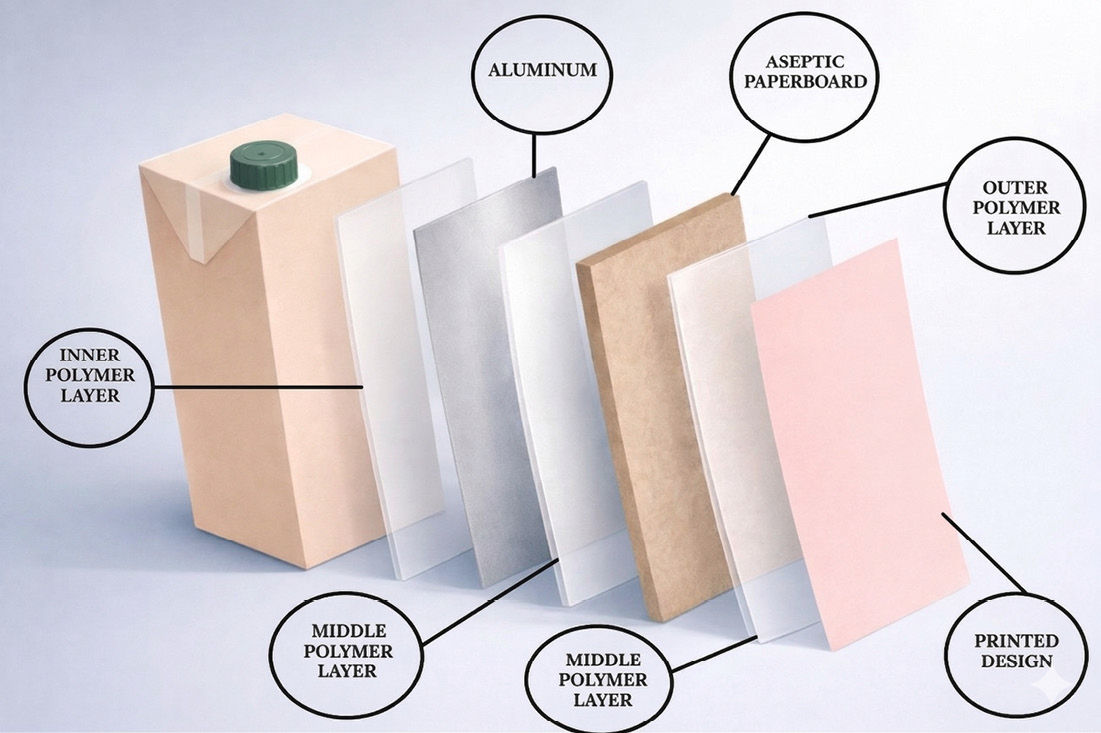
Note. Developed with artificial intelligence by the authors.
Laminated cartons significantly contribute to sustainability and circular economic trends. Ciravegna (2020) argues that our production and consumption systems must transition toward more environmentally responsible models to address the challenges posed by climate change and waste management. In this context, Ferrara and De Feo (2020) demonstrate that laminated carton packaging and bag-in-box systems exhibit lower environmental impacts than plastics and glass packaging, owing to their composition, logistical efficiency, and recycling potential. These findings underscore the importance of investigating the application of laminated carton packaging in traditional products, such as chicha de jora.
The incorporation of laminated carton packaging in the beverage industry not only represents a technical advancement but also offers an opportunity to blend tradition with innovation. By implementing a modern, sustainable packaging solution for this ancestral product, producers can extend its shelf life, streamline distribution, and enhance its appeal in both domestic and international markets. Furthermore, the transition supports compliance with existing environmental and health regulations in the country, notably Supreme Decree No. 007-98-SA (Ministerio de Salud del Perú, 1998), which governs the safety and handling conditions of food products, as well as the guidelines established by the Dirección General de Salud Ambiental (DIGESA) and the Ministerio de Salud del Perú (MINSA) (Dirección General de Salud Ambiental & Ministerio de Salud del Perú, 2008), which aim to ensure the safety and quality of food.
From a scientific perspective, evaluating the technological feasibility of packaging chicha de jora in laminated cartons requires an analysis of their behavior concerning various physicochemical variables. Relevant parameters--including pH, total acidity, sugar content, and alcohol content--serve as essential indicators for assessing the physicochemical quality of the final product in fermented beverages (Fentie et al., 2022). Similarly, these parameters play a critical role in the quality control of non-alcoholic beverages, as they constitute fundamental criteria for evaluating product stability and acceptability during storage (Gernet et al., 2019). These indicators will facilitate the examination of whether the packaging material influences the product’s stability and quality by assessing potential physicochemical variations during storage and comparing these variations with those observed in traditional packaging, such as glass. This analysis will provide a foundation for identifying the impact of packaging on product preservation. The goal of implementing a sustainable and functional packaging solution is not to replace tradition but to enhance it by integrating modern technology that ensures product preservation without compromising its essence. Therefore, this research is driven by a dual purpose: to preserve the cultural heritage of chicha de jora and to promote technological innovation within the Peruvian food sector.
In this context, the present study seeks to determine the technological feasibility of packaging chicha de jora in laminated carton containers by evaluating their influence on the beverage’s physicochemical characteristics. Additionally, the study examines the potential of this packaging type as a sustainable alternative to glass, which enables a more efficient, standardized, and environmentally friendly production process. By addressing these objectives, the research aims to establish a foundation for the future industrialization of chicha de jora, preserving this ancestral product while positioning it within a competitive market that values both quality and sustainability.
METHODOLOGY
This study employed an experimental design with a longitudinal approach, wherein the researchers deliberately manipulated the independent variables and monitored the outcomes over time. A pretest-posttest design, incorporating a control group, was utilized to assess the effects of packaging type on the physicochemical characteristics of chicha de jora over a 12-week observation period.
The research team processed the information using both qualitative and quantitative approaches at descriptive and explanatory levels. The study took place in the Technical Advisory Laboratory in Health Sciences of Dr. Jorge Luis Díaz Ortega in Trujillo, Peru. Two experimental groups were established: one group utilized glass packaging (control group), while the other employed laminated cartons (experimental group), with both groups utilizing 750 mL containers. Both packaging types were monitored for approximately three months post-packaging. At the beginning of the study, twenty-four samples from each group were collected to assess various parameters relevant to the shelf life of the pasteurized fermented beverage (Techakanon & Sirimuangmoon, 2020). The samples were kept in conditions protected from sunlight, and sample size was determined based on the intention to analyze two containers every week during the study period—one from each group. This strategy facilitated weekly monitoring of the subject’s behavior under both packaging conditions, with the first sampling conducted one week after storage (t = 1). All tests were conducted at an average temperature of 28 ± 0,7°C for both groups. Table 2 presents the methodological sequence employed in the research, outlining the stages from instrument preparation to results analysis.
For the data collection stage corresponding to section 2.1 (Stage 2) as described in Table 2, the dependent variables were designated as pH, total acidity, total sugars content, and alcohol content. In the absence of a specific technical standard for chicha de jora, the Peruvian Technical Standard (NTP) 210.026:2007, which outlines the requirements for cider, was utilized as a reference to standardize analytical procedures and ensure the methodological validity of the study (Instituto Nacional de Calidad, 2019). According to Seluy et al. (2018), cider is produced through the alcoholic fermentation of apple juice by natural or added yeasts, followed by a pre-conditioning and sweetening stage using corn syrup or sucrose. Given the similarities between this process and the traditional fermentation of chicha de jora--both relying on the conversion of fermentable sugars into alcohol--NTP 210.026:2007 served as an appropriate technical reference for defining parameters and experimental protocols in the current research.
Table 2
Methodological sequence
|
N° |
Stage |
Substage |
Description |
|
1 |
Preparation |
1.1. Conditioning of laminated |
Cleaning and disinfection of laminated |
|
1.2. Pasteurization of chicha de jora |
Heating chicha de jora for 15 minutes |
||
|
1.3. Packaging and sealing |
Filling by volume and sealing with |
||
|
1.4. Storage and preservation |
Using a closed storage facility at |
||
|
2 |
Data |
2.1. Analysis of dependent variables |
Performing various analyses |
|
2.2. Excel registration |
Entering the results obtained into Excel |
||
|
3 |
Statistical |
3.1. Bar chart |
Preparing graphs showing the results |
Measurement of physicochemical characteristics
-pH
The pH was determined using the potentiometric method. Specifically 10,0 g of chicha de jora (or its equivalent of 10,0 mL) was placed in a beaker, followed by the addition of 100,0 mL of distilled water. The mixture was gently stirred to homogenize the sample while preserving its physicochemical properties. Prior to the measurement, we calibrated the potentiometer with standard buffer solutions to ensure accuracy. The electrodes were then immersed in the prepared sample, and we recorded the pH value once the reading stabilized. We conducted measurements using an Oakton® 700 Benchtop pH Meter (China), under controlled laboratory conditions, maintaining an average temperature of 28 ± 0,7°C. This procedure involved multiple independent determinations (n ≥ 3), with a minimum of three repetitions per sample, to ensure the precision, accuracy, and reproducibility of the results.
-Total Acidity
Total acidity was determined through acid-base titration. A 25,0 mL aliquot of chicha de jora was placed in a 100 mL Erlenmeyer flask and heated for approximately 30 seconds to facilitate the release of volatile gases; the sample was then allowed to cool to an average temperature of 28 ± 0,7°C. For the titration, the indicator solution was prepared by adding 1,0 mL of 1 % phenolphthalein to 200,0 mL of distilled water that had been previously boiled, then transferring the solution to a beaker. Subsequently, 5,0 mL of the sample was combined with the indicator solution and titrated with sodium hydroxide (NaOH) until a persistent pale pink color appeared, indicating the endpoint of the reaction.
Total acidity was calculated and expressed as grams of acetic acid per liter (g/L) of sample, in accordance with the criteria established in the NTP 210.026:2007 (Instituto Nacional de Calidad, 2019). This procedure was conducted in triplicate to ensure the precision and reproducibility of the results.
-Total Sugars
To determine the sugar content, we used an ATAGO PAL-1 digital handheld refractometer (Japan), calibrated in °Brix (%, w/w sucrose equivalent) and operating within a temperature range of 10°C to 100°C. Before each measurement, we carefully cleaned the device’s optical surface with purified water to prevent any interference with the readings. We then applied approximately three drops of the sample (about 0,3 mL), taken directly from the fermentation tank, ensuring that the temperature remained between 20°C and 25°C, optimal conditions for accurate readings.
We recorded the total sugars content value directly from the instrument’s display, repeating the measurement five consecutive times to ensure data reproducibility. We discarded the two most outlying values and averaged the remaining three measurements. This analysis adhered to the guidelines of the NTP 210.026:2007 (Instituto Nacional de Calidad, 2019).
-Alcohol Content
The alcohol content was measured using a Gay-Lussac alcoholmeter, which features a mercury bulb and a stem graduated from 0 % to 100 % v/v, calibrated at a standard temperature of 20°C. An aliquot of 80,0 mL of chicha de jora was taken and neutralized by adding 3,0 mL of 20 % NaOH until a color change indicated the complete neutralization of the present acids. Subsequently, the researchers conducted distillation on the neutralized sample and collected the distillate in a 100 mL graduated cylinder until a volume of 40,0 mL was reached. Distilled water was then added to achieve a total volume of 80,0 mL.
Once the solution temperature stabilized at 20°C, we carefully inserted the alcoholmeter into the graduated cylinder and recorded the flotation value corresponding to the volumetric percentage of alcohol (% v/v). This procedure was conducted in triplicate to ensure precision and reproducibility of the results.
RESULTS
The findings regarding the determinations of alcohol content, total sugars, pH, and total acidity during the experimental period are presented. Table 3 below provides a detailed account of the values recorded for both study groups throughout the twelve-week analysis period.
Table 3
General table of physicochemical results during the study period
|
Days |
Group |
pH |
Total Acidity (g/L) |
Total Sugars (°Brix) |
Alcohol Content (%v/v) |
|
7 |
Control Experimental |
3,12 ± 0,01 3,12 ± 0,01 |
18,43 ± 0,13 18,22 ± 0,07 |
7,36 ± 0,01 7,93 ± 0,30 |
6,00 ± 0 8,00 ± 0 |
|
14 |
Control Experimental |
3,14 ± 0,01 3,11 ± 0,01 |
21,08 ± 0,08 20,95 ± 0,08 |
8,43 ± 0,04 8,98 ± 0,09 |
8,00 ± 0 8,00 ± 0 |
|
21 |
Control Experimental |
2,52 ± 0,02 2,50 ± 0,01 |
24,83 ± 0,13 25,05 ± 0,08 |
8,40 ± 0,19 8,37 ± 0,02 |
8,00 ± 0 8,00 ± 0 |
|
28 |
Control Experimental |
2,43 ± 0,02 2,44 ± 0,01 |
26,47 ± 0,06 26,30 ± 0,17 |
8,14 ± 0,25 8,84 ± 0,08 |
8,00 ± 0 8,00 ± 0 |
|
35 |
Control Experimental |
2,44 ± 0,01 2,41 ± 0,01 |
24,67 ± 0,06 26,43 ± 0,06 |
8,51 ± 0,04 8,66 ± 0,06 |
9,00 ± 0 9,00 ± 0 |
|
42 |
Control Experimental |
2,36 ± 0,02 2,35 ± 0,01 |
27,30 ± 0,17 28,33 ± 0,06 |
8,77 ± 0,08 8,81 ± 0,11 |
8,00 ± 0 8,00 ± 0 |
|
49 |
Control Experimental |
2,41 ± 0,01 2,36 ± 0,01 |
29,30 ± 0,20 31,37 ± 0,25 |
8,24 ± 0,16 8,40 ± 0,12 |
8,00 ± 0 8,00 ± 0 |
|
56 |
Control Experimental |
2,37 ± 0,01 2,37 ± 0,01 |
32,97 ± 0,12 34,23 ± 0,12 |
8,57 ± 0,09 7,93 ± 0,15 |
9,00 ± 0 8,00 ± 0 |
|
63 |
Control Experimental |
2,38 ± 0,01 2,35 ± 0,01 |
35,87 ± 0,27 35,78 ± 0,15 |
8,46 ± 0,28 8,39 ± 0,16 |
8,00 ± 0 8,00 ± 0 |
|
70 |
Control Experimental |
2,35 ± 0,01 2,35 ± 0,01 |
41,31 ± 0,16 38,56 ± 0,26 |
8,15 ± 0,01 7,61 ± 0,06 |
8,00 ± 0 8,00 ± 0 |
|
77 |
Control Experimental |
2,35 ± 0,01 2,41 ± 0,01 |
47,12 ± 0,27 46,59 ± 0,27 |
8,72 ± 0,25 8,31 ± 0,13 |
8,00 ± 0 8,00 ± 0 |
|
84 |
Control Experimental |
2,36 ± 0,01 2,37 ± 0,01 |
58,90 ± 0,27 58,90 ± 0,27 |
8,52 ± 0,04 7,32 ± 0,13 |
8,00 ± 0 7,00 ± 0 |
Note. pH = potential of hydrogen; °Brix = total soluble solids.
Determination of physicochemical characteristics
-pH
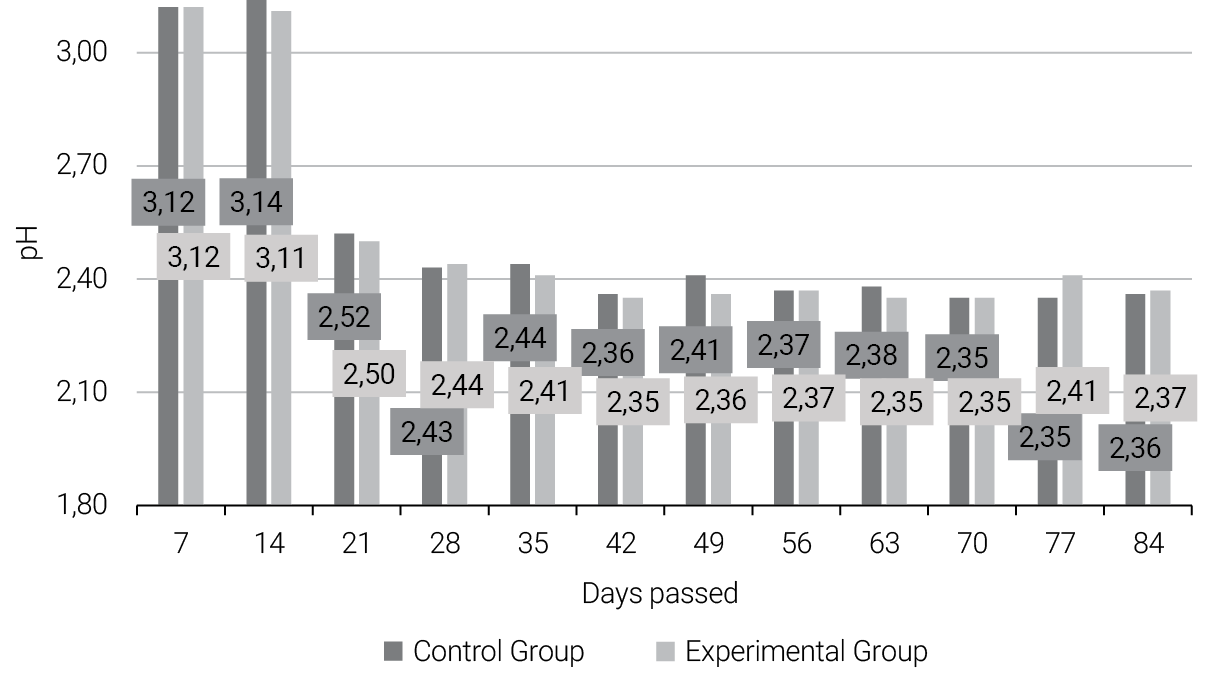
After conducting the necessary tests in both study groups, we determined an average pH of 2,52 ± 0,03 for the control group and 2,51 ± 0,03 for the experimental group, with no statistically significant differences identified (p > 0,05). These values reflect a distinctly acidic sensory profile, characteristic of fermented beverages such as chicha de jora. The slight negative variation noted toward the end of the experimental period likely results from minor fluctuations in fermentative activity. Figure 3 illustrates the evolution and stability of pH in both groups, confirming that packaging type did not significantly affect the pH over the 12-week evaluation period.
Figure 3
pH value during storage
-Total Acidity
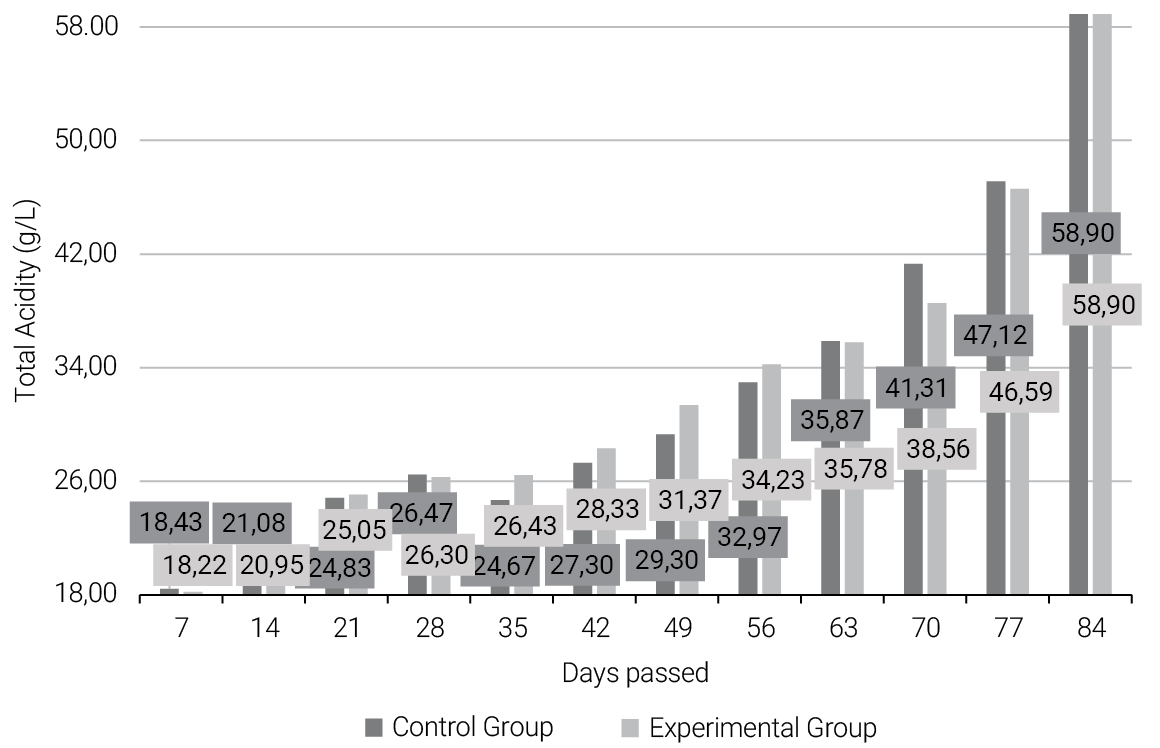
The total acidity values increased progressively over the 12-week analysis period. The control group demonstrated an average acidity of 32,35 ± 1,21 g/L, while the experimental group showed an average of 32,56 ± 1,21 g/L, with no statistically significant differences observed (p > 0,05). Initially, total acidity measured 18,43 ± 0,13 g/L in the control group and 18,22 ± 0,07 g/L in the experimental group, ultimately reaching final values of 58,9 ± 0,27 g/L for both groups. This trend reflects a sustained increase in acidic compounds during storage, as presented in Table 3. These findings suggest that the applied pasteurization did not fully eliminate the fermentative microbiota, permitting the residual activity of thermo-resistant microorganisms throughout the storage period. While this heat treatment reduces the microbial load, it does not ensure absolute sterility. Moreover, the increase in total acidity correlates with the reduction in pH, establishing an inverse relationship between these parameters. The evolution of total acidity demonstrated a consistent trend in both groups, as illustrated in Figure 4, indicating that the packaging type did not significantly influence the acidification dynamics during storage.
Figure 4
Total acidity during storage
- Total Sugars
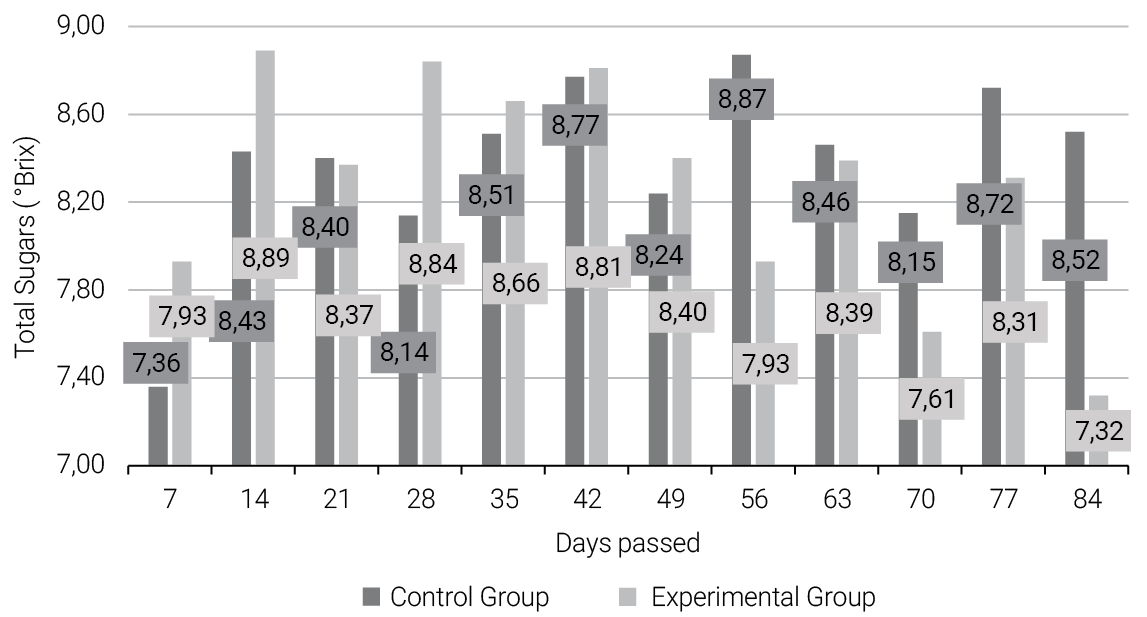
The analysis revealed that the experimental group exhibited a mean total sugars value of 8,29 ± 0,56 °Brix, compared to a mean value of 8,38 ± 0,56 °Brix observed in the control group. Although a portion of the initial sugar was metabolized during fermentation, the persistence of values near 8 °Brix indicates that the substrate was not entirely depleted. This level of total sugars imparts a slight sweetness that balances the product’s inherent acidity. Figure 5 illustrates the fluctuations in °Brix values throughout storage; however, these values remained within a relatively narrow range of 7,3 to 8,9 °Brix, demonstrating no sustained upward or downward trend and indicating moderate variation in total soluble solids.
Figure 5
Total sugars during storage
-Alcohol content
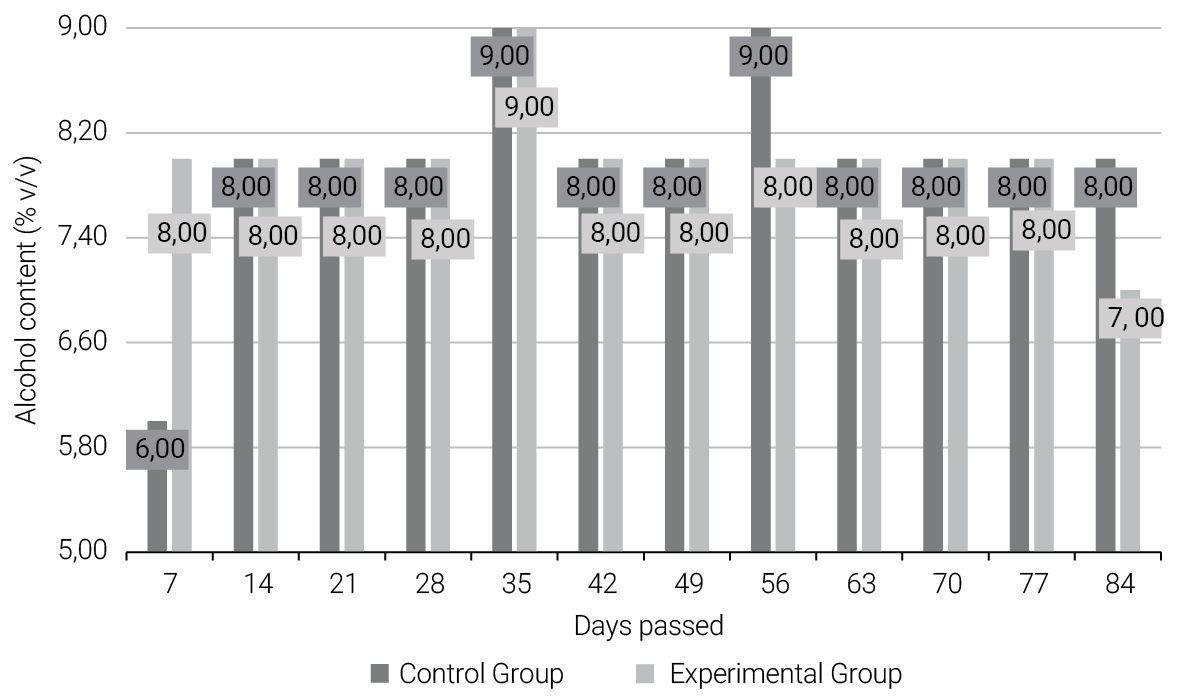
The analysis of alcohol content revealed an average concentration of 8,0% v/v in both the control and experimental groups, with a standard deviation of ± 0,71. The fermentation process preceding pasteurization accounts for ethanol production, primarily involving yeasts of the genus Saccharomyces in cereal-based fermentation systems. These yeasts are recognized for their capacity to convert glucose, fructose, and sucrose into ethanol and carbon dioxide (Ciani & Comitini, 2015). However, this study did not perform specific microbiological identification; therefore, the reference to Saccharomyces relies on existing literature concerning similar fermentation processes. While sugars typically decrease during fermentation, the slight stability observed in total sugars values may result from the partial hydrolysis of residual polysaccharides. This progressive degradation releases fermentable sugars that offset the consumption of simple sugars by the yeasts (Barbosa Piló et al., 2018). In this context, the residual polysaccharides primarily originate from corn starch, consisting of amylose and amylopectin, whose slow degradation has been documented as a factor influencing the availability of fermentable sugars in cereal-based processes (Liu et al., 2024).
Therefore, the relationship between total sugars and alcohol content is not strictly direct. Ethanol production occurred during the fermentation stage before pasteurization, achieving concentrations near 8,0 % v/v. Subsequently, during storage, the alcohol content remained stable (p > 0,05), as illustrated in Figure 6, indicating no significant fermentation activity. While the °Brix values varied, these fluctuations do not necessarily indicate additional ethanol production; rather, they reflect changes in the concentration of total soluble solids.
Figure 6
Alcohol content during storage
DISCUSSION
This analysis aimed to experimentally demonstrate the feasibility of using laminated cartons for packaging chicha de jora by comparing the physicochemical characteristics of the control group (glass containers) with those of the experimental group (laminated cartons). It is important to emphasize that no prior studies have addressed this specific topic; therefore, all information presented here is original and contributes to the advancement of chicha de jora production and commercialization.
The results revealed consistent variations among the study groups; however, these variations did not reach statistical significance (p > 0,05), suggesting that the packaging material did not considerably influence the evolution of the evaluated variables. The pH displayed average values of 2,51 ± 0,03, a characteristic indicative of fermented beverages with a high degree of acidity, which correlates with the activity of fermentative microorganisms. From a microbiological perspective, pH values below 4 inhibit the growth of pathogenic microorganisms, thereby enhancing product safety (Lund et al., 2020). These findings align with those reported by Ara Rojas et al. (2018) and Periche Pérez (2018), who assert that the decrease in pH is directly correlated with the production of organic acids, primarily lactic, acetic, and succinic acids, generated during fermentation prior to heat treatment by microorganisms such as Saccharomyces cerevisiae, Lactobacillus sp., and Acetobacter sp. In this study, since the ethanol content remained stable during storage, researchers interpret the decrease in pH as a result of previously formed acid compounds and potential adjustments in the system´s chemical equilibrium, rather than from subsequent active fermentation. This phenomenon also accounts for the gradual increase in total acidity, with values falling within the acceptable range for fermented beverages as outlined in the Instituto Nacional de Calidad (NTP 210.026:2007).
Total acidity consistently increased from 18,43 ± 0.13 g/L to 58,9 ± 0,27 g/L throughout the analysis period, indicating the accumulation of acidic compounds in the system. Researchers primarily generated these acids during the fermentation phase prior to heat treatment, during which yeasts and lactic acid bacteria typically associated with cereal fermentation play a significant role (Liang et al., 2020). The study did not perform specific microbiological identification; therefore, the references to yeasts and lactic acid bacteria rely on existing literature regarding traditional cereal fermentations. It is important to distinguish between pH and titratable acidity. pH measures the concentration of free protons (H+) in solution, while titratable acidity quantifies the total concentration of organic acids present, irrespective of their degree of dissociation. Although these two parameters are interrelated, they are chemically distinct. During storage after heat treatment, the ethanol content remained constant at 8,0 % v/v (p > 0.05), suggesting a lack of significant fermentation activity. Given this context, the observed variation in total acidity does not necessarily indicate further microbial production; instead, it may reflect adjustments in the system’s chemical balance or the redistribution of previously formed acid-base species. Consequently, both types of packaging effectively maintained conditions conducive to preserving the chemical quality of chicha de jora during storage.
Regarding the total sugars content, the average values were found to be 8,38 °Brix for the control group and 8,29 °Brix for the experimental group, resulting in a minimal variation of 0,09 °Brix. This slight variation suggests that the type of packaging has no significant effect on the overall concentration of soluble compounds during storage. Furthermore, it is important to recognize that °Brix measures total soluble solids, rather than exclusively fermentable sugars. Therefore, the observed stability can be attributed to a balance between the reduction of previously metabolized simple sugars and the presence of other soluble compounds produced during fermentation prior to heat treatment.
With respect to alcohol content, both groups exhibited an average of 8,0 ± 0,71 % v/v, with no statistically significant differences identified between them. This measurement slightly exceeds the range established for other traditional fermented beverages, such as cider (4,0-7,0% v/v), as outlined in NTP 210.026:2007, which suggests efficient fermentation. During the fermentation phase, yeasts of the genus Saccharomyces predominantly converted sugars into ethanol, with their metabolic activity transforming glucose, fructose, and a portion of sucrose into ethyl alcohol and carbon dioxide (Ciani & Comitini, 2015). Following this phase, the pasteurization treatment effectively halted microbial activity, allowing the generated metabolites to remain within the system. Within this context, an inverse relationship between total sugars content and alcohol content emerged, consistent with the characteristics of fermentation processes, wherein yeast consumption of sugars results in the production of ethanol and carbon dioxide.
In relation to the aforementioned findings, this study demonstrates that no statistically significant variation exists in the physicochemical characteristics between the groups evaluated. The outcome supports the suitability and safety of laminated carton packaging for preserving chicha de jora. A primary limitation of this research is the scarcity of studies analyzing the physicochemical characteristics of chicha de jora, as most existing literature focuses on its production process. Consequently, this lack of data hampers the ability to compare the study’s results, thereby affecting their reliability. Future research should focus on measuring the variables included in this study to validate these results. Additionally, expanding the number of variables would be beneficial to identify any factors that might contraindicate the use of laminated cartons as packaging for chicha de jora.
CONCLUSIONS
After performing physicochemical analyses for this study, the comparative evaluation between the control group (glass packaging) and the experimental group (laminated carton packaging) revealed no statistically significant differences (p > 0,05). The average parameters for the control group were pH 2,52 ± 0,03, total acidity 32,35 ± 1,21 g/L, total sugars 8,38 ± 0,56 °Brix, and alcohol content 8,00 ± 0,71 % vol. On the other hand, the experimental group showed the following results: pH 2,51 ± 0,03, total acidity 32,56 ± 1,21 g/L, total sugars 8,29 ± 0,56 °Brix, and alcohol content 8,00 ± 0,71% vol.
A comparison with the parameters established by NTP 210.026:2007 (Cider) indicated that the pH values obtained fell below the reference range, the total sugars content exceeded the established limit, and the alcohol content slightly surpassed the permitted value. These distinctions confirm that chicha de jora, as a traditional fermented beverage, has a unique physicochemical profile distinct from that of industrially produced fermented beverages such as cider. In this context, the regulatory comparison functioned solely as a technical reference and did not serve as a direct criterion for conformity assessment.
The comparative analysis revealed that the packaging type did not induce significant variations in the physicochemical parameters evaluated during the experimental period. Consequently, laminated carton packaging emerges as a technically viable alternative for preserving chicha de jora, demonstrating behavior comparable to that of traditional glass containers.
In conclusion, the adoption of laminated carton packaging for chicha de jora offers operational advantages in the realms of packaging, storage, and transportation processes, without affecting its physicochemical characteristics. These results provide substantial technical evidence supporting the feasibility of implementing this packaging type for large-scale production while maintaining the beverage’s physicochemical identity.
CONFLICTS OF INTEREST
The authors declare no conflict of interest.
AUTHOR CONTRIBUTION
Marcos Luis Humberto Sánchez Ferrer Marengo: Original draft writing, writing-revision and editing, conceptualization, methodology, research, visualization, and supervision. Marco Antonio Guardamino Castro: Original draft writing, writing-revision and editing, conceptualization, methodology, research, visualization, and supervision. Marcos Fernando Ruiz-Ruiz: Revision and editing, conceptualization, methodology, visualization, and supervision.
DECLARATION ON THE USE OF GENERATIVE IA
The authors used generative AI tools solely to improve the writing, grammar, and clarity of the manuscript. The interpretation of the results, analysis, and conclusions correspond exclusively to the authors.
REFERENCES
Aguirre Logrono, H. J. (2009). Propuesta de una receta estándar para la elaboración de la chicha en la provincia de Chimborazo [Master’s thesis, Equinoctial Technological University]. UTE Repository. https://hdl.handle.net/20.500.13066/11504
Ara Rojas, S., Hurtado Alendes, A., Barnett Mendoza, E., Celi Saavedra, L., & Ramos Escudero, M. (2018). Optimización de parámetros del proceso de elaboración de chicha de jora. Campus, 23(25), 11-28. https://doi.org/10.24265/campus.2018.v23n25.01
Azanza, C., & Chacón, D. (2018). Análisis cultural y sensorial de la chicha de jora elaborada en la sierra norte ecuatoriana (Imbabura y Pichincha) [Bachelor thesis, San Francisco de Quito University]. USFQ Digital Repository. https://repositorio.usfq.edu.ec/handle/23000/7335
Barbosa Piló, F., Carvajal-Barriga, E. J., Guamán-Burneo, M. C., Portero-Barahona, P., Morato Dias, A. M., Daher de Freitas, L. F., Oliveira Gomes, F. de C., & Rosa, C. A. (2018). Saccharomyces cerevisiae populations and other yeasts associated with indigenous beers (chicha) of Ecuador. Brazilian Journal of Microbiology, 49(4), 808-815. https://doi.org/10.1016/j.bjm.2018.01.002
Bassi, D., Orrù, L., Cabanillas Vasquez, J., Cocconcelli, P. S., & Fontana, C. (2020). Peruvian chicha: A focus on the microbial populations of this ancient maize-based fermented beverage. Microorganisms, 8(1), 93. https://doi.org/10.3390/microorganisms8010093
Bolzon, G., Cornaggia, G., Shahmardani, M., Giampieri, A., & Mameli, A. (2015). Aluminum laminates in beverage packaging: Models and experiences. Beverages, 1(3), 183-193. https://doi.org/10.3390/beverages1030183
Brock, A., & Williams, I. D. (2020). Life cycle assessment of beverage packaging. Detritus, 13, 47-61. https://doi.org/10.31025/2611-4135/2020.14025
Camacho, L. (2019). Evaluación del efecto de la ozonización en la vida útil de chicha de jora envasada [Bachelor thesis, Micaela Bastidas National University of Apurímac]. UNAMBA Institutional Repository. https://hdl.handle.net/20.500.14195/201
Chunqui, B. (2019). Optimización del proceso de elaboración de la chicha de jora [Bachelor thesis, National University of Trujillo]. UNT Institutional Repository. https://hdl.handle.net/20.500.14414/13459
Ciani, M., & Comitini, F. (2015). Yeast interactions in multi-starter wine fermentation. Current Opinion in Food Science, 1, 1-6. https://doi.org/10.1016/j.cofs.2014.07.001
Ciravegna, E. (2020). Repensar los envases en tiempos de crisis: implicancias éticas y enfoque sistémico en el diseño de packaging. RChD: Creación y pensamiento, 5(9), 1-6. https://doi.org/10.5354/0719-837X.2020.59536
De Florio Ramírez, E. (2019). Elaboración tradicional de chicha de jora. Ciencia & Desarrollo, 1, 92-96. https://doi.org/10.33326/26176033.1995.1.26
Dirección General de Salud Ambiental, & Ministerio de Salud del Perú. (2008). Actualización de la Resolución Ministerial N.º 615-2003-SA/DM. https://www.saludarequipa.gob.pe/desa/archivos/Normas_Legales/alimentos/RM591MINSANORMA.pdf
Fentie, E. G., Jeong, M., Emire, S. A., Demsash, H. D., Kim, M. A., Jeon, H.-J., Lee, S.-E., Tagele, S. B., Park, Y.-J., & Shin, J.-H. (2022). Physicochemical properties, antioxidant activities, and microbial communities of Ethiopian honey wine, Tej. Food Research International, 152, 110765. https://doi.org/10.1016/j.foodres.2021.110765
Ferrara, C., & De Feo, G. (2020). Comparative life cycle assessment of alternative systems for wine packaging in Italy. Journal of Cleaner Production, 259, 120888. https://doi.org/10.1016/j.jclepro.2020.120888
Gernet, M. V., Sevostyanova, E. M., Soboleva, O. A., Kovaleva, I. L., & Gribkova, I. N. (2019). Methodological approaches to evaluating beer and non-alcoholic products shelf life: Physicochemical parameters including pH, titratable acidity, sugars, and alcohol content. Journal of Beverage Analysis, 2(3), 13-16. https://doi.org/10.21323/2618-9771-2019-2-3-13-16
Instituto Nacional de Calidad. (2019). Bebidas alcohólicas. Sidra. Requisitos (NTP 210.026:2007, 2.ª ed.).
Kirwan, M. J. (2005). Paperboard-based liquid packaging. In M. J. Kirwan (Ed.), Paper and Paperboard Packaging Technology (pp. 386-413). Blackwell Publishing. https://doi.org/10.1002/9780470995877
Liang, Z., Lin, X., He, Z., Li, W., Ren, X., & Lin, X. (2020). Dynamic changes of total acid and bacterial communities during the traditional fermentation of Hong Qu glutinous rice wine. Electronic Journal of Biotechnology, 43, 23-31. https://doi.org/10.1016/j.ejbt.2019.12.002
Liu, S., Hu, J., Zhong, Y., Hu, X., Yin, J., Xiong, T., Nie, S., & Xie, M. (2024). A review: Effects of microbial fermentation on the structure and bioactivity of polysaccharides in plant-based foods. Food Chemistry, 440, 137453. https://doi.org/10.1016/j.foodchem.2023.137453
Lund, P. A., De Biase, D., Liran, O., Scheler, O., Pereira Mira, N., Cetecioglu, Z., Noriega Fernández, E., Bover-Cid, S., Hall, R., Sauer, M., & O’Byrne, C. (2020). Understanding how microorganisms respond to acid pH Is central to their control and successful exploitation. Frontiers In Microbiology, 11, 556140. https://doi.org/10.3389/fmicb.2020.556140
Ministerio de Salud del Perú. (1998). Decreto Supremo N.º 007-98-SA. Reglamento sobre vigilancia y control sanitario de alimentos y bebidas. https://www.gob.pe/institucion/minsa/normas-legales/256394-007-98-sa
Olsmats, C., Nilsson, B., & Pousette, S. (2015). Perceptions of sustainability and functional aspects on liquid carton board packaging materials versus competing materials for juice applications in Sweden. Beverages, 1(3), 194-203. https://doi.org/10.3390/beverages1030194
Periche Pérez, J. (2018). Contenido de aminas biógenas (histamina y tiramina) y su relación con características fisicoquímicas en muestras de chicha de jora elaboradas en la provincia de Abancay, Apurímac. Industrial Data, 21(2), 35-46. https://doi.org/10.15381/idata.v21i2.15601
Seluy, L. G., Comelli, R. N., Benzzo, M. T., & Isla, M. A. (2018). Feasibility of bioethanol production from cider waste. Journal of Microbiology and Biotechnology, 28(9), 1493-1501. https://doi.org/10.4014/jmb.1801.01044
Techakanon, C., & Sirimuangmoon, C. (2020). The effect of pasteurization and shelf life on the physicochemical, microbiological, antioxidant, and sensory properties of rose apple cider during cold storage. Beverages, 6(3), Article 43. https://doi.org/10.3390/beverages6030043
Thompson-Witrick, K. A., Pitts, E. R., Nemenyi, J. L., & Budner, D. (2021). The impact packaging type has on the flavor of wine. Beverages, 7(2), 36. https://doi.org/10.3390/beverages7020036
Turrado, J., Dávalos, M. F., Fuentes, F. J., & Saucedo, A. R. (2012). Envases de cartón para líquidos como fuente de fibra secundaria. Información Tecnológica, 23(3), 59-66. https://doi.org/10.4067/S0718-07642012000300008
Vargas-Yana, D., Aguilar-Morón, B., Pezo-Torres, N., Shetty, K., & Gálvez Ranilla, L. (2020). Ancestral Peruvian ethnic fermented beverage “chicha” based on purple corn (Zea mays L.): Unraveling the health-relevant functional benefits. Journal of Ethnic Foods, 7, Article 35. https://doi.org/10.1186/s42779-020-00063-3