Resource Optimization in Urban Irrigation Systems:
Reservoir and Clustering Techniques
Ariana E. Castro-Quispe1 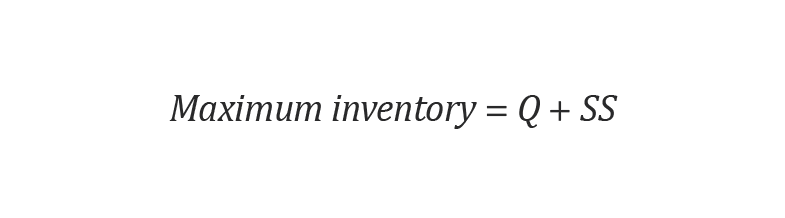 , Juan C. Quiroz-Flores2 , Elsie V. Bonilla-Pastor3
1[email protected], 2[email protected], 3[email protected]
123Carrera de Ingeniería Industrial, Universidad de Lima, Perú
Received: September 13, 2025 / Accepted: September 30, 2025 / Published: 5 June, 2026
doi: https://doi.org/10.26439/ciii2025.8648
Abstract—Urban irrigation in a district of Lima currently relies on costly groundwater despite the availability of legacy canals. This study addresses rising unit costs by integrating a canal-fed reservoir with inventory model and k-means clustering for resource allocation. The design replaces the water source, sizes the reservoir using inventory-management logic, and relocates loading to a strategically ranked park. Using operational data from one representative day, the proposed scenario reduces labor cost, fuel cost and water cost. Measured outcomes include a reduction of 50.25% in labor, 26.03% in fuel and 90.8% in water costs along with an internal rate of return of 199%. Academically, the work links source substitution, inventory sizing, and clustering within a single engineering design; socio-economically, it offers a replicable pathway for municipalities. Municipalities should evaluate canal-fed storage and assignment analytics to unlock similar unit-cost reductions.
Index Terms—Clustering, cost efficiency, reservoir, resource optimization, urban irrigation.
- Introduction
The rapid growth of the global population, combined with increasingly unpredictable climate patterns, has made sustainable water management one of the most pressing challenges of the 21st century. At present, water scarcity stems not only from the physical limitations of natural resources but also from economic constraints, such as insufficient investment in infrastructure and research [1]. Irrigation canals play a crucial role in sustaining vegetation and demonstrate multifunctional potential. For instance, recent studies have explored the installation of photovoltaic panels over canals to reduce evaporation while generating renewable energy [2], as well as the integration of hydrokinetic turbines, which can convert up to 78.53% of available hydraulic energy into usable power [3]. Furthermore, irrigation canals contribute to ecological restoration in rural areas and enhance urban environments through the creation of green spaces, which have been associated with improved physical and mental well-being [4], [5].
Previous studies have modeled farmer responses to reservoir operation policies, showing that dynamic hedging strategies based on water performance forecasts effectively influence irrigation technology adoption, land use, and cost–benefit outcomes [6]. River-fed reservoirs offer a sustainable storage option; however, they face sediment accumulation challenges. For example, reservoirs in Poland lose approximately 0.1% of their capacity annually due to sedimentation [7].
In Lima, two principal pre-Hispanic irrigation canals remain: the Surco Canal and the Huatica Canal. The Surco Canal extends for 29.5 km and traverses 14 districts. Historically, it played a vital role in the ecosystem and agricultural development, but its significance has diminished in contemporary times [8]. Considering that Lima is the second largest city built in a desert, the presence and maintenance of these canals are of critical importance [9], [10].
The irrigation of public green areas, however, entails high operational costs and logistical inefficiencies. When water sources are geographically distant, extended transport routes are required, increasing both costs and delivery time. Consequently, route optimization becomes essential for improving resource efficiency. Related studies to route optimization and resource efficiency conducted in Argentina compared three algorithms for municipal waste collection and identified simulated annealing as the most effective approach for minimizing travel distance [11]. Similarly, research conducted in Canada applied genetic algorithms, FS-ACO, and Tabu search to optimize municipal sweeping routes, achieving significant reductions in fuel consumption, travel distance, and time [12]. In Chile, the application of the Ant Colony Optimization algorithm reduced travel distance by 23% and time by 22% [13]. Other approaches, such as Prim’s heuristic [14] and Mixed-Integer Linear Programming, achieved a 19% reduction in total delivery distance while considering constraints such as truck and product type [15]. In problems with many nodes, the Cluster-First Route Second (CC-CVRP) method has proven competitive and effective, particularly in medium-to-large problems, and remains one of the few feasible solutions for very large routing challenges [16], [17]. These findings suggest that assigning irrigation routes for tank trucks through optimized clustering and routing may significantly reduce travel time and operational inefficiencies.
A study conducted in China shows that the multi-objective genetic algorithm can accurately predict the demand trend and improve the inventory turnover rate [18]. Another study applied linear programming to forecast the demand of their product using inventory data as inputs [19].
Previous research has primarily focused on either reservoir design or routing optimization in isolation. There remains a lack of integrated approaches that simultaneously consider reservoir sizing, canal-fed water distribution, and cluster-based routing for urban irrigation systems. This gap is particularly relevant in Lima, where public green areas are currently irrigated using groundwater purchased at a unit cost of 1.85 PEN/m³, while canal-sourced water averages only 0.17 PEN/m³, representing a cost difference of 90.81%. Addressing this gap, the central problem guiding this study is how to reduce the unit cost of urban irrigation by integrating water supply alternative, reservoir design, and route clustering within a unified framework.
The novelty of this research lies in its holistic approach that combines reservoir sizing and clustering of irrigation areas into a single model. This integrated methodology offers three key contributions: it provides a replicable framework for metropolitan areas facing similar challenges; it demonstrates the measurable economic benefits of canal-fed irrigation; and it contributes to sustainability by reducing dependency on underground water sources. Accordingly, this study not only advances the state of the art but also provides practical insights for municipalities striving to balance cost-efficiency with environmental responsibility.
The remainder of this paper is organized as follows: Section II presents the methodology and engineering tools applied; Section III discusses the results; and Section IV highlights the main conclusions.
- Methodology
This research is applied and correlational in nature, as it aims to reduce the unit cost of irrigation through the implementation of an alternative water source.
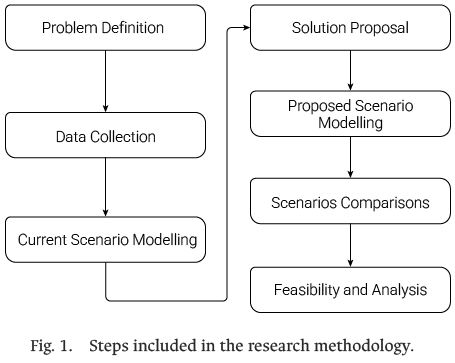
Firstly, the problem was identified, and the root causes were analyzed.
Subsequently, the data are collected. To define the unit of analysis, all irrigation routes carried out during a selected month were considered; simple random sampling was used to select a specific day considered as the unit of analysis. The stop points corresponding to the routes on the selected day were georeferenced.
The current scenario was modelled to determine the travel time and distance covered under the existing groundwater supply conditions.
Considering the water cost disparity, a solution was proposed based on the root causes of the problem.
The proposed solution consists of constructing a canal-fed reservoir. Potential parks suitable for reservoir construction were identified. For their selection, four relevant variables were defined and weighted using the factor ranking method. Once the most suitable site was selected, the structural design of the proposed reservoir was conceived. The reservoir volume was estimated using the maximum inventory formula (1), which requires the lot size (Q) and the safety stock (SS).
(1)
To calculate the safety stock (2), the following factors were considered: the desired service level, the average water demand, the demand standard deviation, the average canal inflow rate, and its standard deviations.
 (2)
(2)
To model the proposed scenario, the travel time and distances were determined, and the new estimated cost of the water resource was calculated.
The logistical indicators of both scenarios were compared by calculating the reduction in travel time, distance travelled, water cost and carbon dioxide emissions.
Annual savings in labor, fuel and water costs were estimated. The initial investment, as well as the maintenance, and cleaning costs of the reservoir were averaged. Based on this information, the projected cash flow was developed and financial profitability indicators were calculated.
Results
The company’s current irrigation unit cost is high, as the groundwater used for irrigation is 90.81% more expensive than canal-supplied water. A canal known as Surco flows through the district, with a flow rate of 800 L/s, of which 200 L/s correspond to environmental flow. When tank trucks are loaded directly from the canal’s main channel, the loading time reaches approximately 30 minutes for 10,000 gallons. This loading method generates traffic congestion, residents’ complaints, and financial penalties for the company. The construction of a reservoir would increase the inlet flow rate, thereby reducing tank truck loading times.
Data were collected to quantify irrigation demand for public green areas, which totals 714,761.85 m³. Each green area should be irrigated twice per week during cold seasons and thrice per week during hot seasons. A unit of analysis is chosen, which is a day consisting of 80 routes carried out in the year 2025 during the month of March. The coordinates of the stops were identified. This route irrigates approximately 238,254 m3, representing 33.33% of the total demand. The tank trucks with a capacity of 10,000 gallons service 70% of the stops assigned; the remaining 30% of the stops are made by tank trucks with a capacity of 5,000 gallons.
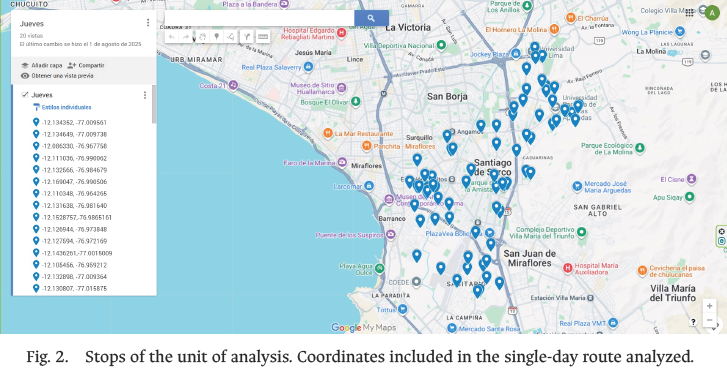
Currently the water supply is in the coordinate -12.18763, -76.972691. Eleven tank trucks start their routes simultaneously, each operated by one driver and one assistant.
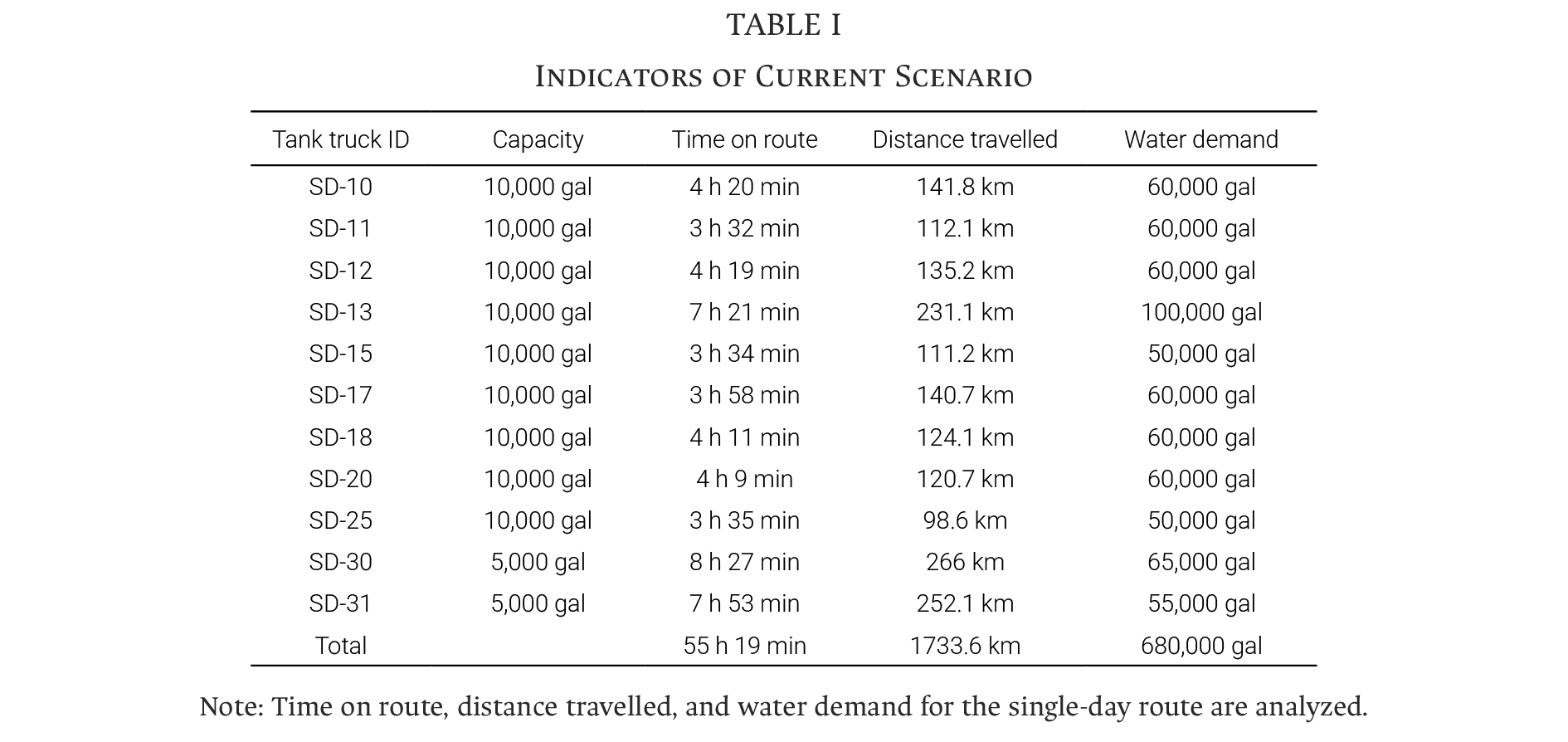
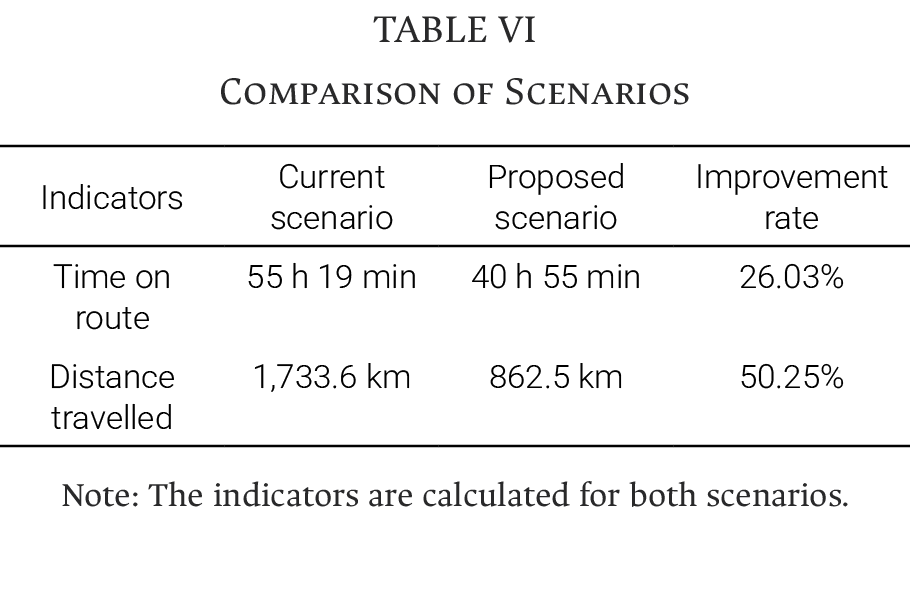
The indicators for the actual scenario are calculated. The travel time is 55 h 19 min, and the total man-hours are 110 h 38 min, given that each route is operated by two personnel. The travel time refers to the driving time on the assigned route. The total distance travelled is 1,733.6 km.
Three potential sites were identified as possible locations for the reservoir: Filomeno Ormeño, De los Ingenieros, and María Reiche.
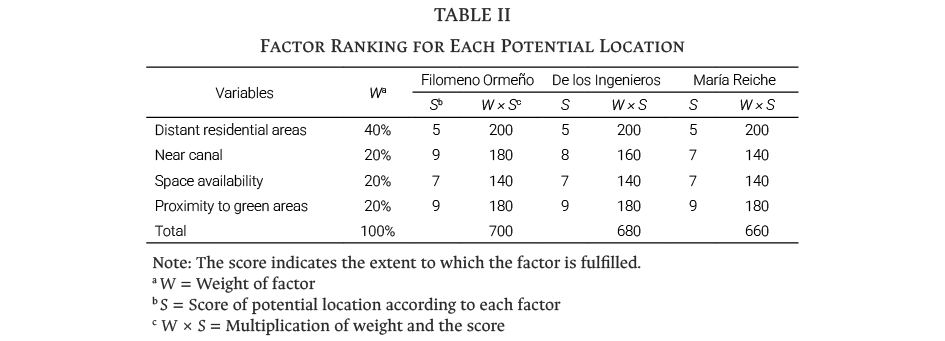
The proposed site for building the reservoir is Filomeno Ormeño Park, located at coordinates are -12.120952, -76.997572.
To calculate the volume of the reservoir, the maximum inventory formula (1) is used. Four variables are required to calculate the safety stock (2). The demand and its standard deviation are obtained using historical route data. Lead time corresponds to the loading duration of a tank and is generally assumed to be constant, implying no deviation. Two safety stocks were calculated: one for tank trucks of 10,000 gallons of capacity and another one for tank trucks of 5,000 gallons of capacity. For both calculations a service level of 95% was applied.
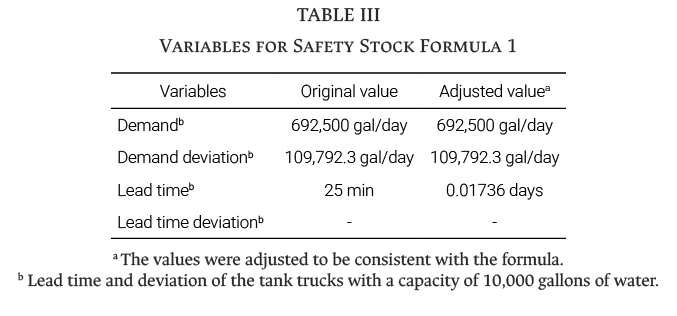
 (3)
(3)
The safety stock for tank trucks with a capacity of 10,000 gallons of water was calculated as 23,796.48 gallons using formula (2).
The lot size for tank trucks (Q) corresponds to their capacity, which in this case is 10,000 gallons.
 (4)
(4)
The maximum inventory to supply the demand of tank trucks with a capacity of 10,000 gallons was calculated as 33,796.48 gallons using the formula (1).
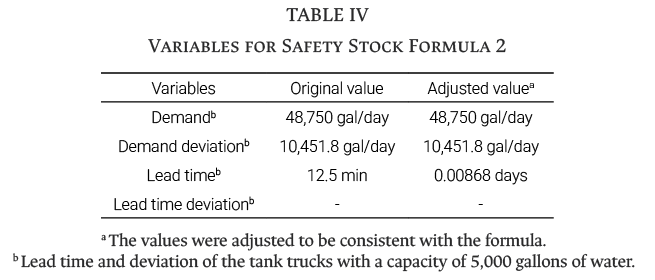
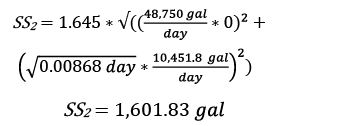 (5)
(5)
The safety stock for the tank trucks with a capacity of 5,000 gallons of water was calculated as 1,601.83 gallons using formula (2).
The lot size for tank trucks () corresponds to their capacity; which in this case is 5,000 gallons.
 (4)
(4)
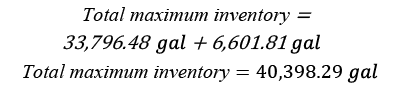
The maximum inventory to supply the demand of tank trucks with a capacity of 5,000 gallons was calculated as 6,601.83 gallons using formula (1).
 (4)
(4)
The proposed reservoir capacity is 40,398.29 gallons, equivalent to 152.96 m³.
The Surco Canal currently presents a moderate level of pollution due to the discharge of wastewater and domestic effluents [20]. It is proposed that the reservoir incorporates an inlet grate to trap large solid debris. In addition, the implementation of steeply inclined settlers is proposed to reduce suspended sediments. These settlers are installed at angles between 45° and 60° relative to the horizontal and consist of tube-like channels with a width of 5 cm and a length of approximately 2 m [21].
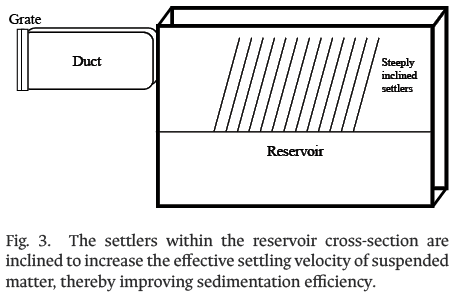
The reservoir is designed to supply the total demand of public green areas. The travel time and distance were calculated considering the reservoir located at the coordinates −12.120952, −76.997572.
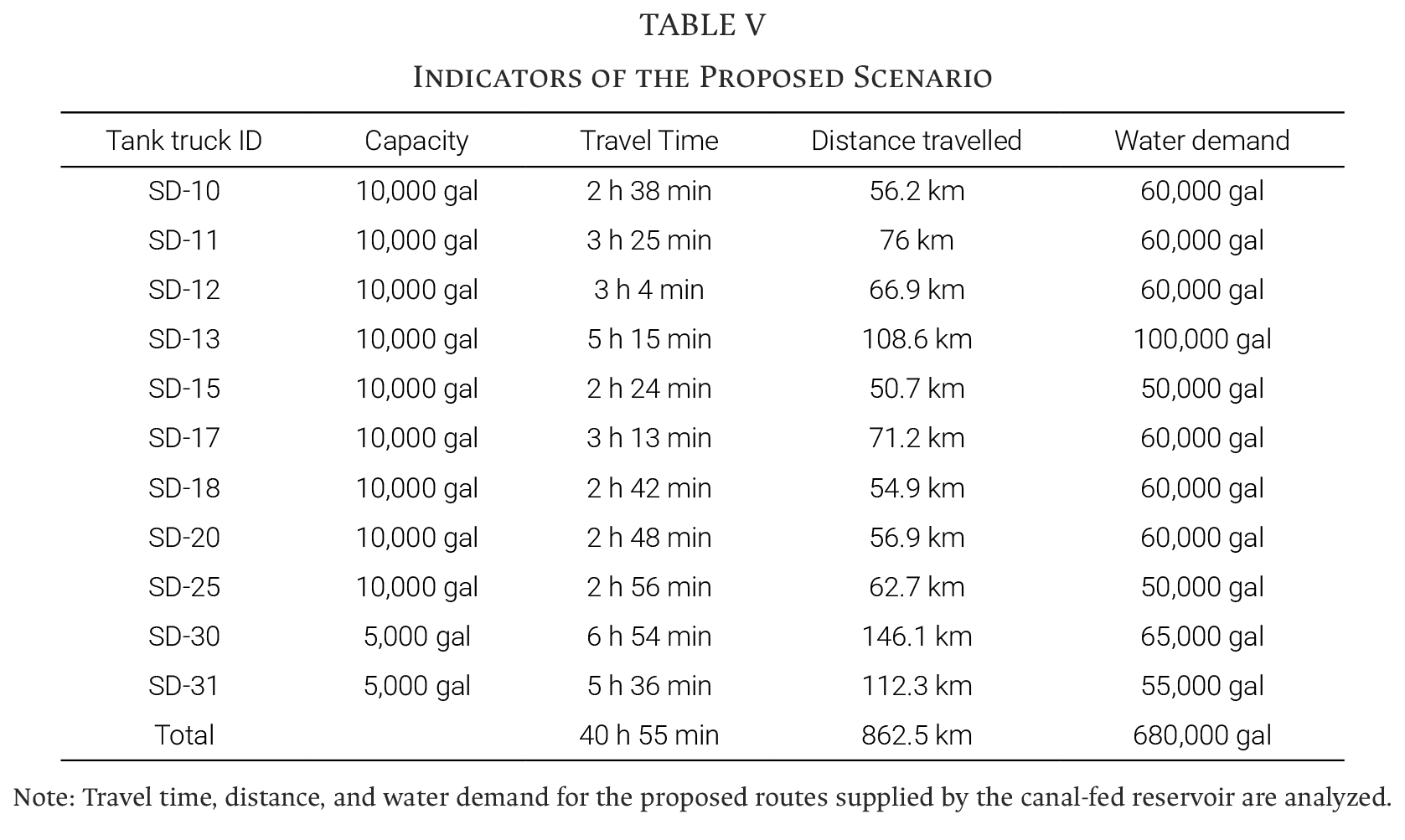
The indicators for the proposed scenario are calculated. The travel time is 40 h 55 min, and the total man-hours is 81 h 50 min considering that two operators accompany each route. The total distance is 862.5 km.
Both scenarios are compared, and the improvement rates are quantified.
Additionally, the economic impact of resource optimization is evaluated. The labor cost is 15 PEN per man-hour, with two personnel assigned to each route. The tank trucks consume one gallon of fuel every 5 km traveled, and the fuel cost is 13.12 PEN per gallon. The unit cost of canal-sourced water is 0.17 PEN/m³ [12]. The capacity of each tank truck is 10,000 gallons, equivalent to 37.85 m³.
Clustering is proposed to reduce the learning curve by assigning each cluster to a tank truck. The inputs consist of the coordinates of the green areas, while the outputs include scatter plots and an Excel file grouping the coordinates according to each cluster. The number of clusters is equal to the number of tank trucks: nine for trucks with a capacity of 10,000 gallons and two for trucks with a capacity of 5,000 gallons. The algorithm begins with k-means to initialize the centroids. A greedy algorithm is then applied to enforce capacity constraints within each cluster. Subsequently, the Hungarian algorithm is used to minimize the overall travel distance. Finally, the constrained Lloyd algorithm performs iterative restarts and updates the centroids.
The following figures present the clustering results, in which each cluster is assigned to a tank truck. The first scatter plot corresponds to tank trucks with a capacity of 10,000 gallons while the second corresponds to tank trucks with a capacity of 5,000 gallons.
The inputs, outputs, and source codes are available at: https://drive.google.com/drive/folders/1hSPFviVlS91n1tg3uJxEmNRodBBB-fvP?usp=sharing
The project cash flow for the next three years begins with the operating phase of the reservoir. The proposed reservoir is similar in size and structural characteristics to one previously constructed in another district of Lima, for which public investment information is available [22]; therefore, the same investment amount was adopted. The construction permit is issued by the National Water Authority of Peru (Autoridad Nacional del Agua, ANA) [23]. A reservoir scraper system is proposed to facilitate cleaning operations. This technology enables the continuous removal of sludge from the bottom of the reservoir. In addition, the construction of a parking area for two tank trucks is considered essential to prevent traffic congestion. Finally, the presence of a technician responsible for cleaning, maintenance, and security of the reservoir is required.
The costs for the proposed scenario are calculated on a daily basis. Irrigation is carried out six days per week, over 4.3 weeks per month, and twelve months per year.
The cash flow indicates an internal return rate of 199%. The social impact of the reservoir includes the provision of efficient urban irrigation services using an alternative water source. The reservoir will be available for firefighting purposes when required. The construction of the reservoir will slightly reduce the area of public green spaces. From an environmental perspective, the project achieves a 50.22% reduction in carbon dioxide emissions.
- Discussion
The high values of the economic indicators obtained in this study are primarily explained by the fact that the positive cash flow results from cost savings rather than direct revenues [24]. Similar conclusions have been reported in Valparaíso, where strategically located reservoirs play a key role in ensuring timely access to water for firefighting, thus generating both economic and social benefits [25]. While most previous research has concentrated mainly on resource optimization, this study incorporates environmental considerations, such as carbon dioxide emissions, which are often overlooked [26]. In comparison, other studies applying routing techniques estimate emissions using vehicle speed functions [27], whereas in this research the analysis was conducted directly based on the distance travelled. Although this approach provides a practical estimation, speed-based functions could yield a more accurate assessment of improvement rates. Furthermore, comparative studies analyzing scenarios with a single large reservoir versus multiple smaller reservoirs have shown that the single-reservoir configuration achieves higher economic efficiency due to lower construction and operational costs [28], which is consistent with the methodology used. Additional studies highlight the role of suspended sediment loads and mass conservation principles in reservoir calculations [29], as well as the reuse of bottom sediments in croplands, which enhances soil properties and irrigation efficiency [30]. These findings are consistent with the present research and suggest opportunities for further refinement.
Despite these promising outcomes, the study has several limitations. The analysis was conducted within a single district in Lima, which restricts the generalizability of the findings to other urban contexts. Moreover, for model simplification, external factors such as weather variability, vehicle maintenance, and traffic congestion were not considered. The results also rely on the assumption of a constant and reliable canal inflow, which may not always be maintained in real operating conditions.
In practical terms, the proposed model demonstrates strong potential to reduce irrigation costs while simultaneously addressing environmental impacts. Its application can be extended to municipal decision-making processes, particularly in contexts where water scarcity and financial constraints coexist. Furthermore, integrating the reservoir as a dual-purpose infrastructure—supporting both irrigation and firefighting operations—highlights its societal relevance.
Future research should address the identified limitations identified by incorporating weather conditions, transportation constraints, and more advanced emission models into the optimization framework. Expanding the geographical scope to multiple districts or even to metropolitan scales would strengthen the external validity of the results. Finally, the inclusion of sediment reuse strategies and advanced routing algorithms could further enhance both the environmental sustainability and the operational efficiency of the proposed model.
- Conclusions
This study demonstrates that integrating a canal-fed reservoir with route redesign is an effective strategy to reduce the irrigation unit cost of urban green areas. The proposed model achieves a 26.03% decrease in labor costs, 50.25% reduction in fuel consumption cost and a 90.8% drop in water costs compared with the current groundwater-based system. Additionally, fuel savings contribute to a 50.2% reduction in CO₂ emissions, while the economic evaluation confirms strong feasibility with an internal rate of return of 199%. These results validate the proposed model as a practical and replicable approach for municipalities operating under both budgetary and environmental constraints.
The importance of this research lies in addressing the challenge of costly irrigation practices in desert cities such as Lima by linking water resource substitution with operational optimization. The study highlights the potential of industrial engineering to provide solutions that are simultaneously efficient, sustainable, and economically viable.
The main contribution of the work lies in the methodological integration of reservoir sizing and clustering for vehicle assignment, which together deliver measurable performance improvements. Future research should evaluate seasonal variability, incorporate real-time monitoring technologies, and assess the social acceptance of canal-fed reservoirs to enhance long-term applicability.
This study analyzes the economic benefits of having a water supply close to final location, as well as shifting to balanced driver assignments and clustering to achieve efficient and timely operations.
For future research, it is recommended to incorporate additional constraints into the model. Interdisciplinary studies are encouraged, including regulatory compliance, alternative structural designs, and community acceptance.
Acknowledgement
I would like to express my sincere gratitude to Professor Elsie Bonilla-Pastor and Professor Juan C. Quiroz-Flores for their guidance and contributions to my academic development. I am deeply grateful to Paola Castro and Christian Ortiz, whose assistance in providing the company’s performance indicators was essential to the completion of this study. I also extend my appreciation to the municipalities of Santiago de Surco and San Borja for their collaboration and support throughout this research.
References
[1] A. Mehallel and V. Feliu-Batlle, “Reducing the impacts of withdrawals on the water distribution in main irrigation canals based on a modified Smith predictor control scheme,” Water, vol. 17, no. 3, p. 373, Jan. 2025, doi: 10.3390/w17030373.
[2] A. Kaab, H. Ghasemi-Mobtaker, M. Sharifi, and U. Jørgensen, “Evaluating the viability of installing photovoltaic panels on irrigation canals for energy generation and water storage,” Energy Nexus, vol. 18, p. 100455, Jun. 2025, doi: 10.1016/j.nexus.2025.100455.
[3] E. Peralta-Escobar, S.-R. Galván-González, G. Solorio-Díaz, N.-D. Herrera-Sandoval, and D. Cahue-Díaz, “Estimation of the electrical energy provided by an irrigation canal with the design of a hydrokinetic turbine,” IEEE Lat. Am. Trans., vol. 23, no. 1, pp. 58–67, Jan. 2025, doi: 10.1109/TLA.2025.10810396.
[4] J. Dostálek, T. Frantík, and L. Pavlů, “Passive restoration of vegetation on gravel/sand bars in the city: A case study in Prague, Czech Republic,” Urban Ecosyst., vol. 25, no. 4, pp. 1265–1277, Apr. 2022, doi: 10.1007/s11252-022-01225-8.
[5] W. Lin et al., “The effect of green space behaviour and per capita area in small urban green spaces on psychophysiological responses,” Landsc. Urban Plann., vol. 192, p. 103637, Dec. 2019, doi: 10.1016/j.landurbplan.2019.103637.
[6] E. Ebrahimi and M. Shourian, “Modeling farmer responses to reservoir operation policies using agent based analysis of risk behavior and irrigation adoption,” Sci. Rep., vol. 15, no. 1, Jul. 2025, doi: 10.1038/s41598-025-11908-9.
[7] Ł. Pieron, D. Absalon, M. Habel, and M. Matysik, “Inventory of reservoirs of key significance for water management in Poland—Evaluation of changes in their capacity,” Energies, vol. 14, no. 23, p. 7951, Nov. 2021, doi: 10.3390/en14237951.
[8] K. S. B. Peña Medrano, “Ecosistema urbano canal: renaturalización y reintegración del canal de Surco en Lima [Urban canal ecosystem: renaturalization and reintegration of the Surco canal in Lima],” Professional degree thesis, Pontif. Univ. Católica del Perú, Lima, Peru, 2022. [Online]. Available: http://hdl.handle.net/20.500.12404/22292
[9] J. Lizarzaburu, “The Surco canal, an ancient irrigation canal in Lima, Peru, and a citizens’ campaign for its protection,” Water Hist., vol. 12, no. 3, pp. 299–310, Nov. 2020, doi: 10.1007/s12685-020-00257-1.
[10] Comisión de Regantes Surco, Lima, Peru. Video Sobre el Riego en Áreas Verdes del Distrito de Surco [Video on Irrigation in Green Areas of the Surco District]. (Aug. 25, 2018). [Online Video]. Available: https://www.facebook.com/regantessurco/videos/282427792354882
[11] D. G. Rossit, A. A. Toncovich, and M. Fermani, “Routing in waste collection: A simulated annealing algorithm for an Argentinean case study,” Math. Biosci. Eng., vol. 18, no. 6, pp. 9579–9605, Nov. 2021, doi: 10.3934/mbe.2021470.
[12] T. Parsons, J. Seo, and D. Livesey, “Municipal street-sweeping area generation with route optimization,” Int. Trans. Oper. Res., vol. 32, no. 3, pp. 1375–1399, Jul. 2024, doi: 10.1111/itor.13515.
[13] C. Oliva, M. Cepeda, and S. Muñoz-Herrera, “Coordinated truck loading and routing problem: A forestry logistics case study,” Math., vol. 13, no. 15, p. 2537, Aug. 2025, doi: 10.3390/math13152537.
[14] A. Ganesan and A. Narasimhamurthy, “An algorithm for the multi-depot, multi-vehicle routing problem with capacity constraints,” in Proc. 3rd IEEE World Conf. Appl. Intell. Comput. (AIC), Jul. 2024, pp. 54–59, doi: 10.1109/AIC61668.2024.10730945.
[15] S. Prachyathawornkul, A. Apichottanakul, and K. Pitiruek, “Improving delivery planning via an optimization technique for a case study of a construction material store,” Cogent Eng., vol. 10, no. 1, Jul. 2023, doi: 10.1080/23311916.2023.2231725.
[16] M. Shalaby, A. Mohammed, and S. Kassem, “Supervised fuzzy C-means techniques to solve the capacitated vehicle routing problem,” Int. Arab J. Inf. Technol., vol. 18, no. 3A, pp. 452–463, Jan. 2021, doi: 10.34028/iajit/18/3a/9.
[17] F. Alesiani, G. Ermis, and K. Gkiotsalitis, “Constrained clustering for the capacitated vehicle routing problem (CC-CVRP),” Appl. Artif. Intell., vol. 36, no. 1, pp. 1–25, Jan. 2022, doi: 10.1080/08839514.2021.1995658.
[18] L. Fan et al., “Change is safer: a dynamic safety stock model for inventory management of large manufacturing enterprise based on intermittent time series forecasting,” J. Intell. Manuf., vol. 36, pp. 3983–4003, Jun. 2024, doi: 10.1007/s10845-024-02442-y.
[19] N. Somjai, P. Rueangsrisai, and R. Homchalee, “Optimizing production and inventory planning of concentrated wild mushroom leavening agents to maximize annual sales using linear programming,” GMSARN Int. J., vol. 19, no. 3, pp. 466–475, Sep. 2025. [Online]. Available: http://gmsarnjournal.com/home/wp-content/uploads/2024/12/vol19no3-8.pdf
[20] J. V. Yon Leiva and J. A. Arenas Ibarra, “Evaluación de la calidad del agua en el canal Surco de la Zona de Reglamentación Especial del Humedal Los Pantanos de Villa (Lima, Perú) [Water quality assessment of the Surco canal in the Special Regulation Zone of the Los Pantanos de Villa wetland (Lima, Peru)],” South Sustain., vol. 5, no. 1, e090, 2024, doi: 10.21142/SS-0501-2024-e090.
[21] C. F. Ihle and C. Reyes, “A new criterion to estimate the capacity of steeply inclined settlers of arbitrary cross-sectional shape,” Powder Technol., vol. 397, p. 117004, Jan. 2022, doi: 10.1016/j.powtec.2021.11.048.
[22] Panamericana Televisión, “La Victoria: Construye reservorio subterráneo de agua para riego de áreas verdes [La Victoria: Construction of an underground water reservoir for irrigation of green areas],” Panamericana Televisión, Sep. 3, 2020. [Online]. Available: https://panamericana.pe/24horas/locales/302170-victoria-construye-reservorio-subterraneo-agua-riego-areas-verdes
[23] Autoridad Nacional del Agua. “Permisos. Uso de agua superficial o subterránea [Permits: Use of surface or groundwater].” Gob.pe. [Online]. Available: https://www.gob.pe/institucion/ana/tema/permisos/uso-de-agua-superficial-o-subterranea
[24] Q. Sun, “Application analysis of internal rate of return capital budgeting method in project investment decision-making,” BCP Bus. Manag., vol. 35, pp. 6–10, Dec. 2022, doi: 10.54691/bcpbm.v35i.3219.
[25] M. Alfaro, P. Santander, G. Fuertes, R. Ternero, and M. Vargas, “Water reservoir placement methodology for forest firefighting: a case study of Valparaíso, Chile,” Forests, vol. 15, no. 1, p. 201, Jan. 2024, doi: 10.3390/f15010201.
[26] J. Chazarra-Zapata, J. M. Molina-Martínez, F.-J. Pérez de la Cruz, D. Parras-Burgos, and A. Ruíz Canales, “How to reduce the carbon footprint of an irrigation community in the south-east of Spain by use of solar energy,” Energies, vol. 13, no. 11, p. 2848, Jun. 2020, doi: 10.3390/en13112848.
[27] Z. Yao, H. Cao, Z. Cui, Y. Wang, and N. Huang, “Research on urban distribution routes considering the impact of vehicle speed on carbon emissions,” Sustainability, vol. 14, no. 23, p. 15827, Nov. 2022, doi: 10.3390/su142315827.
[28] A. M. Takeleb, J. Sujono, and R. Jayadi, “Evaluation of reservoir capacity and reliability for urban water purpose in Dili, Timor Leste,” J. Civ. Eng. Forum, vol. 1000, no. 1000, Dec. 2020, doi: 10.22146/jcef.58538.
[29] E. Somathilake and M. Diagne, “Output feedback control of suspended sediment load entrainment in water canals and reservoirs,” IFAC-PapersOnLine, vol. 58, no. 28, pp. 983–988, Jan. 2024, doi: 10.1016/j.ifacol.2025.01.124.
[30] C. Gomez et al., “Reuse of bottom sediment from reservoirs to cropland is a promising agroecological practice that must be rationalized,” Sci. Rep., vol. 15, no. 1, Mar. 2025, doi: 10.1038/s41598-025-92206-2.