Improving SME Manufacturing in the Footwear
Sector through an Operational Model Based on TQM,
Standardized Work, and Autonomous Maintenance
Renzo A. Gutierrez Rodriguez1 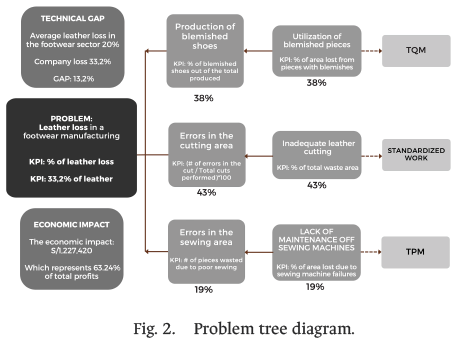 , Maricielo D. V. Marín Marmolejo2 , Wilson D. Calderón Gonzales3 Gustavo A. Luna Victoria-Leon4
1correo: [email protected], 2[email protected], 3[email protected], 4[email protected]
1234Carrera de Ingeniería Industrial, Universidad de Lima, Perú
Received: August 1, 2025 / Accepted: September 23, 2025 / Published: 5 June, 2026
doi: https://doi.org/10.26439/ciii2025.8650
ABSTRACT—The footwear sector in Peru has experienced sustained growth over time, playing a significant role in the national economy and contributing substantially to employment and exports. Consequently, companies in the sector must continuously evolve to meet new market demands and address production-related challenges that affect their competitiveness. In this context, identifying the root causes of these challenges is essential, such as the high level of leather waste, which is directly linked to insufficient input inspection, the absence of standardized cutting procedures, and recurrent sewing machine failures. This research proposes an improvement model based on three key tools—Total Quality Management (TQM), Standardized Work, and Total Productive Maintenance (TPM)—with the main objective of reducing leather waste in footwear companies to enhance material utilization, productivity, and profitability. The results confirm the effectiveness of the proposed model, achieving a reduction in overall leather waste from 33.2% to 20.1%, a 20% increase in productivity, and a return on investment in less than three months.
Index Terms—Leather waste, productivity improvement, Standardized Work, Total Quality Management (TQM), Total Productive Maintenance (TPM).
- Introduction
The leather and footwear industry in Peru is an economically significant sector, contributing 0.8% to the manufacturing GDP and employing more than 64,000 workers [1]. In recent years, exports have shown a positive trend, driven by new market opportunities and increasing demand for quality products. However, the sector remains dominated by micro and small enterprises (MSEs), which face structural barriers that limit their competitiveness. These include deficiencies in general administration and lack of quality standards and technology to optimize production processes [2], poor resource utilization and low productivity, as documented in case studies within the sector [3], [4], the presence of manual artisan work and lack of standardized procedures [5], and difficulties in competing with larger firms that benefit from economies of scale. These challenges directly affect operational efficiency, product quality, and profitability.
This study analyzes a Peruvian MSE with more than 25 years of experience in manufacturing leather footwear for children and school use. Despite producing over 10,800 pairs annually, the company faces a critical issue: an average leather waste rate of 33%, significantly higher than the 20–30% range reported for footwear and leather goods industries [6]. This inefficiency results in monthly loss of approximately 300 unproduced pairs and represents up to 63% of the company’s potential profits. Addressing this issue is essential for improving profitability and strengthening the company’s competitiveness in an increasingly demanding market.
The identified causes of this high level of leather waste include the use of defective raw materials due to insufficient inspection, poor layout and cutting practices resulting from the lack of standardized procedures, and frequent sewing machine failures caused by inadequate preventive maintenance. These issues reveal broader weaknesses in quality management, process standardization, and equipment upkeep. As a result, the study proposes a hybrid operational improvement model that integrates three well-established tools from industrial engineering: Total Quality Management (TQM), Standardized Work, and Total Productive Maintenance (TPM). The objective is not only to reduce material waste but also to enhance overall efficiency, increase productivity, and serve as a reference model for other MSEs facing similar challenges.
To quantify the problem, this study uses the percentage of leather waste as a key performance indicator (KPI). Data collected over a 12-month period show a consistent waste rate of 33%, revealing a technical gap of 13% compared to the industry average. This waste translates into an estimated annual loss of S/1,227,420, including 2,700 ft² of leather discarded monthly at an average price of $8.55/ft², and the loss of 300 pairs of shoes per month, each with a $15 profit margin. This economic impact highlights the urgency of implementing improvement actions.
The production process of the company involves several sequential stages, as illustrated in Fig. 1: leather selection, cutting, coding and classification, skiving, assembling, lasting, finishing, and packaging. The cutting and sewing stages are identified as the main sources of waste and are therefore prioritized for intervention.
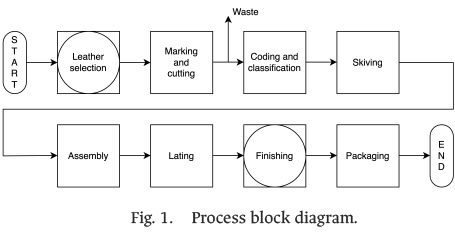
To better understand the situation, a problem tree was developed, as shown in Fig. 2. This diagram identifies the main problem—excessive leather waste—and its root causes: the use of defective leather due to inadequate inspection, cutting errors resulting from the absence of standardized procedures, and machine-related damage caused by poor maintenance. Each cause is linked to a corresponding tool within the proposed solution: TQM addresses inspection processes, Standardized Work improves cutting efficiency, and TPM enhances equipment reliability.
This article presents the proposed model and its application through the following structure. First, it outlines the context, problem, motivation, and diagnostic findings. Then, a literature review is provided to support the selection of the proposed tools. The next section describes the methodology and implementation of the hybrid model. Subsequently, results from the validation stage are discussed, followed by conclusions and a scenario analysis to evaluate the model’s adaptability under different operational conditions.
- Methodology
A. Literature Review
This study draws upon a hybrid improvement model that integrates three well-established methodologies in industrial engineering: TQM, Standardized Work, and TPM. Each of these tools is applied to address a specific root cause of leather waste in the footwear production process, as identified during the diagnostic phase.
TQM is a comprehensive management philosophy that involves all members of an organization in the continuous improvement of processes, products, and services to achieve long-term customer satisfaction. Academic literature supports TQM as a critical driver of organizational performance, as evidenced by studies such as [7], which demonstrate its direct impact on operational efficiency and an organization’s ability to adapt to market demands. In the context of the footwear industry, the implementation of TQM is essential for establishing a robust quality culture, which is fundamental to addressing the root causes of production-related issues. This methodology provides a structured framework to proactively identify and eliminate defects from the earliest stages of the production chain, such as raw material inspection, which is a key factor in mitigating high levels of leather waste.
Furthermore, TQM principles enable a data-driven approach to process control, ensuring that all operational activities are aligned with the strategic objectives of the business. By integrating quality assurance throughout the entire value chain—from supplier management to final product delivery—organizations can significantly improve its resilience and operational efficiency. The continuous application of TQM principles not only leads to a superior end-product but also fosters a proactive problem-solving environment. This ultimately translates into optimized resource utilization, reduced operational costs, and an improved competitive standing in the market.
Standardized Work is a fundamental lean manufacturing tool that focuses on documenting and implementing the most efficient and safest procedures for performing tasks. This tool’s primary objective is to eliminate process variability, a common source of defects, waste, and inconsistencies in production. As confirmed by the literature, including seminal works by Fin et al. [8] and empirical evidence from the footwear sector by Solomon [9], who demonstrated that standardizing the leather cutting method across all operators significantly reduced material waste and improved cutting efficiency. In the footwear sector, where raw material costs are significant, the implementation of this tool is crucial for addressing the problem of excessive leather waste. By defining the “one best way” to perform the cutting process, it ensures that every cut is made with maximum material yield in mind, minimizing leftover scraps.
The application of standardized work directly addresses the problem of high leather waste by providing a clear and uniform template for the cutting process. This practice not only improves material utilization but also serves as a stable foundation for employee training and continuous improvement initiatives. When processes are standardized, it becomes easier to identify inefficiencies and make targeted adjustments. This approach enables further reductions in waste and sustained gains in productivity, as a well-defined and optimized procedure serves as the baseline for all subsequent improvements. Consequently, the implementation of standardized work is a prerequisite for achieving operational excellence in a resource-intensive industry like footwear manufacturing.
TPM is an advanced maintenance strategy that seeks to maximize the overall effectiveness of equipment throughout its entire life cycle. Unlike traditional reactive maintenance, which addresses failures only after they occur, the academic literature supports TPM as a proactive and collaborative approach involving operators, maintenance personnel, and management. This methodology is centered on the principle that equipment failures are largely preventable through a culture of ownership and consistent care.
A core component of TPM is Autonomous Maintenance, a concept that empowers operators to take ownership of their own equipment’s basic maintenance and care. By training operators to perform routine tasks such as cleaning, lubrication, inspection, and minor adjustments, TPM not only frees up specialized maintenance personnel for more complex repairs but also instills a sense of responsibility and enhances the operator’s understanding of their machinery. This proactive approach is vital for the footwear industry, as it ensures that critical machinery, such as sewing and cutting machines, remains in optimal working condition. The implementation of TPM, particularly through Autonomous Maintenance, directly contributes to reducing defects caused by faulty equipment, minimizing production downtime, and ultimately achieving smoother, more efficient, and more productive operation.
Fig. 2 illustrates the alignment of each tool with a specific root cause and its corresponding KPI, forming a coherent strategy for reducing leather waste.
Together, these three methodologies form a synergistic framework that addresses material losses at different stages of the production system including inspection, layout and cutting, and machine operation. The literature supports their individual effectiveness, and their integration into a hybrid model provides a comprehensive response to the structural inefficiencies observed in small-scale leather footwear manufacturing.
B. Innovation Proposal
The Peruvian footwear industry is a traditional and labor-intensive sector that plays a crucial role in the national economy, particularly through the contribution of MSEs. These firms represent a significant share of domestic production and employment; however, they face persistent structural challenges, including limited access to formal financing, high levels of informality, low technological adoption, and operational inefficiencies. These constraints hinder competitiveness and limit the sector’s ability to meet modern market demands.
In recent years, the sector has experienced positive export trends, largely due to the growing demand for quality footwear and the opening of new international markets. However, despite these opportunities, many MSEs continue to struggle with low productivity and high levels of waste in their production processes. One of the most critical issues is the excessive leather waste rate, which in many cases exceeds the accepted industry standard of 20%. Such high waste levels not only reduce profit margins but also compromise sustainability and material efficiency.
Previous studies have emphasized the importance of adopting continuous improvement methodologies to address these inefficiencies. Tools such as TQM, Standardized Work, and TPM have been successfully applied across diverse manufacturing contexts to reduce waste, improve process stability, and increase overall productivity. However, their application in small-scale footwear manufacturing environments remains limited, particularly in Latin America.
This research builds upon these foundations by applying a hybrid model that integrates TQM, Standardized Work, and TPM to address the specific causes of leather waste in a Peruvian footwear MSE. The model not only targets technical improvements but also promotes cultural shift toward operational discipline and process control, contributing to the long-term sustainability of the business.
This study contributes to the existing body of knowledge by applying a hybrid model tailored to the operational realities of small-scale leather footwear manufacturing. While methodologies such as TQM, Standardized Work, and TPM have been extensively studied in large-scale industrial contexts, their integrated implementation in MSEs in the Peruvian footwear sector remains underexplored. This research demonstrates how these tools can be adapted to reduce material waste, improve process stability, and increase profitability in resource-constrained environments.
1) Total Quality Management (TQM): The application of TQM in this study focuses on enhancing raw material inspection prior to production. By implementing visual and tactile quality checkpoints at the leather selection stage, the company was able to identify and isolate defective inputs at an early stage, preventing their entry into the value stream. This contributes to a proactive quality culture and aligns with the principles of defect prevention rather than post-process detection. The study provides practical evidence that TQM can be effectively applied without the need for costly automation or advanced inspection systems.
2) Standardized Work: Standardized Work was applied to address variability in the leather cutting process. Through the use of simulation software (DeepNest) and printed cutting templates, a repeatable and optimized layout optimized layout methodology was implemented, significantly reducing material losses caused by inconsistent cutting practices. This contribution demonstrates that even in highly manual processes, visual standardization and structured operator guidance can substantially improve resource utilization and process efficiency. Furthermore, the integration of operator training and continuous audits reinforces a sustainable cycle of continuous improvement.
3) Total Productive Maintenance (TPM): TPM was implemented to reduce leather losses caused by sewing machine failures. The study introduced a dual-level maintenance approach—daily autonomous maintenance by operators and monthly technical inspections—supported by digital incident tracking using UpKeep. This framework improved machine reliability and reduced downtime, protecting semi-finished products from damage. The key contribution of this approach lies in demonstrating that TPM can be adapted to small workshop environments and still yield measurable performance gains, even in the absence of sophisticated monitoring systems.
Together, these tools form a coherent and adaptable model that can be replicated in similar small and medium-sized enterprises (SMEs). This research not only addresses a specific operational problem—leather waste—but also provides a structured methodology that supports broader objectives of productivity, sustainability, and competitiveness in emerging economies.
C. Implementation of the Integrated System
The following section presents the improvement proposal through various phases and components. This model integrates the information gathered during the diagnostic phase and links the proposed actions to each selected technique.
1) Phase 1 - Data Collection: In this initial phase, information is gathered. An empirical study was conducted through the analysis of historical production records, direct observation in the plant, and interviews with operational staff. As an analytical tool, a problem tree was developed, which allowed for a clear visualization of the cause-and-effect relationships associated with the identified issue. The diagnostic process revealed that the main cause of leather waste is linked to three primary reasons: production of shoes with defects (leather blemishes), errors in the cutting area, and errors in the sewing area.
2) Phase 2 - Implementation of TQM, Standardized Work, and TPM: To address the identified problem, an integrated system was implemented with the objective of preventing waste generation.
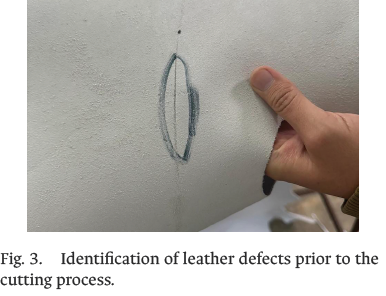
2a) Implementation of TQM: The proposed improvement incorporated a visual and tactile inspection point for leather sheets prior to cutting, structured according to the TQM approach.
A standardized template was developed for evaluating the leather, enabling the identification of unusable areas, as illustrated in Fig. 3. A marking procedure was implemented to guide operators on which areas to avoid during cutting. This action not only strengthens quality assurance from the early stages but also promotes a culture of continuous improvement and visual control based on objective criteria.
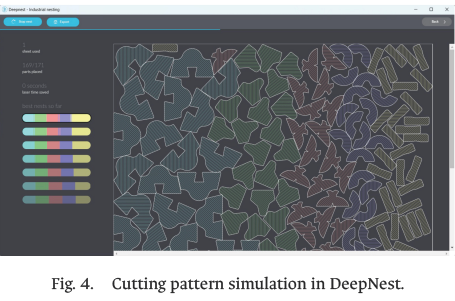
2b) Implementation of Standardized Work: For this implementation, the DeepNest tool was employed as an automated nesting software, enabling the simulation of the optimal arrangement of pieces on a given surface, as shown in Fig. 4. The proposal involves digitally designing the cutting patterns and then printing them for direct use on the leather sheets by operators. This action introduced a standardized visual guide into the cutting process, reducing reliance on individual judgment and improving leather utilization. Additionally, this improvement enabled the standardization of results among operators and reduced variability between production batches, without requiring costly automation.
2c) Implementation of TPM: A maintenance system was designed and implemented based on the principles of TPM, as illustrated in Fig. 5. The TPM implementation was structured as a staged process, with the purpose of transforming the maintenance culture from a reactive orientation to a preventive one. The cornerstone of this approach was Autonomous Maintenance, for which an intensive four-day training program was developed for the sewing machine operators. This training was delivered by an industrial machinery specialist at the end of the workday and covered essential topics such as machine anatomy, cleaning and lubrication routines, common adjustments based on the type of leather, and the use of the UpKeep software for digital recording of incidents and machine maintenance. Following the training, the recording process was standardized through the use of daily maintenance checklists in UpKeep, lasting 10 to 15 minutes and conducted before and after the workday, ensuring tasks such as needle inspection, residue removal, and verification of the electrical system were consistently performed.
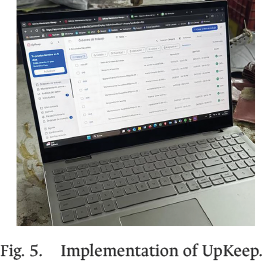
This pillar of Autonomous Maintenance was complemented by monthly Planned Maintenance, conducted by specialized technical personnel and focused on in-depth inspections and preventive adjustments. The UpKeep software served as the central element of the system, enabling supervisors to monitor compliance with routines for each operator, analyze failure frequency, and establish a knowledge base to anticipate future issues. In this way, the initiative not only ensures the operational availability of equipment and prevents recurring failures that affect leather pieces but also fosters operator accountability in machinery care and supports continuous and reliable production.
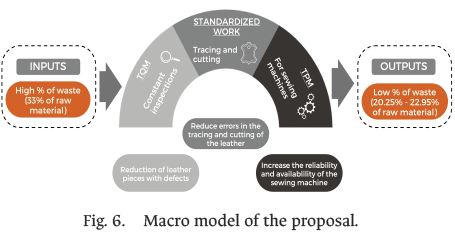
The overall improvement approach is summarized in the macro model as shown in Fig. 6. The proposal integrates three complementary tools: TQM to reduce the number of defective leather pieces through improved inspection processes, Standardized Work to minimize tracing and cutting errors, and TPM to increase the reliability and availability of sewing equipment. The model illustrates the transformation from a high raw material waste rate of approximately 33% to a reduced range between 20.25% and 22.95%, thereby improving material utilization and process efficiency.
To evaluate the effectiveness of the proposed improvement model, the following KPIs were defined, each associated with one of the implemented tools:
- Percentage of area lost due to defective parts (TQM): This indicator quantifies the waste generated directly by quality defects in the raw material. It measures the impact of the TQM implementation by ensuring that only defect-free leather pieces proceed through the production process.

Where Adefective is the area lost due to defective leather, and Atotal is the total leather area used.
- Percentage of total waste area (Standardized Work): This KPI measures the overall efficiency of material usage. It quantifies the reduction in total waste (scrap) achieved through the standardization of cutting and tracing processes, thereby optimizing leather utilization.

Where Awaster is the total scrap leather area, and Aused is the total leather area fed into production.
- Percentage of area lost due to sewing machine breakdowns (TPM): This indicator quantifies material losses specifically caused by technical failures or equipment breakdowns. It serves as a direct measure of the effectiveness of TPM in ensuring machinery availability and proper operation.

Where Adamaged is the number of pairs damaged due to machine failures, and Ain−process is the total number of pairs in process.
- Total Percentage of Lost Leather (General): This overall indicator consolidates the losses identified by TQM, Standardized Work, and TPM. It represents the cumulative reduction of waste throughout the process, providing a comprehensive view of the project’s success.

Where Alost is the sum of all leather losses from various causes, and Atotal is the total leather area available for production.
- Results
The implementation of the hybrid improvement model, integrating TQM, Standardized Work, and TPM, resulted in measurable and significant reductions in leather waste.
As summarized in Table I, TQM reduced the percentage of area lost due to defective (scarred) leather pieces from 6.8% to 4.4%, a decrease of 2.4 percentage points. This improvement was achieved by strengthening the inspection stage, enabling early detection and marking of unusable areas to prevent their incorporation into production.
TABLE I
Implementation Results
|
Tools |
Indicator |
Unit |
AS-IS |
TO-BE |
Var. |
|
TQM |
Percentage of area lost due to defective (scarred) leather pieces |
% |
6.8% |
4.4% |
-2.4% |
|
Standardized Work |
Total percentage of area wasted |
% |
22.4% |
13.5% |
-8.9% |
|
TPM |
Percentage of area lost due to sewing machine breakdowns |
% |
4% |
2.2% |
-1.8% |
|
%Loss |
|
|
33.2% |
20.1% |
-13.1% |
Standardized Work had the largest impact, reducing the total percentage of area wasted from 22.4% to 13.5% (-8.9 percentage points). The implementation of optimized cutting layouts using DeepNest software, combined with printed templates for operators, minimized cutting variability and enhanced leather utilization across production batches.
The implementation of Autonomous Maintenance, as a fundamental pillar of TPM, demonstrated significant improvements in the operational efficiency of the production process. Quantitatively, the KPI percentage of area lost due to sewing machine breakdowns decreased from an average of 4% in the baseline scenario to 2.2% in the improved scenario, representing a reduction of 1.8 percentage points. The robustness of this improvement was confirmed through statistical analysis, as the 95% confidence intervals for both scenarios ([3.85%, 4.15%] for the baseline and [2.1%, 2.3%] for the improved) do not overlap. Consequently, the observed difference is statistically significant (p <0.05) and cannot be attributed to random variation. From a qualitative perspective, the application of Autonomous Maintenance routines—including daily cleaning, lubrication, and inspection tasks performed by operators, complemented by monthly technical inspections—contributed to a substantial reduction in production losses associated with equipment failures. Moreover, it standardized maintenance practices and fostered a cultural shift among workers.
The combined effect of these tools reduced the overall %Loss indicator from 33.2% to 20.1%, representing a total improvement of 13.1 percentage points. This translates into both material and economic benefits, with the company recovering a substantial volume of usable leather while also strengthening operational reliability.
- Discussion
A. Validation Scenario
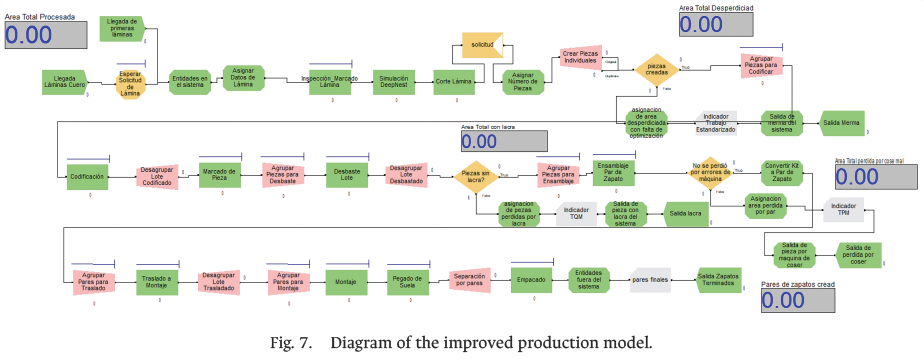
The validation of the proposed model, which integrates TQM, Standardized Work, and TPM, allowed for a direct comparison between the current state and an improved scenario through both Arena simulation and on-site pilot tests. The simulation incorporated specific modules such as Leather_Inspection_Marking for TQM, DeepNest Simulation for Standardized Work, and scheduled maintenance using UpKeep for TPM, enabling an accurate representation of the improvements in quality control, cutting optimization, and machine availability.
Post-implementation results were consistent across both validation methods, confirming the robustness of the proposed model. Leather loss decreased from 946 ft² to 553 ft² per month, corresponding to a saving of USD 3,444 per month, while the overall waste percentage dropped from 44% to 26%. These results exceed the reduction needed to meet the sector benchmark. This performance is theoretically supported by Al-Qahtani et al. [7] and is consistent with the empirical evidence of Phan et al. [10] that TQM process control practices reduce process variance, leading to fewer scraps and lower production costs in manufacturing environments.
B. Initial Diagnostic
In the initial diagnostic, the waste rate of 32% significantly exceeded the industry standard of 20%. The main causes identified were cutting defects (43%), sewing errors (19%), and leather with blemishes (38%). These conditions generated irrecoverable material losses and adversely affected the final product quality.
Additionally, operator productivity averaged 71 pairs per month, and leather utilization showed high variability. These findings underscore the need for an integrated approach capable of simultaneously addressing quality inspection, process variability, and equipment reliability simultaneously.
C. Validation Design
The validation was designed with a dual approach combining simulation and real-world experimentation. The model was first tested in Arena, representing both the current (AS-IS) and improved (TO-BE) processes, as shown in Fig. 7.
Subsequently, pilot tests were carried out focusing on Standardized Work and TPM, while the validation of TQM was mainly supported by simulation.
In both cases, KPIs, waste volume and final output, showed significant improvements: waste from blemishes decreased by 35%, waste from sewing errors decreased by 42%, and monthly productivity per operator increased by 39%, rising from 71 to 99 pairs. The benefit–cost ratio (B/C) was 11.64, confirming the economic feasibility of the model.
While the results indicate strong potential for replication in other footwear SMEs, the model’s success depends on sustained training, cultural adoption of standardized practices, and adaptation to local constraints. Integration with digital monitoring or partial automation could further enhance preventive maintenance effectiveness and real-time quality control, amplifying the model’s long-term impact.
- Conclusions
This research presented an operational improvement model aimed at reducing leather waste in a Peruvian small-footwear manufacturing enterprise. The proposed hybrid model combined TQM, Standardized Work, and TPM to address the primary sources of waste: defective raw materials, inefficient cutting processes, and sewing machine failures.
The model’s implementation reduced total leather waste from 33.2% to 20.1%. Individually, cutting waste decreased from 22.4% to 13.5%, machine-related losses from 4% to 2.2%, and material losses due to defects from 6.8% to 4.4%. These results were validated using both real data collection and discrete-event simulation.
The financial analysis indicated a benefit–cost ratio (B/C) of 11.64, with monthly savings of USD 3,444 against an initial investment of USD 2,678.40. The return on investment was achieved in under three months, confirming the solution’s economic feasibility.
The integration of the three tools enhanced operational discipline, process standardization, and preventive maintenance practices without requiring high-cost automation. The results support the scalability and applicability of the model to other SMEs within the footwear industry that face similar constraints.
References
[1] Ministerio de la Producción (PRODUCE), "Análisis sectorial: Desempeño e importancia de la industria de cuero y calzado 2019–2024," Oficina General de Evaluación de Impacto y Estudios Económicos, Lima, Perú, Feb. 2025.
[2] A. F. Espinoza Espinoza, C. O. Venturo Orbegoso, and O. J. Bravo Chávez, “Factores que inciden en el crecimiento de las mypes de calzado [Factors affecting the growth of footwear MSEs],” Inno. Res. J., vol. 5, no. 2, pp. 67-81, 2020.
[3] R. Calderón-Andrade, E. S. Hernández-Gress, and M. A. Montufar Benítez, "Productivity improvement through reengineering and simulation: A case study in a footwear-industry," Applied Sciences, vol. 10, no. 16, p. 5590, 2020.
[4] S. E. Munive Silvestre, V. D. Paucar Chaicha, J. C. Alvarez Merino, and S. Nallusamy, "Implementation of a Lean Manufacturing and SLP-based system for a footwear company," Production, vol. 32, e20210072, 2022.
[5] G. A. Laura-Ulloa, G. N. Chinchay-Morales, and J. C. Quiroz-Flores, “Lean model applied to increase the order fulfillment in SMEs in the footwear industry,” in IEIM 2022: 2022 The 3rd International Conference on Industrial Engineering and Industrial Management. New York, United States: Association for Computing Machinery, 2022, pp. 141-146, doi: 10.1145/3524338.3524360.
[6] M. Tauhiduzzaman, M. A. Mottalib, M. J. Rahman, and M. A. Kalam, “Preparation and characterization of composite sheets from solid leather waste with plant fibers: A waste utilization effort,” Clean Technol. Environ. Policy, vol. 26, pp. 1025–1038, 2023.
[7] N. D. Al-Qahtani, S. S. Alshehri, and A. Abd. Aziz, "The impact of Total Quality Management on organizational performance," Eur. J. Bus. Manag., vol. 7, no. 36, pp. 119-127, 2015.
[8] J. Fin, G. Vidor, I. Cecconello, and V de C. Machado, "Improvement based on standardized work: An implementation case study [Mejora basada en el trabajo estandarizado: Un estudio de caso de implementación]," Brazilian Journal of Operations & Production Management, vol. 14, no. 1, pp. 388-395, 2017.
[9] B. B. Solomon, “Leather cutting waste minimization techniques in Ethiopian footwear industry: Case study ELICO–Universal Leather Products Industry,” Research Square, 2021.
[10] A. C. Phan, A. B. Abdallah, and Y. Matsui, “Quality management practices and competitive performance: Empirical evidence from Japanese manufacturing companies,” International Journal of Production Economics, vol. 133, no. 2, pp. 518-529, 2011.