Virtual Reality for Remote
Inspection of Railway Tunnels
Felipe Muñoz La Rivera1 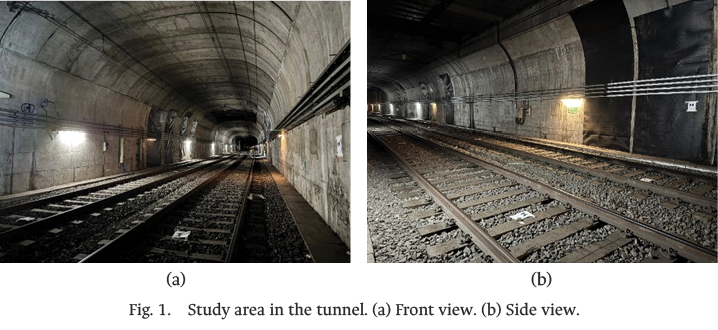 , Andrés López Valenzuela2 , Mathias Proboste3 ,
Sofía Montecinos Orellana4 , Guillermo Höfflinger Bartsch5 , Javier Mora Serrano6
1 [email protected], 2.[email protected], 3 [email protected],
4 [email protected], 5 [email protected], 6 [email protected]
124 School of Civil Engineering, Pontificia Universidad Católica de Valparaíso, Chile
3 Escuela de Caminos, Canales y Puertos, Universitat Politècnica de Catalunya, Spain
5 Efe Valparaíso, Chile | 6 International Centre for Numerical Methods in Engineering, Spain
Recibido: 08 Mayo 2025 / Publicado: 24 Abril 2026
https://doi.org/10.26439/ciic2025.8670
ABSTRACT—The inspection of railway tunnels is essential to ensure the safety and operability of transportation networks. Traditionally, these inspections are conducted through on-site visual assessments, which entails logistical challenges, occupational hazards, and operational interruptions. Although there have been technological advances in infrastructure inspection, on-site visual inspection remains predominant due to the strong reliance on direct observation and the value of the inspector’s field experience. In this context, this study analyzes the efficiency of railway tunnel inspections in virtual reality (VR) environments as an alternative to traditional methods. The research applies Design Science Research Methodology (DSRM) to develop and validate a VR-based inspection protocol, using as a case study a detailed model generated from a point cloud of a railway tunnel. The developed protocol was evaluated and compared with the traditional methodology using 5 key performance indicators (KPIs). The results showed that VR matches the accuracy of traditional inspections, while increasing coverage, reducing operational time, and minimizing service interruptions. However, it also presents certain limitations such as restricted graphical resolution and a learning curve for new users. This study concludes that the effective implementation of VR-based structural inspections represents a key opportunity to significantly improve the management and maintenance of critical infrastructure, providing a safer, more precise, efficient, and operationally sustainable approach.
Index Terms—Railway tunnels, remote inspection, virtual reality (VR).
Thematic Axes—Thematic Area 5: Construction Processes and New Technologies >
2. Virtual Design and Construction (VDC)
- Introduction
A. Inspection and Maintenance of Railway Tunnels
Railway infrastructure plays a crucial role in transportation systems and faces increasing maintenance demands similar to those observed across the Architecture, Engineering, Construction, and Operation (AECO) sector. In this context, railway tunnels represent a critical component of the network, especially in underground railway systems and mountainous regions. However, these structures are subject to deterioration processes caused by continuous use, geotechnical conditions, humidity, water infiltration, vibrations, and material aging, which may compromise their structural integrity if not detected in time [1].
Therefore, the periodic inspection and maintenance of railway tunnels is a critical process for ensuring their functional and structural integrity. Effective inspection enables the detection of damage such as cracks, leaks, or deformations, which may lead to severe failures if not addressed in a timely manner. The data gathered during these inspections provide the foundation for planning preventive or corrective maintenance activities and for making operational decisions that ensure the safety of the railway system [2].
In this regard, the traditional method of on-site visual inspection, which requires inspectors to be physically present inside the tunnels, remains the most widely adopted approach [3]. Despite its prevalence, this method poses significant challenges, including the need for temporary track closures, the exposure of personnel to hazardous environments, and a strong dependence on the inspector’s experience and judgment. Although a variety of technologies are now available, reliance on on-site visual inspection is still substantial [4].
B. The Role of VR in Inspections
The adoption of emerging technologies, such as VR, has begun to substantially transform processes in the construction and infrastructure maintenance sectors. In the specific domain of structural inspection, VR facilitates the reconstruction of highly detailed three-dimensional (3D) environments that may be explored in real time. This development creates new opportunities for remote, safe, and efficient assessment of critical assets, such as railway tunnels [5].
VR enables users to interact with precise digital models that accurately replicate the geometric and material characteristics of real-world structures. These models may be generated by means of point clouds, photogrammetry, or laser scanning, thereby enabling a realistic and navigable representation of the inspected environment [6]. By employing immersive devices, inspectors may explore hard-to-access areas, simulate specific lighting or deterioration conditions, and record observations without physical risk or disruption to railway operations. Furthermore, this technology enables repeated inspections by multiple users, thereby enhancing traceability and promoting standardization [7].
Among the primary advantages of applying VR in infrastructure inspections is the reduction of risks to inspectors by eliminating exposure to hazardous environments. It also minimizes tunnel downtime (TD), as data acquisition may be performed without interference to railway operations [8]. In addition, VR enables broader coverage of the infrastructure, as entire areas may be virtually explored with millimeter-level accuracy [9]. A permanent digital record of the inspection may be kept, enabling historical comparisons, audits, and training activities. Moreover, VR facilitates immersive training experiences by providing realistic scenarios that enable new inspectors to prepare without requiring access to the actual site [10]. Finally, this approach may optimize resources by reducing the logistical and human costs typically associated with frequent on-site inspections [11].
In summary, VR is not merely an alternative to conventional inspection methods; it represents a strategic opportunity to transform the management, maintenance, and inspection of underground railway infrastructure while enhancing both safety and operational efficiency [12].
C. Research Gap and Objectives
Despite the growing advancement of technologies for infrastructure inspection, on-site visual inspection remains the predominant methodology [6], [13]. This is primarily attributed to the value of the inspector’s direct observation, which allows the identification of subtle structural conditions that are often difficult to detect through automated means [7], [14]. However, this reliance on human perception constrains the adoption of advanced solutions, many of which introduce novel approaches for data acquisition and analysis but face challenges related to data management and the absence of validated, standardized protocols for efficient implementation [5], [15].
In this context, immersive technologies such as VR represent a promising opportunity to redefine inspection processes in a structured, quantifiable, and safe manner. This study aims to evaluate the operational efficiency of railway tunnel inspections performed in VR environments as an alternative to conventional visual methods. To achieve this objective, a specific inspection protocol was developed and validated using a 3D model generated from a railway tunnel point cloud, enabling a detailed and immersive evaluation of structural conditions.
D. Article Structure
The article is organized into three main sections. The first section introduces the methodological framework and the formulation of the inspection protocol within VR environments, describing the adopted approach, the selection of technological tools, and the definition of performance indicators. The second section details the implementation of the protocol in a real case study, encompassing the generation of the 3D model, the construction of the virtual environment, and the implementation of the inspection process. Finally, the third section presents the results and provides a comparative analysis between the conventional inspection methodology and the VR-based approach, assessing its effectiveness, benefits, and limitations.
- Research Methodology
For this research, the Design Science Research Methodology (DSRM) was used because of its suitability for the creation and evaluation of technological artifacts, thereby enabling the research process to be represented in a structured manner. The process was divided into five stages: (I) problem and motivation identification, (II) objective definition for a potential solution, (III) design and development, (IV) demonstration, and (V) evaluation.
In the first stage, the available literature was reviewed based on the Web of Science database. Additionally, possible methodologies for tunnel inspection in VR environments were explored using the same source. Based on this research, the second stage focused on defining the objectives of a potential solution, proposing that the use of a VR environment may enhance the efficiency of tunnel inspections.
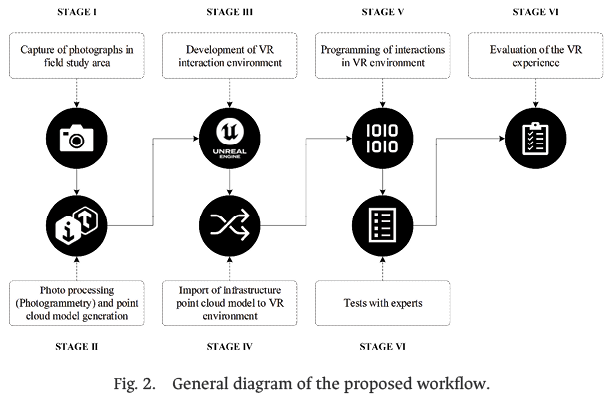
The third stage designed and developed an inspection protocol for a VR environment. To this end, the standard tunnel inspection methodology established in the technical guidelines of the Chilean National Railway Company (EFE Trenes de Chile) was adopted. Key inspection tasks, such as the identification and mapping of defects including cracks, water ingress, and spalling, were translated into the VR environment to identify areas where VR may enhance efficiency. This process involved incorporating steps for photogrammetric data acquisition and 3D model generation prior to the virtual inspection phase.
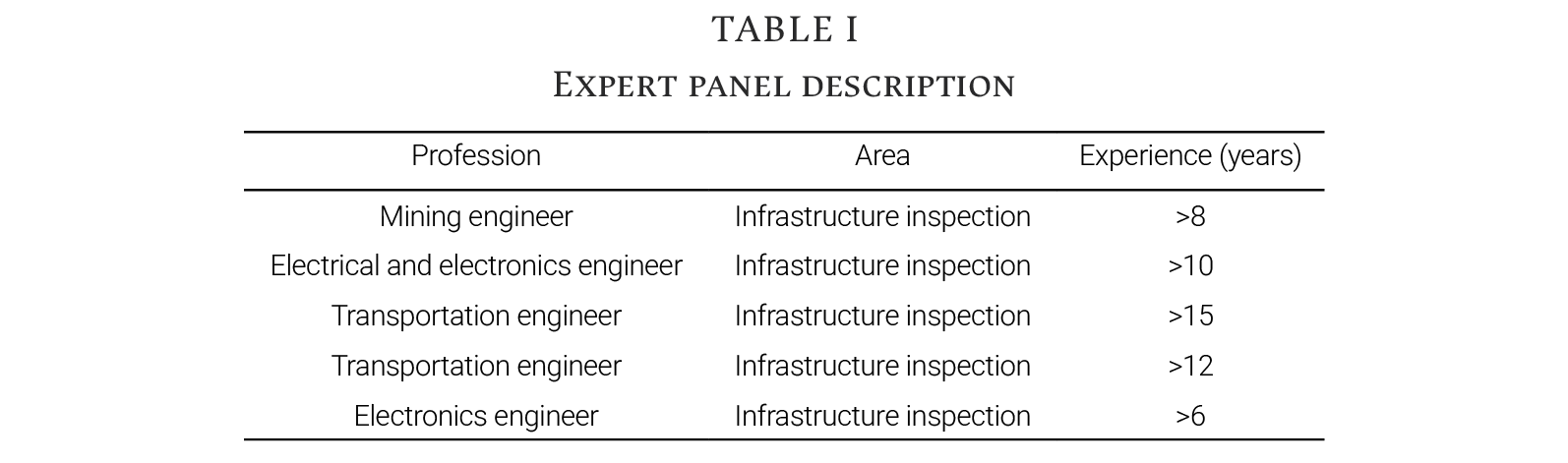
The fourth stage formulated the protocol in a case study. The case study was first reconstructed as a 3D model using Autodesk Revit software. A photographic survey of the tunnel was subsequently performed and integrated into the 3D model. Once the model was complete, the VR environment was tested according to the protocol established in the previous stage, and the results were recorded. For the testing phase, a group of experts specializing in railway tunnel inspection was selected. Five experts were appointed, each with more than five years of experience in inspection processes for the company that owns the infrastructure under study. Table I summarizes the characteristics of the experts. Finally, in the fifth stage, the results of the virtual inspection were evaluated and compared with those obtained from a standardized inspection of the case study. Performance indicators were reviewed, and improvements were proposed for both inspection methods.
- Design and development
A. Case Study Description
The case study focuses on a critical section for regional connectivity within a railway tunnel in Viña del Mar (Chile), used for both passenger and freight transportation. The section selected for the study spans approximately 65 m. The tunnel infrastructure has a straight, horseshoe-shaped geometry, designed to optimize structural stability and load distribution. The distance between the side walls is 7.936 m, and the height from the track platform to the vault is 5.850 m. The tunnel was constructed using the cut-and-cover technique, with reinforced concrete as the primary material, providing durability under operational and environmental conditions. Fig. 1 depicts a photograph of the study area.
B. Workflow
The development of the VR environment for tunnel inspection followed a structured workflow, as shown in Fig. 2, enabling the physical conditions of the infrastructure to be accurately replicated.
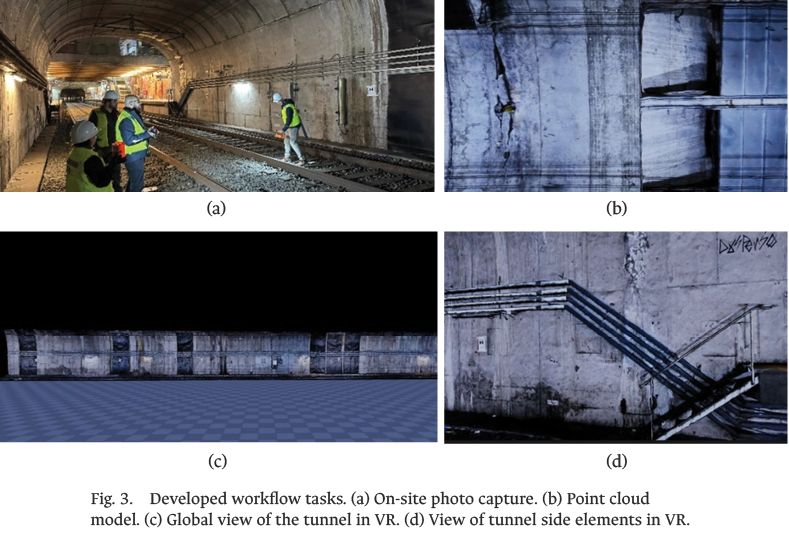
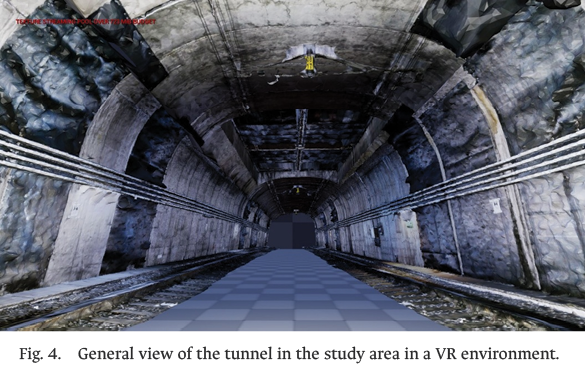
The process began with the capture of high-resolution, on-site images during the photogrammetric survey phase (Fig. 3(a)). The images were processed using Bentley’s iTwin software, enabling the generation of a detailed 3D model of the tunnel in .las and .obj formats. These formats were adopted for their ability to optimize the geometric and visual representation of the infrastructure. The .obj format was preferred over the .las format for its more efficient use of computational resources, ensuring optimal performance in the VR environment (Fig. 3(b)). Subsequently, the VR environment was set up in Unreal Engine, as shown in Fig. 3(c) and 3(d), integrating the generated models with interactive tools that facilitated navigation and virtual inspection. The environment included options for horizontal and aerial movement, as well as lighting adjustments to enhance the visualization of structural details. In addition, specific digital tools were incorporated, including rulers for crack measurement and marking systems for damage identification.
Upon completion of the virtual environment development, as shown in Fig. 4, preliminary tests were conducted by the research team to ensure its functionality and accuracy. These tests focused on verifying interaction with the models, the clarity of these models within the VR environment, and the overall system usability. These aspects were evaluated prior to testing with expert users.
- Implementation and results
A. Expert Testing
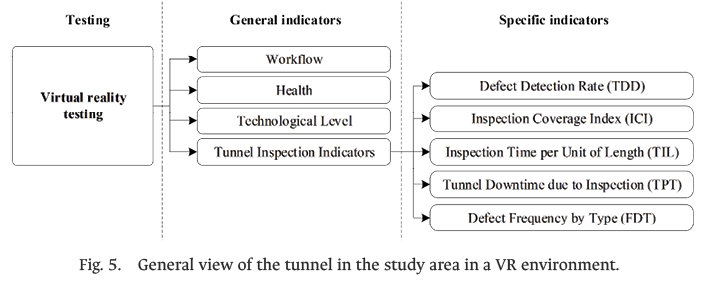
The VR environment developed for tunnel inspection was validated with the participation of a panel of five experts selected for their experience in railway infrastructure inspection. The evaluation process consisted of three main stages, as shown in Fig. 5.
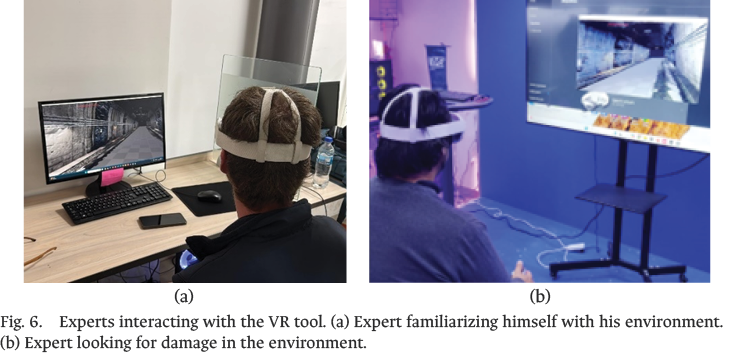
In the first stage, the experts became familiar with the system, including the use of VR headsets and associated controls, as illustrated in Fig. 6(a). This phase was essential to ensure that participants fully understood the available tools and could interact efficiently within the virtual environment. During the second stage, a virtual inspection session was conducted, during which the experts evaluated the system’s capability to identify structural damage—such as cracks and leaks—present in the 3D model, as shown in Fig. 6(b). This analysis included both the identification of critical elements and the interaction with the virtual tools integrated into the inspection protocol. Finally, in the third stage, experts were asked to provide their feedback of the developed environment through structured questionnaires that evaluated aspects such as usability, level of immersion, and the accuracy of the tools compared with traditional inspection methods.
B. Results
The following presents the results of the experts’ feedback regarding the system workflow, associated physical symptoms, level of technological expertise, and key performance indicators (KPIs) for specific tunnel inspection tasks.
1) Workflow: (1) The analysis of the workflow within the VR environment yielded highly positive results. Four of the five experts rated the workflow as very efficient, while the remaining expert rated it as efficient. This perception highlights that the implemented digital tools, such as the measuring devices and marking systems, significantly optimize the inspection process, enabling a more agile and accurate performance compared with traditional methods. Additionally, the immersive environment was praised for its ability to maintain focus on the assigned tasks. Three out of five participants reported an extremely high level of immersion, while the remaining two rated it as high. However, some users reported minor challenges when navigating the environment, particularly with lighting adjustments and the visualization of structural details, which suggested the need for improvements in these technical aspects.
2) Health: In terms of physical well-being, most participants reported mild or no symptoms during the use of the system. Two out of five experts reported no discomfort, while a similar percentage mentioned low levels of visual fatigue and slight dizziness. However, one out of five experts experienced a moderate cognitive load, attributed to the need to perform multiple tasks simultaneously, such as inspecting structural elements and navigating through the virtual environment. The levels of visual fatigue were mainly related to the system’s graphical resolution and lighting, which were identified as priority areas for future improvements. Moreover, balance and orientation remained stable for most users, although pre-training sessions were recommended for those with less experience in immersive technologies.
3) Technological Level: The evaluation of the technological level revealed that prior knowledge of advanced technologies significantly influences the perception of the system’s ease of use and utility. Three out of five participants reported that their prior experience with technological tools had a high or very high influence on their ability to interact with the virtual environment. On the other hand, two of the five participants with moderate or low familiarity with these tools reported a steeper learning curve, although they considered it manageable with appropriate guidance. Regarding specific experience with VR, two out of five indicated they had not previously used this technology in professional applications. Nevertheless, all participants were able to adapt to the system, demonstrating its accessibility even for users with limited prior experience. This adaptability reinforces the importance of integrating interactive tutorials and training sessions when deploying immersive technologies in new operational contexts.
4) Tunnel Inspection Indicators: The evaluation of the KPIs between traditional inspection methodologies—using data provided by the maintenance company for the same inspection process—and the VR-based methodology. These indicators were designed to measure operational efficiency, coverage, and accuracy, providing a comprehensive assessment of the strengths and areas for improvement in the VR-based approach.
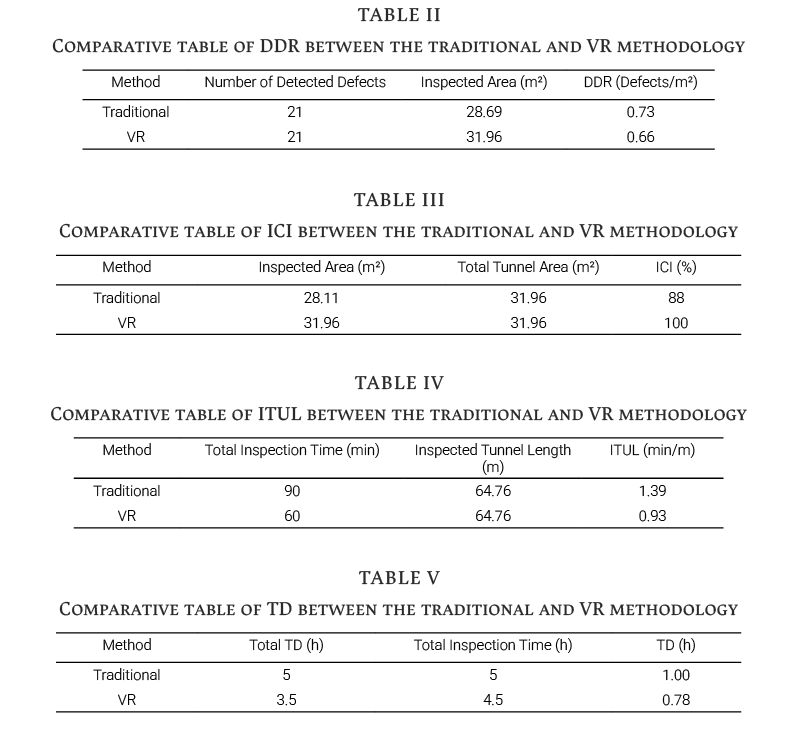
The Defect Detection Rate (DDR) quantifies the number of defects identified per unit of inspected area. This metric is critical for assessing the effectiveness of each inspection methodology in detecting critical structural damage. In this case, the results showed similar values between the two methods, with 0.73 defects/m2 for the traditional approach and 0.66 defects/m2 for the VR-based approach, as shown in Table II. While the accuracy was comparable, the VR-based approach provided additional advantages in terms of traceability and digital defect recording.
The Inspection Coverage Index (ICI) represents the percentage of the tunnel’s total area that was inspected. Results indicated that the VR-based methodology achieved full coverage (100%), while the traditional method reached 88%, as shown in Table III. This difference reflects the capability of the VR-based approach to evaluate hard-to-reach areas, thereby minimizing the risk of overlooking critical zones.
The Inspection Time per Unit Length (ITUL) was used to measure the time efficiency of each methodology. VR showed a significant advantage, reducing the required time from 1.39 to 0.93 min per inspected meter, as shown in Table IV. This improvement reflects the elimination of external interruptions such as weather conditions or operational constraints.
The TD metric assesses the operational impact of inspections on railway service. The VR-based approach reduced this time from 5 to 3.5 h, demonstrating its capability to perform comprehensive evaluations with minimal disruption to operations, as shown in Table V.
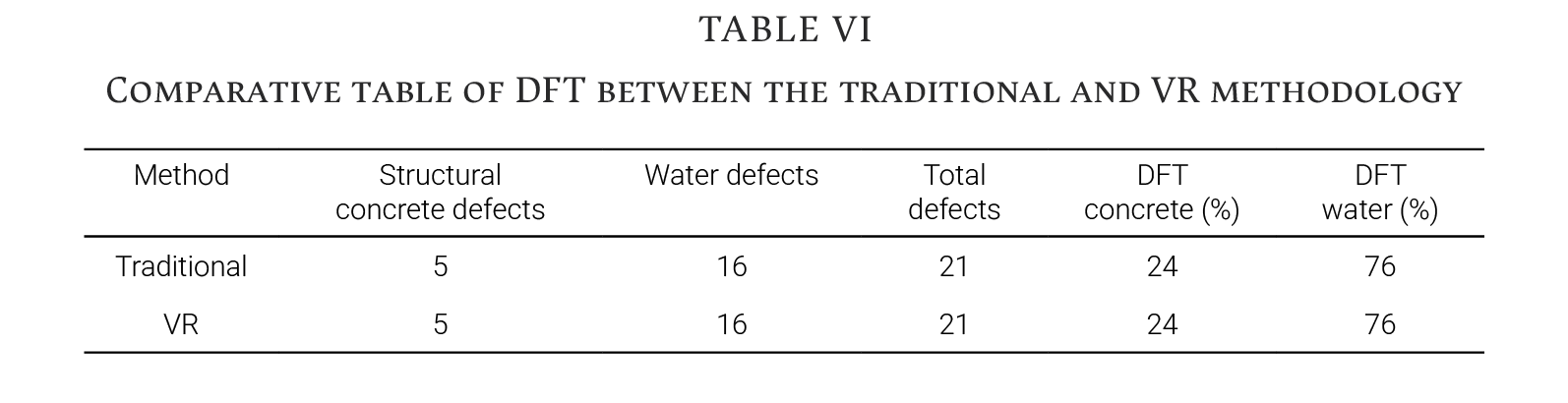
The Defect Frequency by Type (DFT) metric enabled the categorization of detected damages, supporting a more detailed analysis of maintenance needs. Both methods identified similar patterns, with 76% of defects associated with water infiltration and 24% associated with structural concrete issues, as shown in Table VI.
- Discussions
A. General Discussions
The implementation of VR in the inspection of railway tunnels has proven to be a significant advancement in the optimization of critical maintenance processes. The results obtained through KPIs confirm the feasibility of the proposed methodology, demonstrating its capability to achieve accuracy comparable to that of traditional inspections while improving coverage and reducing operational times. The DDR values were comparable between both methodologies, indicating that VR can effectively replicate established detection standards.
Additionally, the ICI metric demonstrated a significant advantage for the VR approach, achieving 100% coverage compared to 88% for the traditional method. This aspect is particularly relevant in complex environments, where traditional inspections may face logistical limitations. Moreover, the reduction in ITUL and TD underscores the operational efficiency of the virtual-based approach, minimizing disruptions and improving resource planning. These findings suggest VR has potential for integration into standard tunnel inspection workflows, providing quantifiable benefits beyond those achievable with traditional methods.
However, some technical challenges remain. Participants with less experience in immersive technologies reported moderate difficulties in visualizing specific details, primarily due to issues with graphical resolution and lighting adjustments. These findings highlight the importance of technical improvements and the incorporation of training programs to optimize user experience.
B. Limitations
Although the VR-based methodology demonstrated high potential, the development and implementation of the model faced several limitations that must be considered:
- Logistical challenges for tunnel access: Obtaining the necessary Weekly Work Permit (PST) posed significant challenges, particularly in complying with strict railway safety regulations related to high-voltage catenaries. The requirement for specific licenses, such as the P6 permit, and the need for coordination with multiple entities delayed the initial data collection process.
- Limitations of photographic equipment: Relying on a standard camera for visual surveying-imposed restrictions on capturing complex geometric details. Although a 90% image overlap ensured sufficient coverage, the use of advanced tools—such as LiDAR cameras or specialized drones—could have further improved the quality of data capture.
- Computational constraints: Rendering the detailed 3D model using software like Unreal Engine and iTwin required intensive computational resources. This led to extended model generation times and occasional navigation difficulties within the virtual environment, especially on mid– to low-range devices. These findings highlight the need to optimize rendering and visualization algorithms to facilitate broader adoption across various operational contexts.
C. Future Research Directions
This study opens multiple opportunities to expand and enhance the application of VR in structural inspections. Key directions for future research include:
- Integration of interactive tools: Developing new functionalities within the virtual environment—such as tools for measuring cracks directly on the 3D model or for marking damaged areas in real time—could enhance inspection accuracy and traceability. These tools would also facilitate the generation of automated reports.
- Improvements in data capture: The integration of advanced technologies, such as LiDAR cameras or drones equipped with multispectral sensors could improve the quality and precision of initial surveys, overcoming limitations associated with conventional photographic equipment.
- Computational optimization: Research aimed at reducing computational demands for rendering and navigating virtual environments could significantly increase accessibility. This includes the implementation of more efficient algorithms, 3D model compression, and adaptive visualization techniques.
- Validation in different scenarios: Expanding the application of VR to other infrastructure types, such as bridges or underground stations, would provide a broader comparative framework to evaluate its applicability under diverse structural and operational conditions.
- Conclusions
This study demonstrates that the implementation of VR environments in railway tunnel inspections is not only feasible but also highly effective in terms of efficiency, safety, and accuracy. The results demonstrate that VR maintains a DDR comparable to traditional inspections, while offering additional benefits in key areas such as the ICI, which reached 100%, significantly surpassing the 88% achieved with conventional methodologies. This level of coverage ensures a comprehensive evaluation, reducing the likelihood of overlooking critical areas.
In addition, VR optimizes operational times, reducing the ITUL from 1.39 to 0.93 min/m, and decreasing the TD from 5 to 3.5 h. These results reinforce the capability of this technology to conduct inspections more efficiently, minimizing operational disruptions and associated costs.
Nevertheless, challenges remain that must be addressed to maximize the adoption of this technology. Among them are the need to improve technical aspects of the system, such as graphical resolution and lighting, and to provide adequate training to reduce the learning curve for inspectors with limited experience in advanced VR tools. Additionally, further research should prioritize the validation of the developed protocol and its replicability in other infrastructure contexts.
Overall, this study contributes to the existing body of knowledge by establishing a standardized protocol for railway tunnel inspection using VR, demonstrating its advantages over traditional methodologies. These findings underscore the potential of VR not only to transform maintenance processes in railway infrastructure but also to be applied across other areas of civil engineering, promoting safer, more efficient, and sustainable practices.
References
[1] N.-H. Pan and N. N. Isnaeni, “Integration of Augmented Reality and Building Information Modeling for Enhanced Construction Inspection—A Case Study,” Buildings, vol. 14, no. 3, p. 612, Mar. 2024, doi: https://doi.org/10.3390/buildings14030612
[2] A. Sánchez-Rodríguez, B. Riveiro, M. Soilán, and L. M. González-deSantos, “Automated detection and decomposition of railway tunnels from Mobile Laser Scanning Datasets,” Automation in Construction, vol. 96, pp. 171–179, Dec. 2018, doi: https://doi.org/10.1016/j.autcon.2018.09.014
[3] A. Sjölander, V. Belloni, A. Ansell, and E. Nordström, “Towards Automated Inspections of Tunnels: A Review of Optical Inspections and Autonomous Assessment of Concrete Tunnel Linings,” Sensors, vol. 23, no. 6, Art. no. 3189, Mar. 2023, doi: https://doi.org/10.3390/s23063189
[4] A. Sadhu, J. E. Peplinski, A. Mohammadkhorasani, and F. Moreu, “A Review of Data Management and Visualization Techniques for Structural Health Monitoring Using BIM and Virtual or Augmented Reality,” Journal of Structural Engineering, vol. 149, no. 1, Jan. 2023, doi: https://doi.org/10.1061/(asce)st.1943-541x.0003498
[5] R. Zhang, G. Hao, K. Zhang, and Z. Li, “Reactive UAV-based automatic tunnel surface defect inspection with a field test,” Automation in Construction, vol. 163, Art. no. 105424, Jul. 2024, doi: https://doi.org/10.1016/j.autcon.2024.105424
[6] R. Argüelles-Fraga, C. Ordóñez, S. García-Cortés, and J. Roca-Pardiñas, “Measurement planning for circular cross-section tunnels using terrestrial laser scanning,” Automation in Construction, vol. 31, pp. 1–9, May 2013, doi: https://doi.org/10.1016/j.autcon.2012.11.023
[7] M. Pejić, “Design and optimisation of laser scanning for tunnels geometry inspection,” Tunnelling and Underground Space Technology, vol. 37, pp. 199–206, Aug. 2013, doi: https://doi.org/10.1016/j.tust.2013.04.004
[8] X. Núñez-Nieto, M. Solla, A. Novo, and H. Lorenzo, “Three-dimensional ground-penetrating radar methodologies for the characterization and volumetric reconstruction of underground tunneling,” Construction and Building Materials, vol. 71, pp. 551–560, Nov. 2014, doi: https://doi.org/10.1016/j.conbuildmat.2014.08.083
[9] L. Bellini Machado and M. Massao Futai, “Tunnel performance prediction through degradation inspection and digital twin construction,” Tunnelling and Underground Space Technology, vol. 144, Art. no. 105544, Feb. 2024, doi: https://doi.org/10.1016/j.tust.2023.105544
[10] Z. Huang, H. Fu, J. Zhang, W. Chen, and Y. Shi, “Structural Damage Evaluation Method for Metro Shield Tunnel,” Journal of Performance of Constructed Facilities, vol. 33, no. 1, Nov. 2018, doi: https://doi.org/10.1061/(asce)cf.1943-5509.0001248
[11] D. Llanca, P. Breul, and C. Bacconnet, “Improving the diagnosis methodology for masonry tunnels,” Tunnelling and Underground Space Technology, vol. 70,
pp. 55–64, Nov. 2017, doi: https://doi.org/10.1016/j.tust.2017.07.002
[12] F. Foria, M. Calicchio, L. Moretti, and G. Loprencipe, “Multidimensional mobile mapping and integrated approach for the digitalisation of underground transport infrastructure,” Acta Polytechnica, vol. 63, no. 2, pp. 111–122, May 2023, doi: https://doi.org/10.14311/ap.2023.63.0111
[13] T. Askarzadeh, R. Bridgelall, and D. D. Tolliver, “Systematic Literature Review of Drone Utility in Railway Condition Monitoring,” Journal of Transportation Engineering, Part A: Systems, vol. 149, no. 6, Jun. 2023, doi: https://doi.org/10.1061/jtepbs.teeng-7726
[14] L. Hesselink, F. Vahdatikhaki, Y. Harmsen, and H. Voordijk, “Usability analysis of virtual-reality-enabled digital twin for the inspection of sewage pumping stations,” International Journal of Construction Management, vol. 24, no. 13, pp. 1419–1430, Jun. 2023, doi: https://doi.org/10.1080/15623599.2023.2219941
[15] M. Omer, L. Margetts, M. Hadi Mosleh, S. Hewitt, and M. Parwaiz, “Use of gaming technology to bring bridge inspection to the office,” Structure and Infrastructure Engineering, vol. 15, no. 10, pp. 1292–1307, May 2019, doi: https://doi.org/10.1080/15732479.2019.1615962