Sustainable Materials for Acoustic
Barriers in Urban Infrastructure:
A Systematic Review
Elena Tirado Duarez1 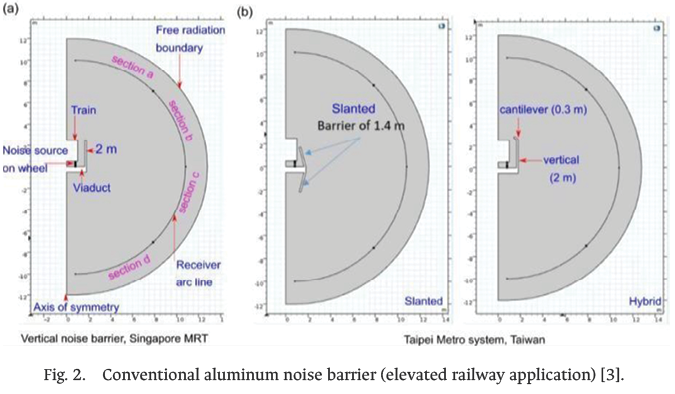 , Henrry Delgado Ortega2
1 [email protected], 2 [email protected]
12 Facultad de Ingeniería, Universidad de Lima, Perú.
Recibido: 21 Mayo 2025 / Publicado: 24 Abril 2026
https://doi.org/10.26439/ciic2025.8667
ABSTRACT: Noise pollution is a major environmental and public health issue in urban areas, leading to the extensive use of acoustic barriers in transportation and infrastructure projects. Traditionally, these barriers have relied on synthetic materials with high acoustic efficiency but considerable environmental impact. This study presents a systematic review of 65 scientific publications published between 2015 and 2024, examining the acoustic performance, environmental impact, durability, and technical feasibility of materials used in acoustic barriers. The review compares conventional synthetic materials with natural, recycled, and hybrid alternatives, using indicators such as noise attenuation metrics, sound absorption coefficients, and life cycle assessment results. The findings show that natural and recycled materials can achieve competitive acoustic performance in specific frequency ranges and application contexts, particularly in urban and moderate-noise environments, while offering clear sustainability advantages. However, limitations persist in low-frequency attenuation, long-term durability, and large-scale implementation under real operating conditions. Hybrid materials emerge as a promising compromise between acoustic efficiency and environmental performance, although cost and technological barriers currently restrict widespread adoption. The study underscores the need for long-term field validation, standardized evaluation methods, and cost-effective production processes to support the integration of sustainable acoustic barriers in urban infrastructure.
KEYWORDS: sustainable acoustic barriers, sound absorption, recycled materials, environmental impact, comparative analysis, civil engineering
- Introduction
Noise pollution has become an increasingly complex environmental problem in urban and industrial settings and is considered by the World Health Organization (WHO) to be the second most significant environmental risk to human health, affecting more than 30 % of the global population [1]. This phenomenon, primarily driven by vehicular traffic and industrial activity, has direct consequences for public health, including an increased incidence of cardiovascular diseases, sleep disturbances, and cognitive deficits [2]. Despite the recognized importance of addressing noise pollution, effective mitigation remains a challenge, particularly in areas with elevated noise levels that require sustainable and technically effective solutions.
Acoustic barriers—structures designed to minimize noise propagation—are among the most widely used strategies for controlling environmental noise. Traditionally manufactured from materials such as concrete, metal, and polycarbonate, these barriers exhibit significant limitations associated with their environmental impact during production and their reduced effectiveness in low- and mid-frequency ranges, particularly in dense urban environments [3], [4]). In response to these limitations, the scientific community has increasingly focused on the development of alternative materials capable of providing comparable or superior acoustic performance while reducing without the environmental impacts associated with conventional materials.
Over the past decade, alternative materials such as coconut fiber, straw, and various recycled composites have emerged as promising options, demonstrating not only favorable acoustic properties but also a reduced environmental footprint. For example, [5] and [6] reported that hybrid composites and natural fibers can achieve high noise reduction coefficients (NRC values of up to 0.8) along with effective sound attenuation performance. Similarly, other recycled materials, such as straw-cement composites, have shown reduced environmental impact together with satisfactory noise attenuation performance [7], [8]). However, much of the existing literature has focused on isolated material evaluations conducted under controlled laboratory conditions, leaving important questions unanswered regarding the real-world performance of these materials in urban infrastructure contexts, their long-term durability, and their practical applicability.
Despite these advances, significant gaps remain in the literature in terms of direct comparisons of acoustic and environmental performance of different material types (natural, recycled, synthetic, and hybrid). To date, no systematic review has integrated the methodologies used to evaluate the acoustic efficiency, sustainability, and durability of noise barriers in real-world urban scenarios. The diversity and heterogeneity of previous studies make it difficult to establish reliable technical standards to guide material selection in sustainable infrastructure projects [9], [10].
This study is grounded in the premise that, although natural and recycled materials often exhibit lower performance at low frequencies when compared with advanced synthetic materials, they offer substantial advantages in terms of sustainability, cost, and long-term feasibility. The main objective of this study is to conduct a systematic review comparing the acoustic and environmental performance of materials used in noise barriers, addressing existing gaps through the analysis of key methodologies for assessing acoustic efficiency (NRC and noise reduction), environmental impact (LCA), structural durability, and technical evaluation criteria.
Finally, this research proposes an analytical regulatory and environmental framework that may guide informed material selection, contributing to the development of more sustainable urban infrastructure that is effective in noise mitigation.
- Methodology
This study employs a systematic review of the literature on sustainable acoustic barriers, focusing on peer-reviewed publications in English and Spanish retrieved from databases such as Scopus, Web of Science, and Google Scholar. The search included key terms such as “acoustic wall,” “sustainable sound insulation,” “absorbing material,” “natural fiber for sound insulation,” and “recyclable acoustic panel,” and was limited to studies published between 2015 and 2024, a period reflecting the growing interest in architectural solutions that integrate sustainability, acoustic performance, and structural feasibility.
The selection criteria included experimental studies, case studies, and reviews that analyzing natural, recycled, hybrid, and synthetic materials used in acoustic barriers, with evaluations of parameters such as sound absorption (NRC), sound level reduction (dB), sustainability assessed through life cycle analysis (LCA), and material or structural durability. Excluded from consideration were documents not specifically addressing acoustic barriers, those focused solely on regulation or design without quantitative analysis, studies based exclusively on simulations without experimental validation, publications in other languages other than English or Spanish, and works those without full-text access.
From an initial total of 896 identified records, 245 were removed due to duplication. Of the remaining 651 records, 142 articles were selected for title and abstract screening and subsequent full-text assessment, resulting in the inclusion of 65 studies in the systematic review and the exclusion of 77 that did not meet the established criteria. The selected studies were organized according to material type (natural, recycled, synthetic, hybrid), evaluation method (laboratory tests, field trials and simulation-supported analyses), analyzed acoustic variables (NRC and sound level reduction in dB), and environmental and technical impacts in urban settings.
- Results
A. Materials used in acoustic barriers
Various materials used in noise barriers were identified and analyzed in terms of their noise reduction performance, application context, and ecological impact.
In the reviewed literature, the information is organized according to the origin of the materials, distinguishing among natural fibers, recycled materials, synthetic products, and hybrid composites, which allows a systematic comparison of their acoustic and environmental behavior. In particular, the studies emphasize the acoustic performance of plant- and animal-based fibers, carbon- and polymer-based materials, and composite solutions combining organic and recycled components.
To ensure comparability among the different investigations, the analysis considers common acoustic parameters reported in the literature, mainly the sound absorption coefficient and the Noise Reduction Coefficient (NRC), evaluated over standardized frequency bands typically ranging from 125 Hz to 4000 Hz, which are representative of traffic and urban noise spectra. When available, sound levels are interpreted using equivalent continuous sound pressure levels expressed in dB(A), which account for the human auditory response. For the purpose of interpretation, low acoustic performance is associated with NRC values below 0.30, medium performance between 0.30 and 0.60, and high performance above 0.60, providing a reference scale for comparing materials reported in different studies.
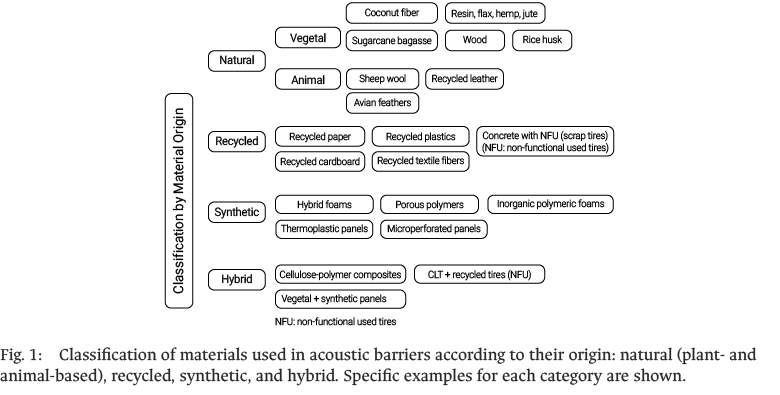
Historically, the most widely used materials for sound absorption include glass wool, mineral wool, and synthetic polymers [11]. However, these materials present significant environmental limitations, as they are not biodegradable and generate pollution at the end of their life cycle [12]. In addition, energy-intensive manufacturing processes contribute to a high carbon footprint [7], and the use of certain toxic compounds in their production has been banned in some countries [13]. Accordingly, while synthetic materials continue to predominate due to their high acoustic efficiency, an increasing number of studies report the use of natural and recycled materials. Figure 1 presents the classification of acoustic barriers according to the material type considered in the reviewed studies.
Acoustic barriers are engineering structures installed along transportation infrastructures such as highways and railways to mitigate the propagation of traffic noise toward surrounding urban areas. Their performance depends not only on the acoustic properties of the materials used, but also on geometric factors such as height, location, and surrounding morphology. Conventional barriers are commonly manufactured using metals, concrete, polymers, or composite panels, which offer effective noise attenuation but may present environmental and spatial limitations in dense urban contexts.
The practical implementation of acoustic barriers in complex urban geometries presents significant design challenges. Figure 2 illustrates a typical application of an aluminum barrier on an elevated railway line, this configuration provides a measurable reduction of 5–12 dB.
However, due to height limits (2.2–5.1 m), its effectiveness decreases near high-rise buildings, reducing its performance in densely populated urban areas or close to tall structures, with negative impacts [3]. These systems are effective for noise attenuation, but since they must adapt to local topography and spatial limitations, there are challenges to their application in certain environments, which calls for consideration of alternative solutions.
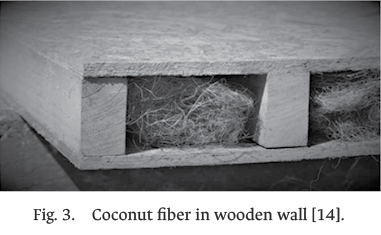
Within the reviewed studies, natural materials emerge as viable alternatives for acoustic barriers, as they combine effective noise attenuation with reduced environmental impact. Among these materials, coconut fiber stands out as a particularly promising option. As shown in Figure 3, coconut fiber-based materials have been applied to enhance acoustic performance in contexts where both sustainability and noise mitigation are key considerations [14]. These materials have demonstrated particular effectiveness in absorbing low- and mid-frequency sound, making them suitable for applications where reduction of railway traffic noise is critical. Moreover, as a renewable resource, coconut fiber reinforces its potential as an environmentally favorable alternative to conventional synthetic materials.
The use of coconut fiber has been associated not only with enhanced acoustic performance but also with improved economic and sustainability indicators. Several studies report that coconut fiber, particularly when combined with other natural materials, enhances the effectiveness of sound barriers, resulting in greater noise attenuation compared to conventional synthetic solutions. For instance, laboratory tests have demonstrated that acoustic barrier walls incorporation coconut fibers achieve higher levels of noise reduction than commonly used synthetic products such as polyurethane and polyethylene panels [12].
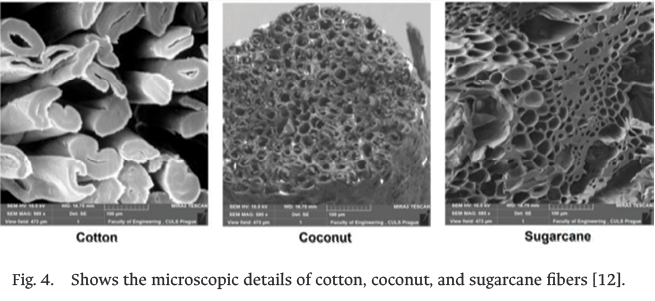
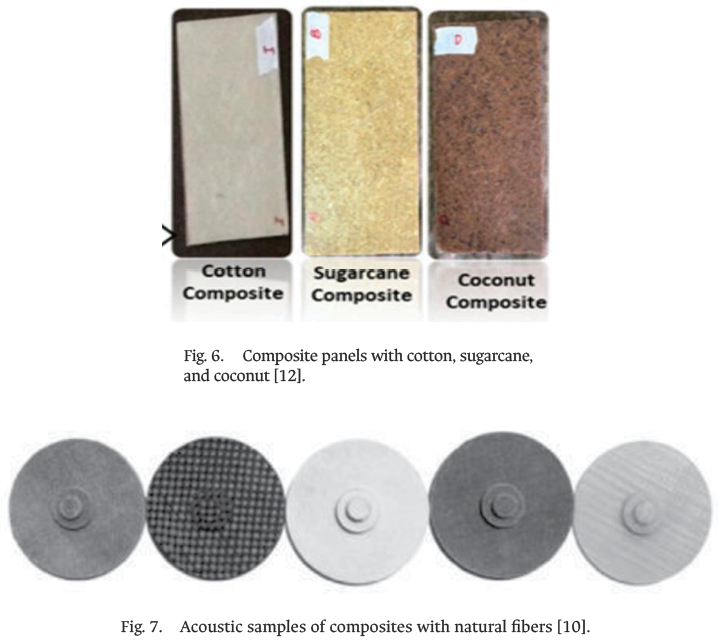
Coconut fibers can be effectively combined with other materials to form composite acoustic panels with improved performance, as shown in Figure 4 [12]. These composite panels, which incorporate natural fiber waste such as cotton, coconut, and sugarcane, are reinforced with epoxy resin to enhance acoustic performance. The sound absorption coefficient increases with the fiber content, with coconut fiber exhibiting the highest absorption values among the materials analyzed. At 1600 Hz, the absorption coefficient ranges from 0.081 to 0.183, depending on the type and content of fibers used.
In contrast to natural fibers, carbon fibers demonstrate excellent thermal stability, withstanding temperatures of up to 300 °C. Although their sound absorption capacity is moderate, carbon fibers provide strong noise-damping performance, making them more suitable for use as acoustic barriers than as sound-absorbing materials. Experimental tests indicate that composite materials incorporating carbon fibers achieve higher levels of noise reduction than conventional synthetic products. By comparison, earth and concrete barriers used on Spanish highways typically achieve attenuation levels ranging from 6.53 to 7.79 dB(A). However, continuous maintenance is required to prevent performance degradation over time [4]. Nevertheless, despite the continued dominance of synthetic materials due to their high acoustic efficiency, their environmental limitations have contributed to the growing interest in natural and recycled alternatives.
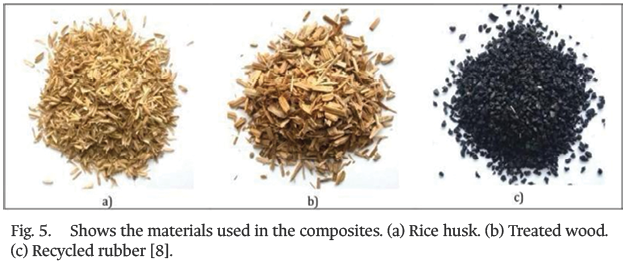
As shown in Figure 5, panels made from recycled materials such as straw-cement composites, also demonstrate high acoustic efficiency. These materials not only meet established acoustic performance requirements but also contribute to sustainability by reducing the demand for virgin natural resources. Rice husk composite (RHC) achieves a noise reduction index of 5–6 dB, while the treated wood composite (TWC) reaches values of 8–9 dB and performs effectively within the target frequency range (315–3150 Hz). In particular, rice husk-based materials have been used to manufacture acoustic panels with strong performance at the tested frequencies, exhibiting noise attenuation levels comparable to conventional materials such as concrete or metal [8].
In addition, studies such as Amarilla et al. (2021) report that construction and demolition waste (CDW) blocks achieve noise reductions of 11–14 dB, demonstrating that recycled materials can be competitive in urban environments. By comparison, as shown in Figure 6, displays finished composite panels incorporating cotton, coconut, and sugarcane fibers, illustrating the scalable product form that can be deployed in construction, this panels fiber exhibit high sound absorption, largely due to their porous structure and their ability to dissipate sound waves. As a result, these materials have been implemented in various urban applications, including the protection of residential areas adjacent to high-traffic roads. For example, [12] report that coconut fiber reinforced with epoxy resin achieves absorption coefficients of 0.183 at mid frequencies (1600 Hz). In addition, as illustrated in Figure 7, crucially, shows the standardized laboratory samples made from similar natural fiber composites, [10] show that composites incorporating natural fibers such as ramie and flax outperform synthetics materials at high frequencies, with absorption coefficients exceeding 0.6 above 800 Hz.
Hybrid materials combining natural and synthetic fibers have also demonstrated promising performance in the reviewed studies. These materials offer a balanced combination of properties that enhance both acoustic efficiency and sustainability. Combinations of materials such as cotton, sugarcane, and coconut have been shown to improve acoustic performance while providing a more environmentally favorable alternative to traditional synthetic panels.
By contrast, synthetic panels remain relevant due to their durability and sound absorption efficiency. These materials offer advantages such as resistance to extreme environmental conditions and high performance at low frequencies; however, their ecological footprints and production costs are often higher than those of natural and recycled alternatives. Nevertheless, their versatility and reliable performance across a wide range of conditions make them particularly suitable for projects in which long-term durability and consistent acoustic efficiency are essential.
B. Acoustic Performance and Sustainability in Noise Barriers
Natural materials such as wool and coconut fibers have shown favorable results in terms of noise reduction, particularly within mid- and high-frequency ranges. These materials are primarily applied in urban infrastructure and in acoustic panels for transportation and construction projects, where acoustic efficiency is a critical requirement. Their overall acoustic performance is generally high (NRC coefficient of 0.7 to 0.8), however, their effectiveness tends to decrease at low frequencies, where sound attenuation remains a challenge. Coconut fiber, in particular, has a low carbon footprint and is a renewable resource, making it suitable for sustainable projects; however, limitations related to durability and acoustic effectiveness at low frequencies have been reported. These trends are illustrated in Figure 8.
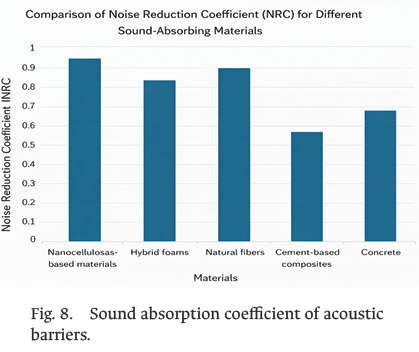
By contrast, recycled materials such as straw-cement composites and recycled tire-based systems exhibit high sound absorption performance, with reported NRC values exceeding 0.9 in some cases. These materials have been applied primarily in highways and industrial sites in countries such as India, Colombia, and Spain, where high noise exposure and material availability favor their use. The use of recycled materials not only reduces the demand for virgin natural resources but also contributes to circular economy principles. However, while their sound absorption performance is competitive, these materials may require additional processing to ensure long-term durability and resistance to extreme weather conditions.
Synthetic materials such as 3D-printed foams and hybrid foams have demonstrated high acoustic efficiency across a wide frequency range, as demonstrated in applications for road infrastructure or elevated railway lines. These materials exhibit very high sound absorption performance, with NRC values of up to 0.99; however, their high environmental impact and elevated production costs represent significant drawbacks. They are therefore suitable for scenarios requiring precise acoustic performance and enhanced durability, such as industrial environments or high-traffic areas; nevertheless, they are not the most ecological or cost-effective options.
Finally, hybrid materials combining natural and synthetic fibers are emerging as a viable option, with reported NRC values of up to 0.94 in certain applications. These materials integrate the high acoustic efficiency characteristic of synthetic materials with the improved sustainability associated with natural fibers. However, higher costs and the complexity of their manufacturing processes may limit their widespread adoption.
Figure 9 indicates that Inorganic Polymeric Foams (IPF) exhibit the highest acoustic performance among the materials analyzed, achieving approximately 100 dB, significantly outperforming other material categories. This exceptional sound attenuation makes them particularly suitable for applications in areas with high noise exposure, such as industrial zones, high-traffic roads, and airport runways, where effective noise control is critical.
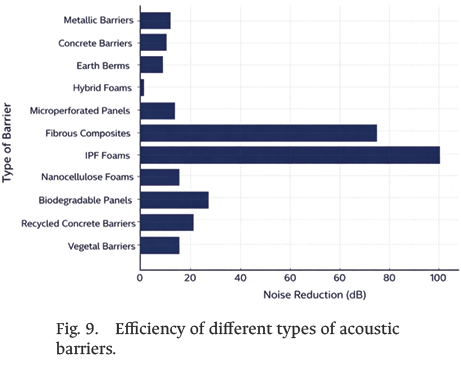
Fiber composite materials also demonstrate high levels of noise attenuation, around 80 dB, making them suitable for use in urban infrastructure and industrial environments. These materials are particularly suitable for applications in which sound absorption plays a key role in improving acoustic quality, such as in commercial buildings or residential areas located near major highways.
Hybrid foams provide intermediate levels of acoustic performance, approximately 2 dB, positioning them between high-performance synthetic materials and natural or recycled alternatives. Although they do not reach the performance levels of high-end synthetic materials, they represent a viable alternative for projects that seek to balance sustainability and acoustic performance, such as green infrastructure or urban development initiatives.
Finally, microperforated panels (~14 dB) and earth berms (~10 dB) exhibit moderate levels of noise attenuation. These materials are suitable for agricultural projects or areas with lower traffic intensity, where overall noise levels are relatively low. Despite their limited noise attenuation capacity, they represent a cost-effective and easily deployable option in areas with less demanding acoustic control requirements.
C. Noise Reduction of Acoustic Barriers
Table 1 compares different types of acoustic barriers used in various parts of the world, detailing the materials employed, reported noise mitigation performance (expressed in decibels), and the types of infrastructure in which they have been applied.
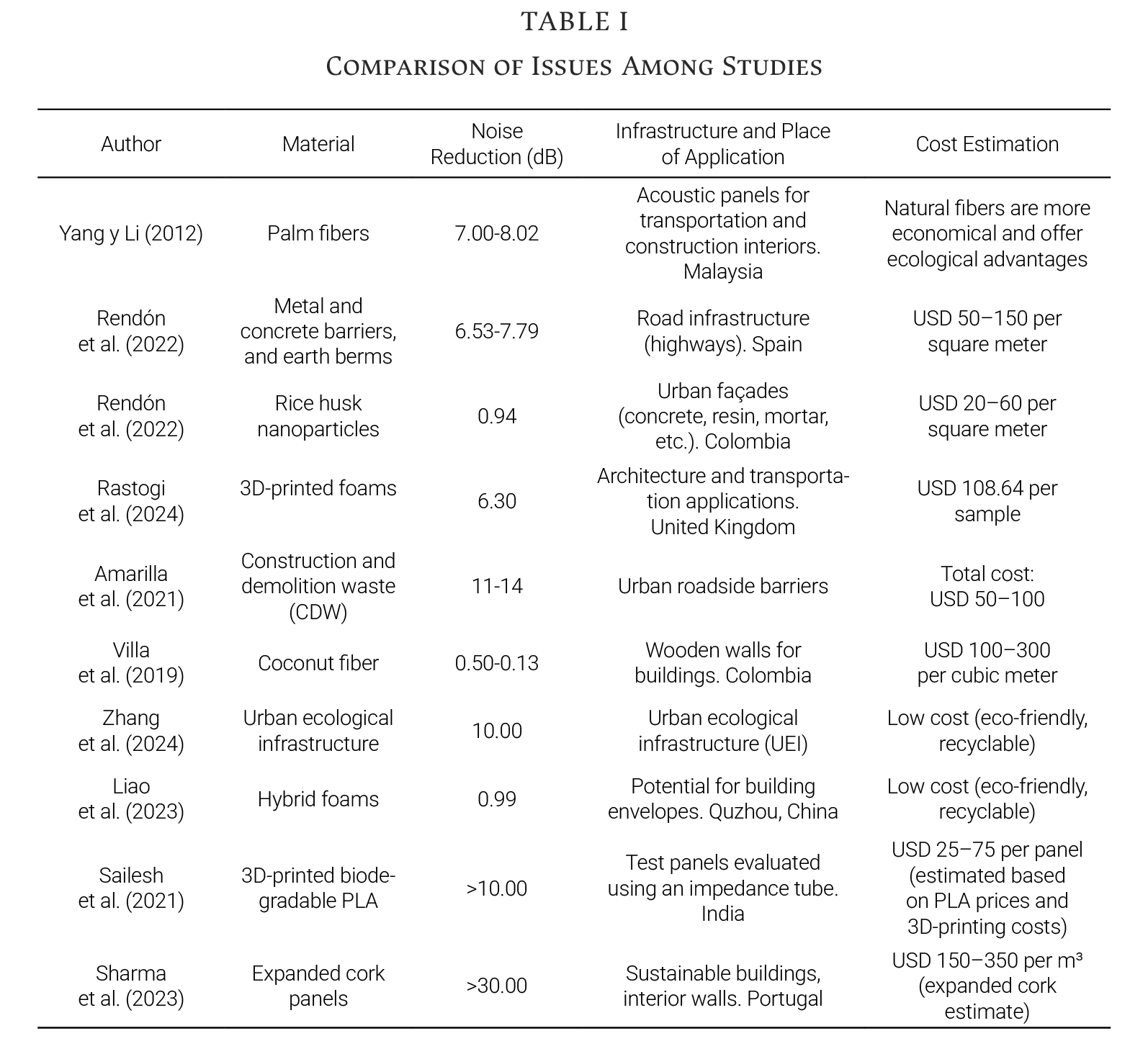
Figure 10 indicates that acoustic barriers based on construction and demolition waste (CDW) are among the most expensive options reported, with costs reaching up to USD 1,150 per unit, depending on the configuraton [2]. This type of barrier is primarily used in urban road infrastructure environments, where structural and regulatory requirements are particularly tringent. Despite being based on recycled material, its relatively high cost can be attributed to the additional processing, pressing, and technical adaptation steps required to meet structural and regulatory standards.
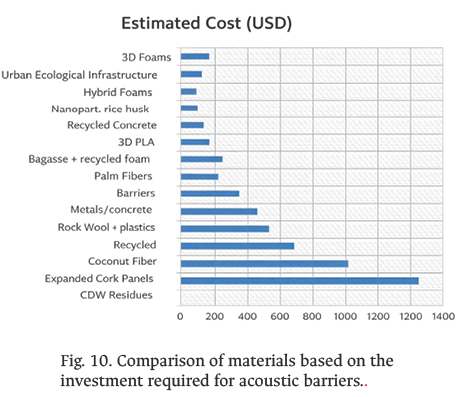
At first glance, it may appear counterintuitive that a waste-based material is among the most expensive options. However, the cost depends not only on the origin of the raw input but also on the conversion processes required to meet structural and acoustic performance requirements. First, CDW must be carefully classified and separated, as not all waste fractions are suitable for reuse. These materials must then undergo technical processes such as crushing, stabilization, or agglomeration with resins in order to form structurally sound and durable volumes or panels. In addition, their application requires laboratory testing to verify both their sound insulation capacity and structural performance, implying additional investment in certification and quality assessment procedures.
Moreover, the weight and geometry of these materials require complex logistical arrangements during transport and installation, which further increase their relative cost. Furthermore, many CDW-based solutions remain at the experimental or pilot-project stage, meaning that their production is not yet fully standardized or implemented at an industrial scale. This lack of standardization contributes to higher costs, a pattern commonly observed in emerging construction technologies.
Other materials also exhibit relatively high costs, including expanded cork panels used in sustainable buildings in Portugal, aluminum applied in railway systems in Singapore, and coconut-based components. All of these solutions exceed USD 250 per unit of measurement, depending on configuration and application, reflecting a trend toward technically robust but more specialized solutions.
By contrast, cheaper and more environmentally friendly alternatives, such as palm fiber, rice husk nanoparticles, or biodegradable polymers like polylactic acid (PLA), have generally been tested only on a limited basis. This is partly because these materials tend to exhibit lower structural resistance to adverse conditions such as weather exposure or vandalism, which limits their suitability for use in public spaces. In addition, there is a degree of uncertainty and limited technical familiarity among designers and regulatory authorities regarding their long-term performance.
Finally, countries in which more expensive acoustic barrier materials are reported—such as Spain, Portugal, Singapore, or Brazil—tend to operate within regulatory frameworks characterized by stricter technical requirements and higher investment capacity. These conditions support prioritization criteria related to durability, structural performance, and technical standardization, which helps explain the preference for higher-cost acoustic barrier solutions.
D. Criteria for the Implementation of Acoustic Barriers
Recent advances in the design of acoustic barriers reflect the need to balance technical efficiency, sustainability, and economic feasibility, as summarized in Table 2. In the context of noise mitigation, studies such as [15] report that periodic structures incorporated into Helmholtz resonant cavities can achieve noise attenuation of up to 16 dB at specific frequency ranges (400–890 Hz). However, their effectiveness depends on factors such as barrier height and spatial configuration, and their action is limited to partial noise attenuation rather than complete noise elimination, as summarized in Table 2. With respect to materials [9], as illustrated in Figure 11, show that nanocellulose-based composites and hydrophobic particle systems can achieve high sound absorption when used in hybrid foam configurations, while maintaining a relatively low environmental impact. By contrast, conventional synthetic materials continue to generate waste streams that are difficult to recycle.
This observation is consistent with the advantages of recycled variants, such as end-of-life tire (ELT)-based systems, listed in Table 2, despite their shorter lifespan. In terms of costs, Table 2 indicates that innovative designs, such as the system developed by [16], require substantial initial investment; however, optimized maintenance strategies —such as the use of digital filters based on Gauss–Legendre quadrature—can significantly reduce operating costs. Finally, design flexibility enables the integration of micro-perforated panels or vegetation-based systems [15]); however, their implementation in dense urban environments remains a challenging, as indicated in Table 2. Taken together, these findings emphasize the need to adapt acoustic solutions to specific contextual conditions and to prioritize sustainable materials and multifunctional structural designs.
- Discussion of Results
This study provides an integrative overview of materials used in acoustic barriers, with particular emphasis on acoustic performance, durability, and structural resistance. The results are consistent with previous findings supporting the effectiveness of natural and recycled materials in enhancing acoustic performance, in line with [8], who report favorable results for rice husk cement, while noting that its performance depends on structural configuration. However, despite their potential, these materials exhibit limitations in low frequency noise attenuation, which is critical for industrial applications and high-traffic environments. This observation is consistent with the findings of [15], who report similar low-frequency constraints in periodic structural systems.
A key gap identified in the literature is that many studies, including those reviewed here, focus on controlled laboratory conditions without validation under real-world or long-term operational conditions. As noted by [9], hybrid materials—despite their low environmental impact—lack comprehensive studies based on real-world applications, representing a methodological limitation that hinders their broader practical adoption. This lack of data on durability and real-world behavior under extreme environmental conditions introduces uncertainty and limits the robustness of current knowledge.
The analysis also reveals a gap between the technical potential of hybrid materials and their commercial feasibility. High production costs and technological barriers, as emphasized by [17], represent significant obstacles to large-scale adoption, thereby limiting the contribution of these materials to urban noise mitigation and the broader promotion of sustainable infrastructure.
Therefore, enhancing environmental performance and reducing costs are critical challenges that must be addressed for natural, recycled, and hybrid materials to become viable alternatives to traditional synthetic solutions, thereby contributing to a lower ecological footprint and improved urban quality of life [12], [10]. In particular, there is a need to develop technologies and production processes that enhance the structural performance of these materials under real-world conditions while reducing costs, in order to facilitate their integration into urban acoustic infrastructures that must meet stringent technical, environmental, and economic standards.
By contrast, variations in acoustic performance are observed in certain recycled materials, such as recycled cardboard, which—despite achieving limited noise reduction (approximately 7–8 dB)—do not reach the performance levels required for high-noise environments. This reduced effectiveness is likely related to insufficient structural rigidity and limited performance at low frequencies, which are critical in industrial applications. This observation highlights the need for further analysis of material structure and specific physical properties in order to optimize acoustic performance across in different application contexts.
Finally, this study contributes to existing knowledge by integrating acoustic, environmental, and durability analyses, and suggests that hybrid materials combining natural and synthetic fibers represent a viable pathway for optimizing acoustic efficiency without compromising durability. However, the adoption of emerging innovations such as nanotechnology and additive manufacturing (3D printing) still requires overcoming significant economic and technical challenges in order to achieve a substantial impact on urban infrastructure [17].
In summary, the discussion indicates that although progress in sustainable acoustic materials has been significant, important methodological and technological gaps remain, along with limitations related to environmental performance and cost. Future research should therefore focus on long-term testing, field validation, and economic and technical optimization to enable efficient and sustainable practical application.
- Conclusion
The analysis conducted in this study on acoustic barriers demonstrates that it is essential to select materials considering not only their acoustic efficiency, but also their environmental impact and economic feasibility, in accordance with the established objectives. Natural materials, such as coconut fiber and sheep wool, as well as recycled materials, such as rice husk cement and recycled plastics, were identified, achieving significant noise reductions ranging from 5 to 14 dB [2],[2], [8] and NRC coefficients between 0.13 and 0.94 [12], [10], confirming their potential as sustainable alternatives.
The initial hypothesis that these materials could match or surpass synthetic materials in acoustic efficiency and durability is partially confirmed. Although competitive, they face significant challenges related to durability and resistance to adverse environmental factors, which limit their practical and large-scale application [1], [4].
The systematic review method applied was validated for integrating acoustic, environmental, and economic aspects, allowing the identification of significant gaps in the literature, particularly the lack of long-term evaluations under real-world conditions, which reduces the robustness of the available knowledge and confidence in its practical application.
Furthermore, synthetic materials such as hybrid foams and advanced polymers, with NRC coefficients close to 0.99 [5], exhibit high acoustic performance; however, their high cost and environmental footprint position them as less sustainable options. Hybrid materials combine properties from both approaches, achieving an NRC coefficient of approximately 0.94, but require optimization of production processes to reduce costs and facilitate their adoption [17].
The identified limitations, such as the lack of real-world testing, insufficient durability, and economic barriers, highlight the need for future research focused on field validation, technology optimization, and cost reduction, as well as on the development of materials with improved low-frequency performance and greater environmental resistance.
Finally, this research reaffirms the importance of continuing to develop sustainable acoustic solutions through a multidisciplinary approach that includes materials science, environmental engineering, and circular economy principles. The integration of natural and recycled materials into acoustic barriers not only improves acoustic efficiency but also significantly contributes to the sustainability of urban infrastructure and is essential for the future of cities.
References
[1] A. Barros, J. K. Kampen, and C. Vuye, “Noise barriers as a mitigation measure for highway traffic noise: Empirical evidence from three study cases,” J. Environ. ManageJ. Environ. Manage., vol. 367, Art. no. 121963, 2024, https://doi.org/10.1016/j.jenvman.2024.121963
[2] R. S. D. Amarilla, R. Scoczynski, M. H. De Avelar, R. Pereira, L. H. Sant’Ana, and R. E. Catai, “Acoustic barrier simulation of construction and demolition waste: A sustainable approach to the control of environmental noise,” Appl. Acoust., vol. 182, Art. no. 108201, 2021, https://doi.org/10.1016/j.apacoust.2021.108201
[3] H. Pueh, K. Meng, and S. Kumar, “Noise assessment of elevated rapid transit railway lines and acoustic performance comparison of different noise barriers for mitigation of elevated railway tracks noise,” Appl. Acoust., vol. 183, Art. no. 108340, 2021, https://doi.org/10.1016/j.apacoust.2021.108340
[4] J. M. Martinez-Orozco and A. Barba, “Determination of Insertion Loss of noise barriers in Spanish roads,” Appl. Acoust., vol. 186, Art. no. 108435, 2021, https://doi.org/10.1016/j.apacoust.2021.108435
[5] J. Liao, Y. Hou, J. Li, M. Zhang, Y. Dong, and X. Chen, “Lightweight and recyclable hybrid multifunctional foam based cellulose fibers with excellent flame retardant, thermal, and acoustic insulation property,” Compos. Sci. Technol., vol. 244, Art. no. 110315, 2023, https://doi.org/10.1016/j.compscitech.2023.110315
[6] S. Sharma, P. Sudhakara, J. Singh, S. Singh, and G. Singh, “Emerging progressive developments in the fibrous composites for acoustic applications,” J. Manuf. Process., vol. 102, pp. 443–477, 2023, https://doi.org/10.1016/j.jmapro.2023.07.053
[7] C. Buratti, E. Belloni, E. Lascaro, G. A. Lopez, and P. Ricciardi, “Sustainable Panels with Recycled Materials for Building Applications: Environmental and Acoustic Characterization,” Energy Procedia, vol. 101, pp. 972–979, 2016,
https://doi.org/10.1016/j.egypro.2016.11.123
[8] B. Marques, J. Almeida, A. Tadeu, J. António, M. I. Santos, J. De Brito, and M. Oliveira, “Rice husk cement-based composites for acoustic barriers and thermal insulating layers,” J. Build. Eng., vol. 39, Art. no. 102297, 2021,
https://doi.org/10.1016/j.jobe.2021.102297.
[9] R. Abidnejad, M. Beaumont, B. L. Tardy, B. D. Mattos, and O. J. Rojas, “Superstable Wet Foams and Lightweight Solid Composites from Nanocellulose and Hydrophobic Particles,” ACS Nano, vol. 15, no. 12, pp. 19712–19721, 2021, https://doi.org/10.1021/acsnano.1c07084.
[10] W. Yang and Y. Li, “Sound absorption performance of natural fibers and their composites,” Sci. China Technol. Sci., vol. 55, pp. 2278–2283, 2012, https://doi.org/10.1007/s11431-012-4943-1.
[11] N. M. Aly, H. S. Seddeq, K. Elnagar, and T. Hamouda, “Acoustic and thermal performance of sustainable fiber reinforced thermoplastic composite panels for insulation in buildings,” J. Build. Eng., vol. 40, art. no. 102747, 2021, https://doi.org/10.1016/j.jobe.2021.102747.
[12] T. Hassan et al., “Acoustic, Mechanical and Thermal Properties of Green Composites Reinforced with Natural Fibers Waste,” Polymers, vol. 12, no. 3, art. no. 654, 2020, https://doi.org/10.3390/polym12030654.
[13] F. Asdrubali, F. D’Alessandro, and S. Schiavoni, “A review of unconventional sustainable building insulation materials,” Sustain. Mater. Technol., vol. 4, pp. 1–17, 2015, https://doi.org/10.1016/j.susmat.2015.05.002.
[14] K. Villa, C. Echavarria, and D. Blessent, “Wood walls insulated with coconut fiber,” DYNA, vol. 86, no. 210, pp. 333–337, 2019, https://doi.org/10.15446/dyna.v86n210.73685.
[15] X. Qin, W. Yang, Z. Zhang, and Z. Chen, “Research on the design and noise reduction performance of periodic noise barriers based on nested structure,” J. Clean. Prod., vol. 476, art. no. 143708, 2024, https://doi.org/10.1016/j.jclepro.2024.143708.
[16] D. Suescún-Díaz, J. A. Chala-Casanova, and G. Ule-Duque, “Reducción de ruido en el cálculo de la reactividad con filtro digital y cuadraturas de Gauss-Legendre,” Inf. Tecnol., vol. 33, no. 6, pp. 45–54, 2022, https://doi.org/10.4067/s0718-07642022000600045.
[17] P. Rastogi, C. H. Venner, C. W. Visser, and Y. Wijnant, “Additive manufacturing of functionally graded foams for acoustic insulation and absorption,” Appl. Acoust., vol. 228, art. no. 110269, 2025, https://doi.org/10.1016/j.apacoust.2024.110269.