Evaluation of the Mechanical and Physical
Properties of Concrete Using Seawater
as a Replacement of Potable Water with the
Addition of Blast Furnace Slag and Metakaolin
Alonso Enrique Marquez Pacheco1 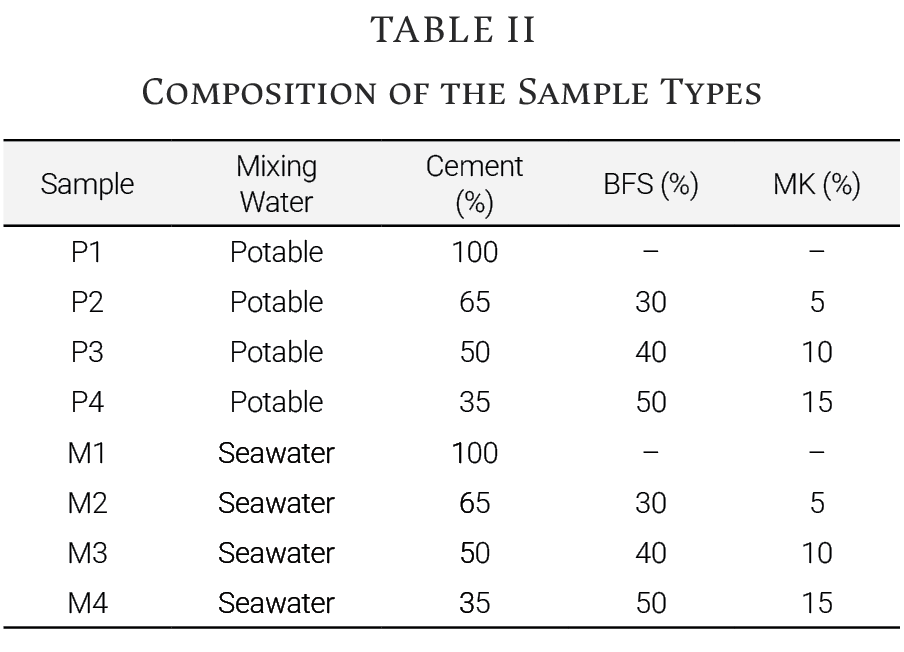 , Bruno Alfredo Palacios Rocha2 ,
Jose Joao Rengifo Reategui3
1 [email protected], 2 [email protected], 3 [email protected]
123 Universidad de Lima, Perú
Recibido: 03 Mayo 2025 / Publicado: 24 Abril 2026
https://doi.org/10.26439/ciic2025.8665
ABSTRACT. Concrete is the most widely used construction material worldwide, and its production consumes more than two million tons of fresh water annually—a resource that accounts for only 3% of the planet’s available water, compared to 97% of seawater. Furthermore, 75% of freshwater consumption occurs in areas experiencing extreme water scarcity. In Peru, the distribution of water resources is unequal due to the geographic location of water sources relative to population centers, with the coastal region being the most affected since it has the lowest water availability and the highest concentration of inhabitants. This research evaluated, through laboratory testing, the mechanical properties of fresh and hardened concrete mixed with seawater, as a 100% replacement of potable water, and incorporating 30% to 50% blast furnace slag (BFS) and 5% to 15% metakaolin (MK) across eight sample types that varied these three components. The mixture containing seawater, 40% BFS, and 10% MK showed lower workability and reduced compressive strength at 28 days; however, it most closely resembled the control sample, suggesting its potential for future applications.
KEYWORDS: Concrete, seawater, blast furnace slag, metakaolin, mechanical properties.
THEMATIC AXES: Axis 6: Sustainable construction
- Introduction
In the construction sector, concrete is the most widely used material worldwide, and its production consumes more than two million tons of fresh water every year, representing 9% of industrial water use. Moreover, three-quarters of the fresh water employed in concrete manufacturing is extracted from areas experiencing extreme water scarcity. This situation highlights the urgent need to seek alternatives to the use of fresh or potable water in concrete production and curing, particularly in regions facing severe water stress, where potable water should be reserved for human consumption [1]. Although approximately three-quarters of the planet is covered with water, only 3% is suitable for human consumption, while the remaining 97% consists of seawater. In this scenario, the continuous growth of the global population has increased water demand, which—compounded by environmental pollution and poor resource management—fails to meet the needs of many cities around the world. Water stress is expected to become particularly critical by 2025 [2]. The most critical case occurs along the Peruvian coast, where approximately 63% of the country’s population resides but only 1.7% of the national water resources are available. This uneven distribution is the result of the geographic location of water sources and the concentration of the population on the coast, creating high demand in regions with insufficient resources to meet it [3]. Despite scientific evidence supports the concept that seawater is not suitable for reinforced concrete, several ancient structures were successfully built using concrete mixed with seawater— for example, the ancient Roman port of Baiae, in Italy, which dates back 2000 years [4]. This suggests the potential applications of seawater for producing durable concrete. However, its use is largely restricted due to its high chloride content, which promotes corrosion in steel reinforcement. This problem can be mitigated by using seawater in plain (unreinforced) concrete applications or by employing non-corrosive materials such as fiber-reinforced polymer (FRP) bars to reinforce structures. FRP bars offer advantages such as light weight and corrosion resistance, but their high cost hinders their widespread use in the market [5].The use of supplementary cementitious materials (SCMs) to partially replace Portland cement also reduces CO₂ emissions associated with concrete manufacturing. Thus, advancing the use of SCMs represents a significant contribution to environmental protection. [6]
Based on these issues, the following research question arises: Can concrete mixed with seawater, adding BFS and MK, achieve properties comparable to concrete mixed with potable water?
- Methodology
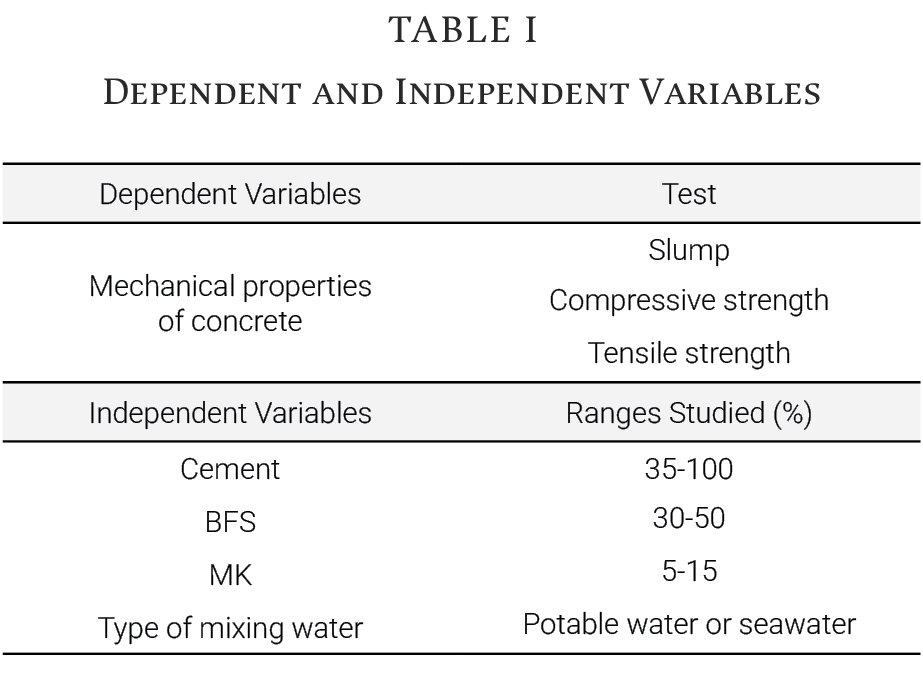
This research follows an experimental design with a quantitative approach, based on the collection and analysis of numerical data obtained from tests conducted in the Materials Laboratory at the University of Lima. The objective was to evaluate the mechanical and physical properties of fresh and hardened concrete using seawater and incorporating BFS and MK. The experimental design allows for the intentional manipulation of independent variables in a controlled environment to analyze their impact on the dependent variables. [7] In this case, the effect of seawater on concrete was analyzed by varying the proportions of BFS and MK as partial replacements for cement. The variables evaluated are presented in Table I.
To carry out this study, information related to the research topic was first gathered from academic sources and indexed journals to establish the theoretical framework and the scope of the research. Then, the materials required for the experimental phase—such as aggregates, binders, and seawater—were obtained and characterized through laboratory tests to determine particle size distribution, moisture content, specific gravity, among other relevant factors. Subsequently, the concrete mixtures for the samples considered in the study were prepared, and their physical and mechanical properties were evaluated. Finally, the results were analyzed and interpreted to answer the research question.
The experimental design included eight sample types, divided into two main groups: those prepared with potable water and those with seawater. Each sample had a different composition since the proportions of the cementitious materials—Portland cement, BFS, and MK—and the type of mixing water varied. BFS was incorporated at proportions ranging from 30% to 50%, and MK from 5% to 15%, following previous studies such as those by Pereira Silva [8] and Li [9]. In both cases, these percentages are regarded as optimal, since higher contents of BFS and MK tend to reduce cement properties and compressive strength, while lower percentages render their effects almost negligible [8], [10], [11], [12], [13], [14], [15], [16], [17]. A detailed presentation of these samples is shown in Table II.
To designate each sample type, acronyms were used to indicate their composition. The first four samples correspond to those prepared with potable water, labeled “P,” and numbered from 1 to 4 according to the proportions of the cementitious materials. Similarly, the last four samples were prepared with seawater, labeled “M,” and numbered from 1 to 4 following the same criterion.
A. Materials
Aggregates. The fine aggregate used was coarse sand, with a specific gravity of 2.09, a water absorption of 1.47%, and a fineness modulus of 2.85. On the other hand, the coarse aggregate consisted of crushed stone, with a specific gravity of 1.70 and a maximum nominal size of 1 in.
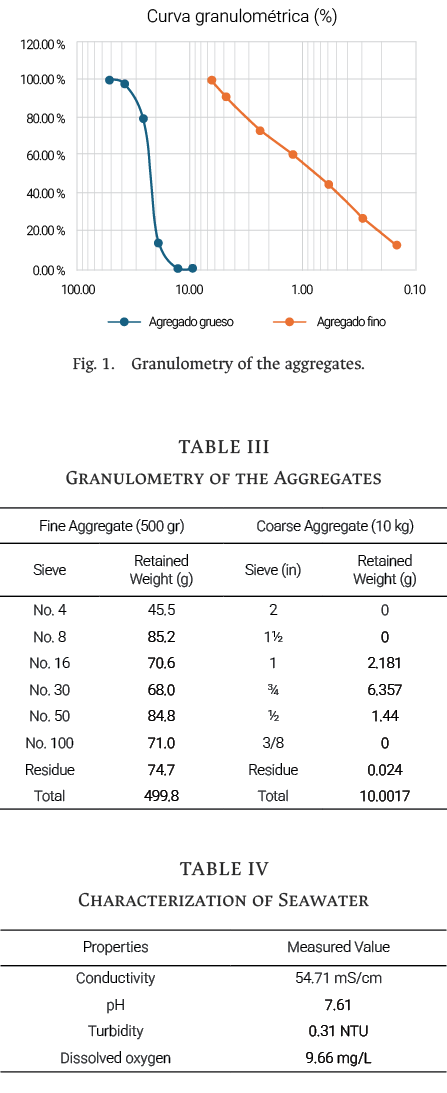
Table III presents the retained weights for each sieve, the residue, and the total weight obtained for both the fine and coarse aggregates, ensuring that the test error remained less than or equal to 0.3%, as specified in the NTP 400.012 standard [18], thereby validating the results. Additionally, Fig. 1 shows the comparison of aggregate sizes, where the curve was generated by plotting sieve opening size on the X-axis against the passing percentage on the Y-axis.
Seawater. To characterize the extracted seawater, tests were conducted in the Environmental Laboratory at the University of Lima, including measurements of conductivity, pH, turbidity, and dissolved oxygen. The results obtained are presented in Table IV.
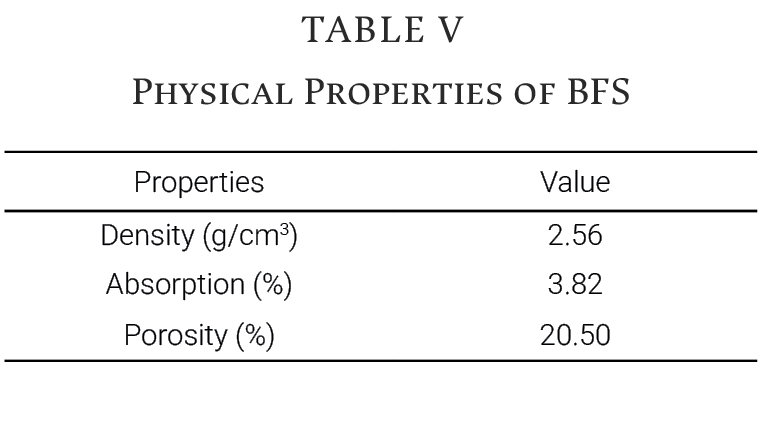
BFS. Laboratory tests were performed to determine the physical properties of BFS, which showed a density of 2.56 g/cm³, a water absorption of 3.82%, and a porosity of 20.5%, as summarized in Table V.
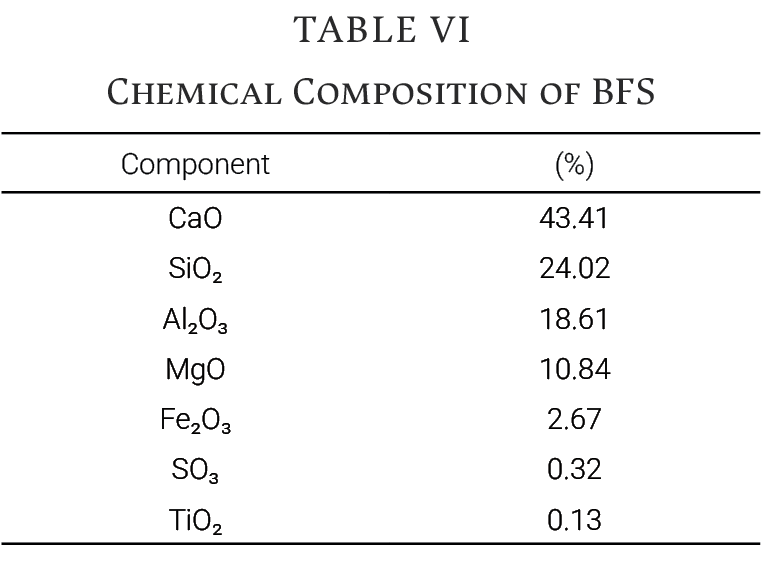
To determine the chemical composition of BFS, an X-ray fluorescence (XRF) spectrometry test was carried out. This analysis allowed the quantification of the elements in the sample, yielding a calcium oxide (CaO) concentration of 43.41% and a silicon dioxide (SiO₂) concentration of 24.02%, among other compounds, as detailed in Table VI.
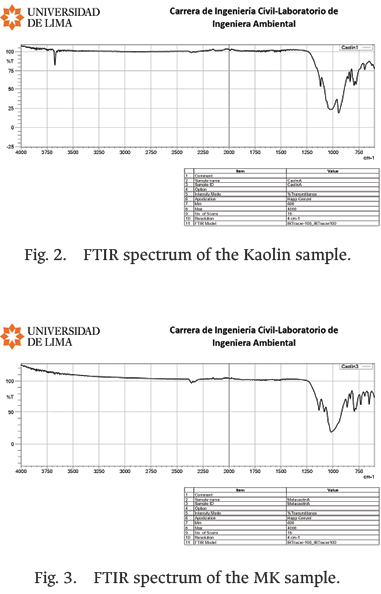
MK. MK was obtained by calcinating kaolin in a muffle furnace at 700 °C. To verify the effective formation of MK, Fourier-transform infrared (FTIR) spectroscopy was performed on both kaolin and MK samples. Before calcination, kaolin exhibits characteristic FTIR bands in the regions of 3695–3620 cm⁻¹, associated with O–H bonds of structural water; 1030–1000 cm⁻¹ from Si–O vibrations; and 540–500 cm⁻¹ from Al–O vibrations. After calcination, kaolin loses water and transforms into an amorphous structure (MK). The disappearance of O–H bands and the presence of new bands or changes in Si–O and Al–O vibrations confirm the dihydroxylation of kaolin and its conversion into MK [19]. The test results and the confirmation of the transformation process from kaolin to MK are shown in Fig. 2 and Fig. 3.
B. Mix Design
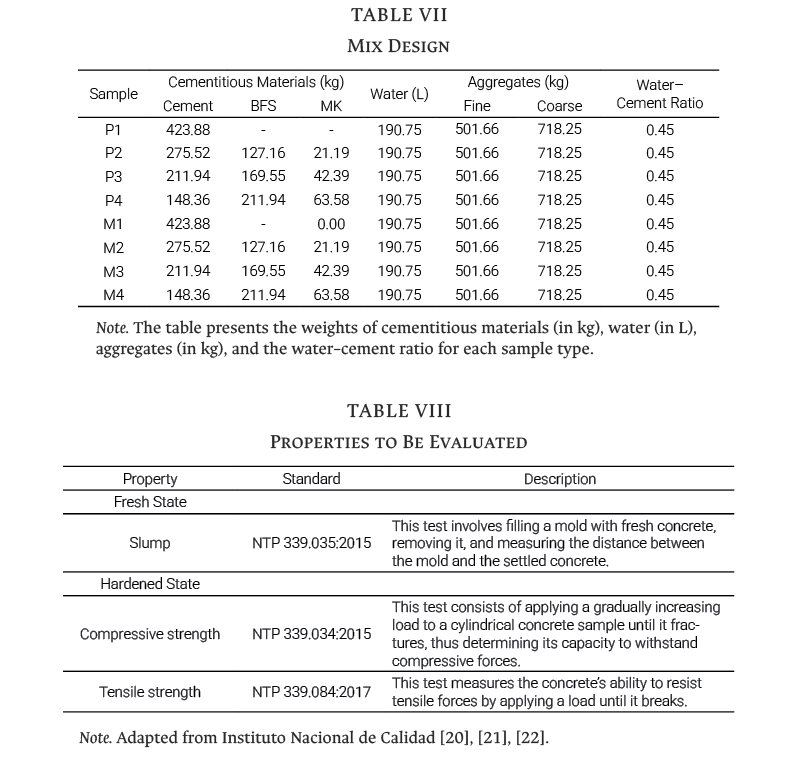
The samples were prepared following the ACI 211.1 (2014) method for concrete with a strength of 210 kg/cm² (21 MPa). Considering a slump range between 25 and 100 mm, a water-to-cement ratio of 0.45, a maximum nominal coarse aggregate size of 1 in., and a fineness modulus of 2.85 for the fine aggregate, the resulting cementitious material content was 423.88 kg per 1 m³, with corresponding variations in the proportions of the cementitious materials. Additionally, a plasticizer admixture, Sikament-290N, with a density of 1.20 g/cm³ was used in a dosage of 1% of the cementitious material by weight. The mixes were prepared in 40 L batches according to the specified mix design, with the proportions of each material adjusted for that batch size.
The tests used to evaluate the properties of concrete were carried out in the laboratories at the University of Lima, assessing both the fresh and hardened states. The slump, compressive strength, and tensile strength tests were conducted in the Civil Engineering Materials Laboratory.
- Results and Discussion
A. Fresh-State Properties
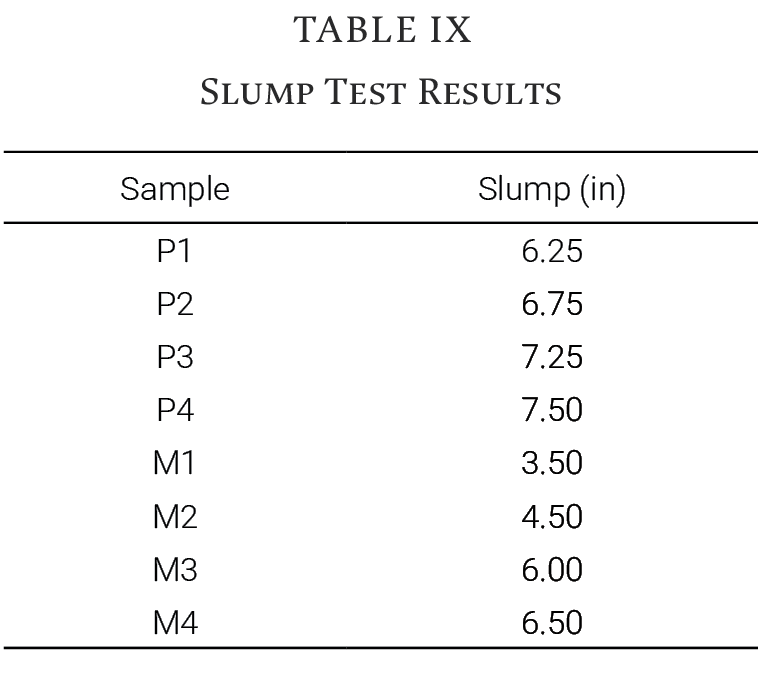
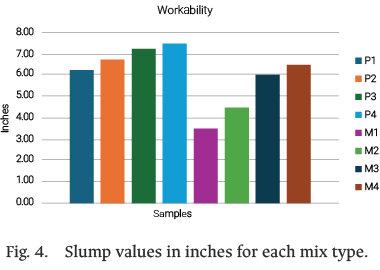
Slump. The slump values obtained from the test for each mix type are shown in Table IX.
As shown in Fig. 4, an increase in the percentage of BFS and MK in the mixes leads to higher workability. Furthermore, it is observed that seawater mixes—regardless of the percentage of cementitious materials used—show 44% lower workability compared to potable-water mixes. Initially, this reduced workability could make them more difficult to handle on site, particularly for pumping operations. However, as the BFS and MK content increases, workability becomes more suitable—by up to 20% in potable-water mixes and 85% in seawater mixes. The optimal slump depends on the specific application of the concrete. In this study, a range between 3 and 5 inches was considered appropriate.
B. Hardened-State Properties
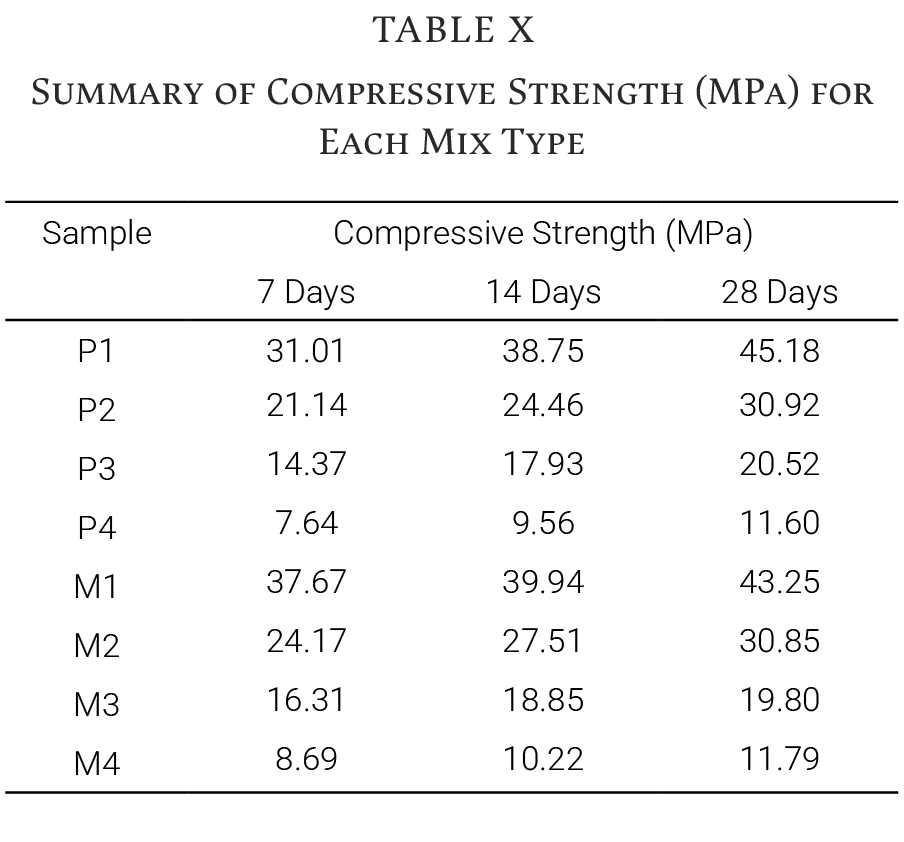
Compressive strength. The compressive strength values at 7, 14, and 28 days, along with a summary for each mix type, are presented in Table X.
In Fig. 5, the compressive strength of the eight mix types is compared at 7, 14, and 28 days. It can be observed that analogous potable-water and seawater mixes with equivalent percentages of BFS and MK show similar results. In all four cases, the seawater mixes display higher strength at early ages; however, over time, their strength increases only slightly and ultimately becomes lower than that of potable-water mixes. The target design strength is 21 MPa.
On the other hand, despite the differences in several factors among the studies cited in Table XI—such as the water–cement ratio, curing days, percentage of cementitious materials used, and the fact that either BFS or MK was employed individually—it is still possible to make certain comparisons. Initially, it can be observed that the compressive strength results obtained in this research are 72% lower for seawater mixes and 74% lower for potable-water mixes compared with those reported in the referenced studies. This difference may be explained by various factors, such as human error during mix preparation, curing conditions, or the fact that, in previous studies, the cementitious materials were used separately, whereas in this research they were used in combination.
Tensile strength. Table XII presents the tensile strength values for each mix type.
In Fig. 6, it can be observed that both groups of mixes exhibit a decreasing trend in tensile strength as the percentage of BFS and MK increases—up to 53% for potable-water mixes and 61% for seawater mixes. An exception is the control seawater mix, which shows the highest tensile strength. In all other cases, seawater mixes display lower tensile strength than their potable-water counterparts. The optimal tensile strength is approximately 10% of the compressive strength; in this study, this corresponds to about 2.1 MPa.
- Conclusions
The use of seawater reduced workability by 44% compared to the mix prepared with potable water, due to the accelerated hydration process caused by the salts present in seawater. However, the addition of BFS and MK increased workability by up to 20% in potable-water mixes and 85% in seawater mixes. Seawater improved compressive strength at early ages (7 and 14 days) compared to potable-water mixes; however, this trend decreased at later ages. The addition of higher percentages of BFS and MK led to reductions in compressive strength of up to 72% for seawater mixes and 74% for potable-water mixes. The effect of seawater on tensile strength resulted in an 18% increase compared to potable-water mixes. Nevertheless, at higher percentages of BFS and MK addition, tensile strength decreased by up to 53% for potable-water mixes and 61% for seawater mixes. Although the mixes containing BFS and MK (P2 and M2) showed lower compressive and tensile strength values compared to the control samples (P1 and M1), they still met the mechanical and physical properties for which they were designed. These results demonstrate that the use of supplementary cementitious materials and seawater is feasible under appropriate design criteria, without compromising the required structural performance.
Recommendations and Acknowledgements
- It is recommended to further evaluate the effects of seawater combined with BFS and MK in reinforced concrete, particularly regarding corrosion and concrete durability.
- The authors express their sincere appreciation to the Environmental and Materials Laboratories at the University of Lima for their valuable support throughout the development of this research. The staff’s commitment, technical guidance, and generous access to the laboratory facilities were essential to the proper execution of the tests, allowing the research to be conducted with rigor and success. Thanks to this collaboration, it was possible to achieve the proposed objectives and obtain solid and reliable results.
References
[1] S. Rathnarajan and P. Sikora, “Seawater-mixed concretes containing natural and sea sand aggregates – a review,” Results in Engineering, vol. 20, Art. no. 101457, Dec. 2023, doi: https://doi.org/10.1016/j.rineng.2023.101457
[2] Y. Elsaje, S. Ismail, H. Soussa, M. Gado, and A. Balah, “Water desalination in Egypt; literature review and assessment,” Ain Shams Engineering Journal, vol. 14, no. 7, Art. no. 101998, Jul. 2023, doi: https://doi.org/10.1016/j.asej.2022.101998
[3] Autoridad Nacional del Agua, Plan nacional de recursos hídricos del Perú: memoria 2013, 2013. [Online]. Available: https://www.ana.gob.pe/sites/default/files/plannacionalrecursoshidricos2013.pdf
[4] S. Chae, M. Emwas, E. Gotti, P. Guttmann, M. Jackson, M. Kunz, P. Levitz, C. Meral, P. Monteiro, J. Moon, R. Taylor, and H. Wenk, “Material and Elastic Properties of Al-Tobermorite in Ancient Roman Seawater Concrete,” Journal of the American Ceramic Society, vol. 96, no. 7, pp. 2598-2606, May 2013. doi: https://doi.org/10.1111/jace.12407
[5] A. Younis, U. Ebead, P. Suraneni, and A. Nanni, “Fresh and hardened properties of seawater-mixed concrete,” Construction and Building Materials, vol. 190, pp. 276-286, Nov. 2018, doi: https://doi.org/10.1016/j.conbuildmat.2018.09.126
[6] K. P. Fattah, A. K. Al-Tamimi, W. Hamweyah, and F. Iqbal, “Evaluation of sustainable concrete produced with desalinated reject brine,” International Journal of Sustainable Built Environment, vol. 6, no. 1, pp. 183-190, Jun. 2017, doi: https://doi.org/10.1016/j.ijsbe.2017.02.004
[7] R. Hernández Sampieri, C. Fernández Collado and P. Baptista Lucio, Metodología de la investigación, 6th ed. México: McGraw-Hill, 2014. [Online]. Available: https://apiperiodico.jalisco.gob.mx/api/sites/periodicooficial.jalisco.gob.mx/files/metodologia_de_la_investigacion_-_roberto_hernandez_sampieri.pdf
[8] L. H. Pereira Silva, V. Nehring, F. F. Guedes de Paiva, J. R. Tamashiro, A. P. Galvín, A. López Uceda, and A. Kinoshita, “Use of blast furnace slag in cementitious materials for pavements - Systematic literature review and eco-efficiency,” Sustainable Chemistry and Pharmacy, vol. 33, Art. no. 101030, Jun. 2023, doi: https://doi.org/10.1016/j.scp.2023.101030
[9] Q. Li, H. Geng, Z. Shui, and Y. Huang, “Effect of metakaolin addition and seawater mixing on the properties and hydration of concrete,” Applied Clay Science, vol. 115, pp. 51-60, Oct. 2015, doi: https://doi.org/10.1016/j.clay.2015.06.043
[10] Y. Asghari, S. E. Mohammadyan-Yasouj, and S. S. Rahimian Koloor, “Utilization of metakaolin on the properties of self-consolidating concrete: A review,” Construction and Building Materials, vol. 389, Art. no. 131605, Jul. 2023, doi: https://doi.org/10.1016/j.conbuildmat.2023.131605
[11] J. Lizarazo Marriaga and P. Claisse, “Influencia de la adición de escoria de alto horno en la penetración de los cloruros en el concreto,” Revista Ingeniería e investigación, vol. 31, no. 2, pp. 38-47, Aug. 2011. Available: https://www.redalyc.org/articulo.oa?id=64322334005
[12] R. Mejía de Gutiérrez, C. Rodríguez, E. Rodríguez, J. Torres, and S. Delvasto, “Concreto adicionado con metacaolín: Comportamiento a carbonatación y cloruros,” Revista de la Facultad de Ingeniería de la Universidad de Antioquia, vol. 48, Apr. 2009. Available: http://www.scielo.org.co/scielo.php?pid=S0120-62302009000200006&script=sci_arttext
[13] D. Li, J. Shen, Y. Chen, L. Cheng, and X. Wu, “Study of properties on fly ash–slag complex cement,” Cement and Concrete Research, vol. 30, no. 9, pp. 1381-1387, Sep. 2000. Available: https://doi.org/10.1016/S0008-8846(00)00360-4
[14] T. Nishida, N. Otsuki, H. Ohara, Z. M. Garba-Say, and T. Nagata, “Some considerations for applicability of seawater as mixing water in concrete,” Journal of Materials in Civil Engineering, vol. 27, no. 7, Dec. 2013, doi: https://doi.org/10.1061/(ASCE)MT.1943-5533.0001006
[15] Q. Li, H. Geng, Y. Huang, and Z. Shui, “Chloride resistance of concrete with metakaolin addition and seawater mixing: A comparative study”, Construction and Building Materials, vol. 101, no. 1, pp. 184-192, Dec. 2015, doi: https://doi.org/10.1016/j.conbuildmat.2015.10.076
[16] C. L. Page, N. R. Short, and W. R. Holden, “The influence of different cements on chloride-induced corrosion of reinforcing steel,” Cement and Concrete Research, vol. 16, no. 1, pp. 79-86, Jan. 1986, doi: https://doi.org/10.1016/0008-8846(86)90071-2
[17] K. M. Lee, H. K. Lee, S. H. Lee, and G. Y. Kim, “Autogenous shrinkage of concrete containing granulated blast-furnace slag,” Cement and Concrete Research, vol. 36, no. 7, pp. 1279-1285, Jul. 2006, doi: https://doi.org/10.1016/j.cemconres.2006.01.005
[18] Instituto Nacional de Calidad, Dirección de Normalización, Norma Técnica Peruana NTP 400.012: AGREGADOS. Análisis granulométrico del agregado fino, grueso y global, Perú, 2017.
[19] A. M. Rashad, “Metakaolin as cementitious material: History, scours, production and composition – A comprehensive overview,” Construction & Building Materials, vol. 41, pp. 303-318, Apr. 2013, doi: https://doi.org/10.1016/j.conbuildmat.2012.12.001
[20] Instituto Nacional de Calidad, Dirección de Normalización, Norma Técnica Peruana NTP 339.035: CONCRETO. Método de ensayo para la medición del asentamiento del concreto de cemento Portland, Perú, 2015.
[21] Instituto Nacional de Calidad, Dirección de Normalización, Norma Técnica Peruana NTP 339.034: CONCRETO. Método de ensayo normalizado para la determinación de la resistencia a la compresión del concreto en muestras cilíndricas, Perú, 2015.
[22] Instituto Nacional de Calidad, Dirección de Normalización, Norma Técnica Peruana NTP 339.084: CONCRETO. Método de ensayo normalizado para la determinación de la resistencia a tracción simple del concreto, por compresión diametral de una probeta cilíndrica, Perú, 2017.